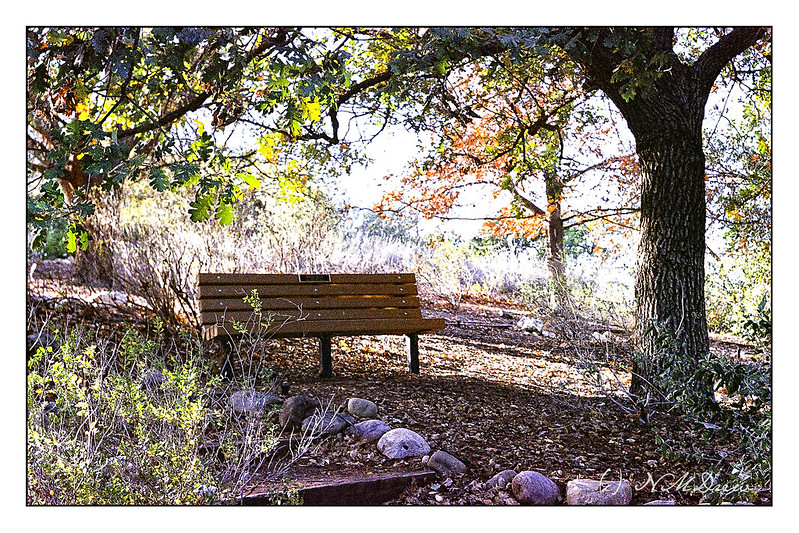
Over the next few weeks, expect more pictures of the local scenery. When I went out, at last able to do more than a hobble because of my foot, I went up to the botanical garden. With the seasonal changes come color changes, even here in Southern California. The local garden is always changing, and autumn and spring are the seasons with the most changes.
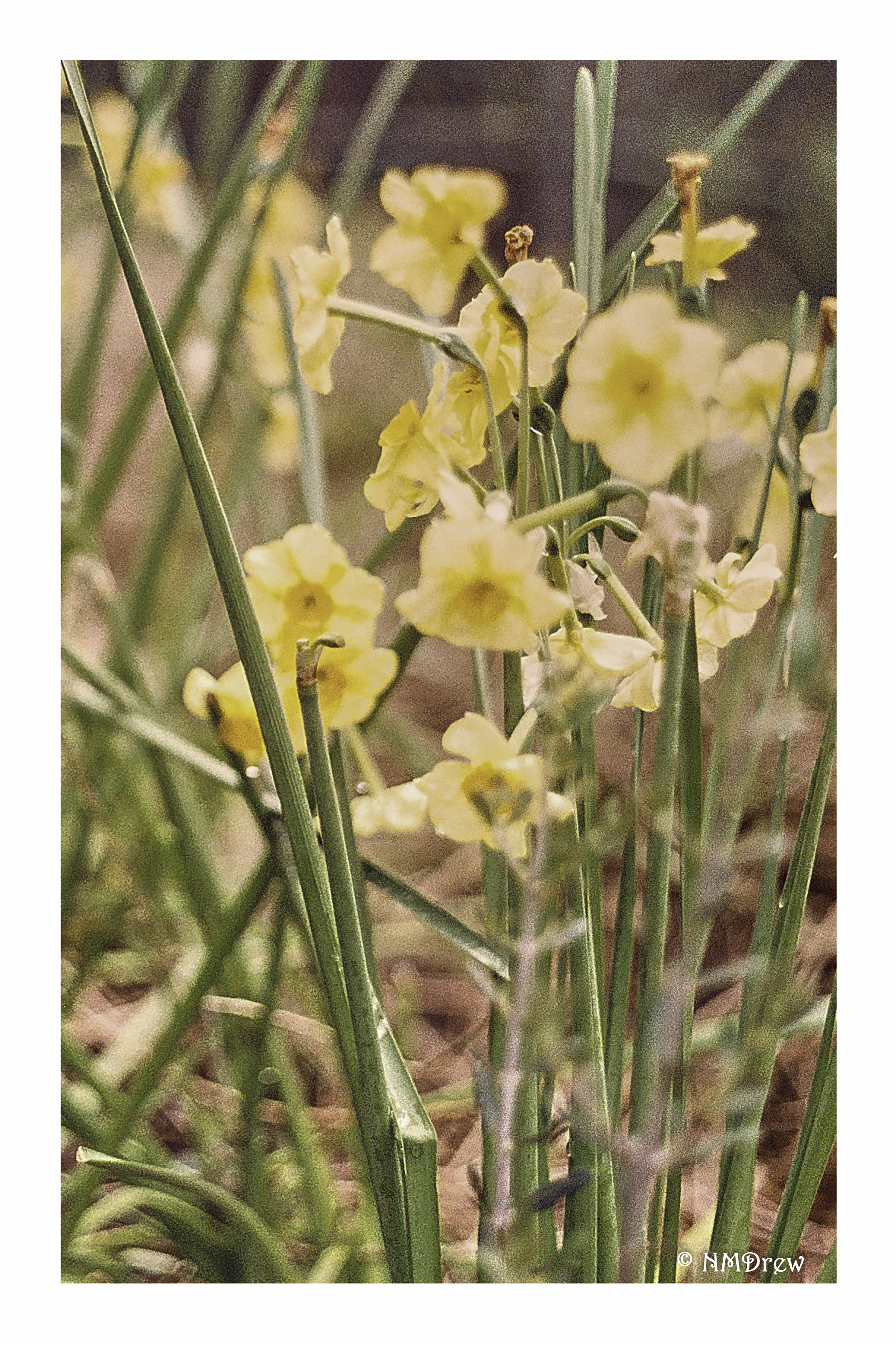
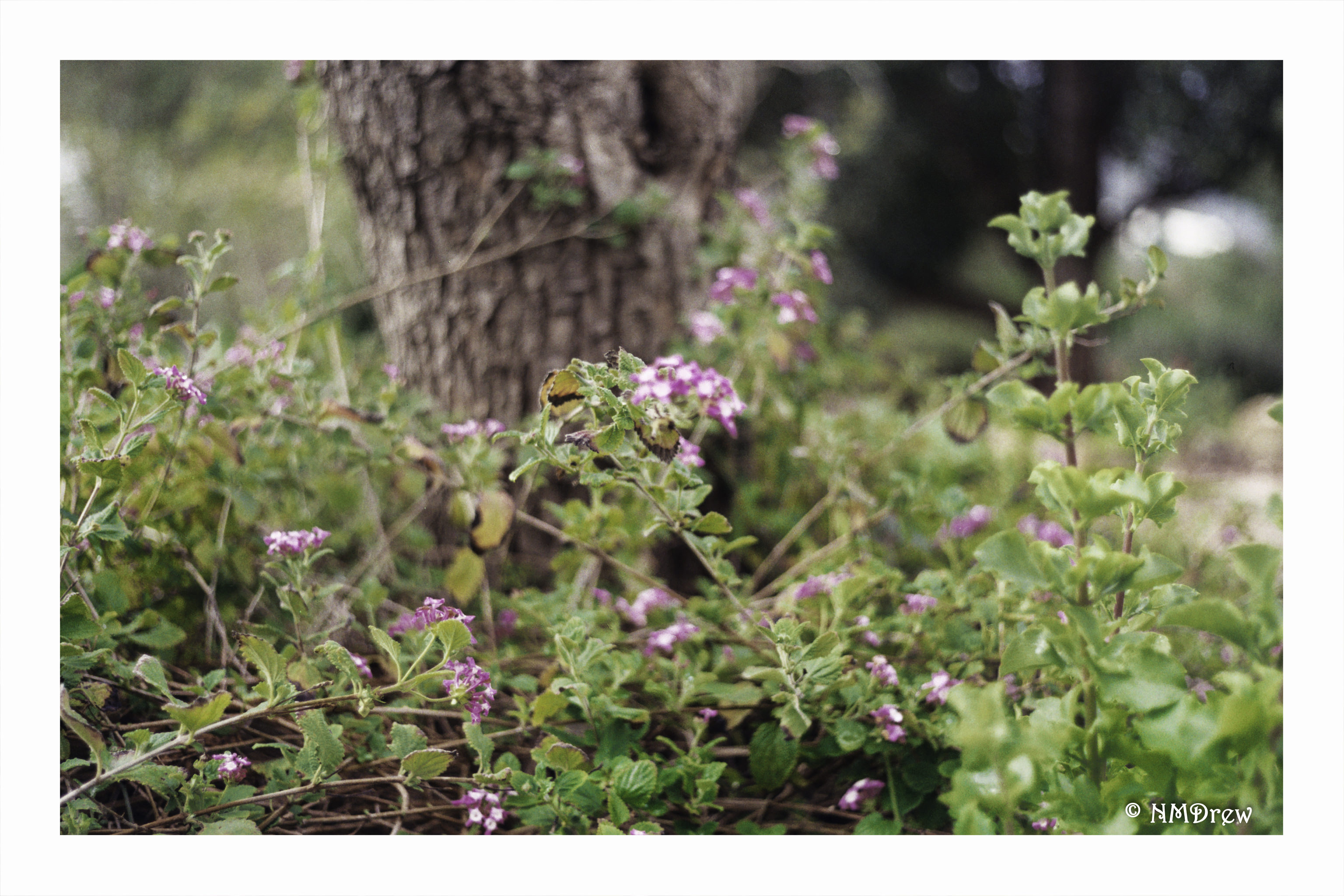
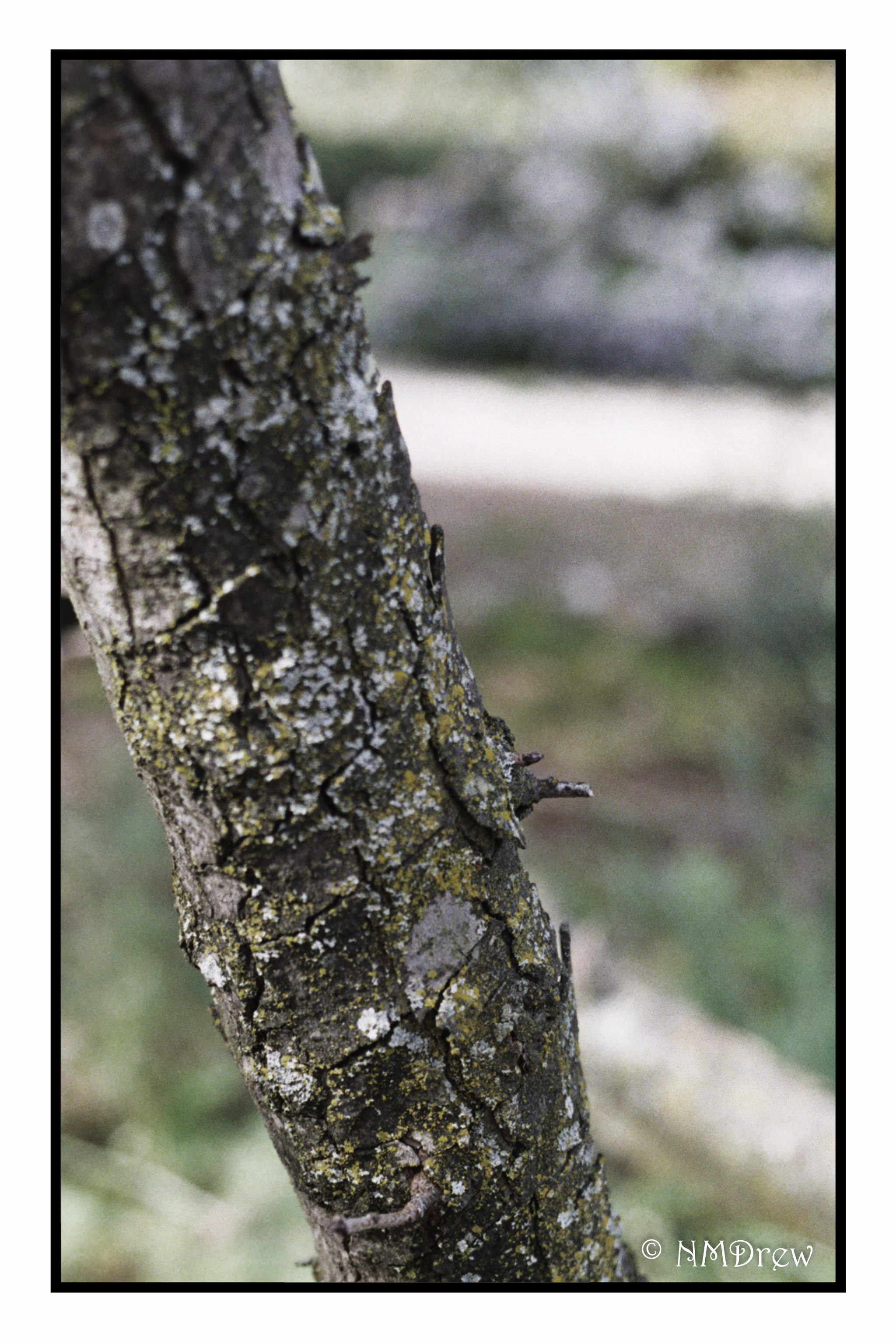
On this trip, I was determined to finish up a couple of rolls of film – the Olympus Trip 35 had Fuji Superia 400 in it, and the Agfa Ambi Silette, loaded in 2019, still had a lot of Kodak UltraMax 400 to be used up. The Agfa, too, had never been tested – it was one of those vintage cameras that intrigued me, so, being me, I bought it. The Trip 35 and the Agfa are small, but compared to the Trip 35, the Agfa is a tiny tank. A nice tank, but still a tank. It has no lugs, either, so I had to use a wrist strap that screws into the tripod mount. Awkward, but it works.
I always play with my photos, digital or analog, in Lightroom. Post processing is part of the way I see photos – like pictures and paintings – I want them to show what I want them to show, not what is straight out of the camera. One of my friends says this is cheating . . . ah, well. It’s autumn and time to show those colors and textures!
I busted a toe about 5 weeks ago and am finally able to wear more than a piece of tape around my 3rd and 4th toes and tight shoes. I have been hobbling around and taking, slowly and surely, short walks. I think I am out of the woods for the most part, and last week I was able to walk, very carefully, along the trails at the botanical garden. These wheel barrows reside behind their maintenance building, and I rather liked their colors and lines, so neatly stacked upon each other.
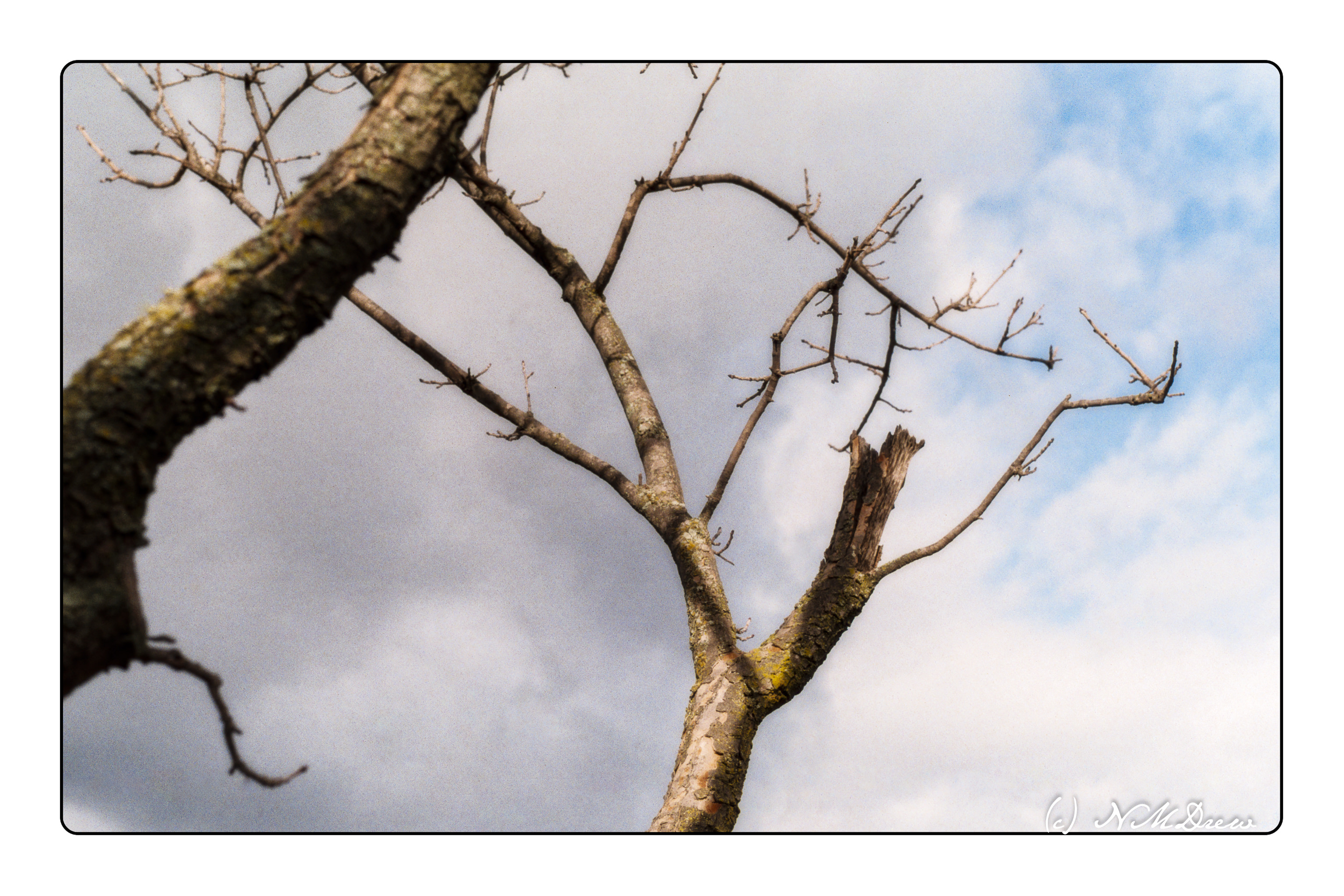
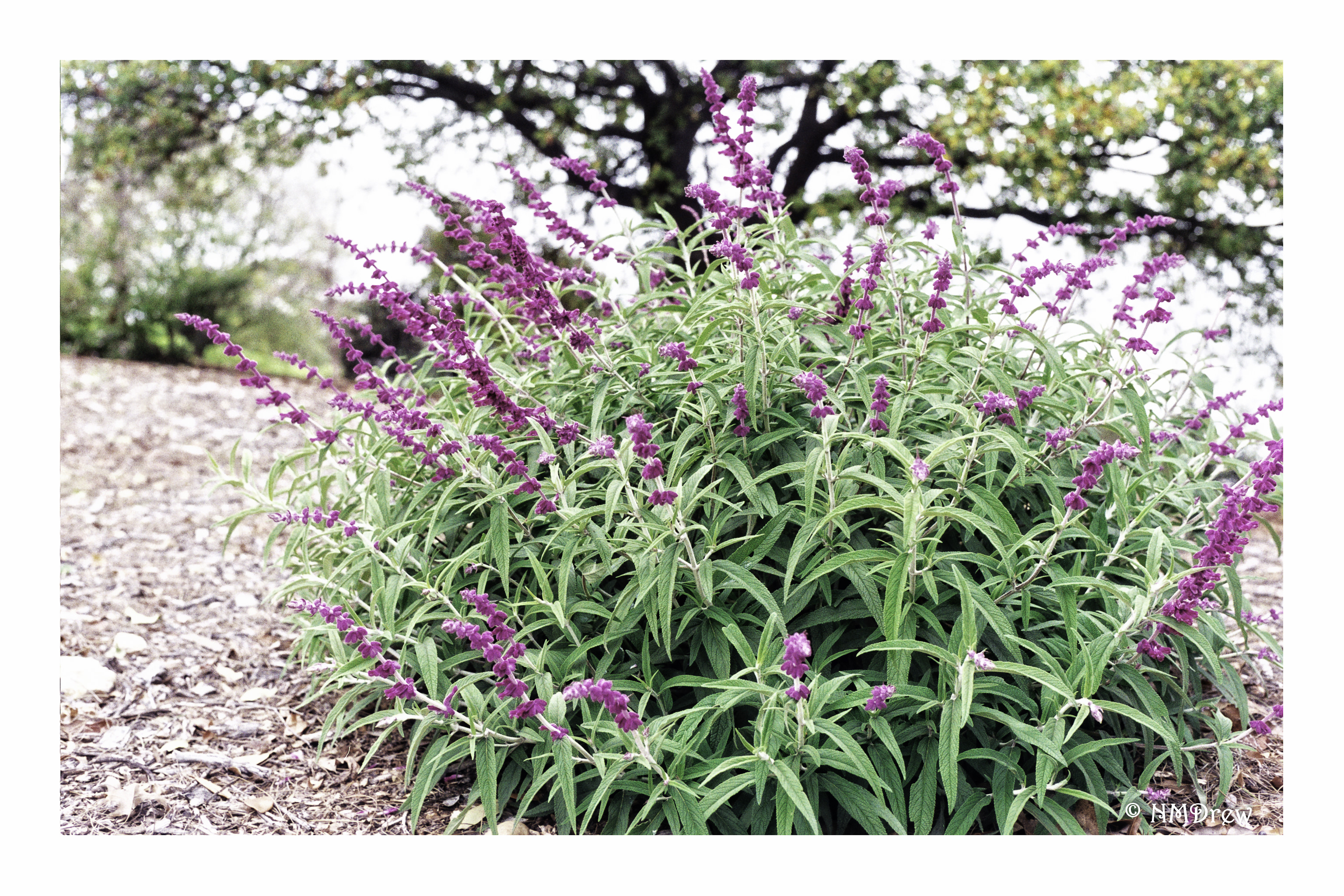
I took these with my Olympus Trip 35 and Fuji Superia 400 film. I picked up the film today and scanned and edited in post. The little Trip 35 does a great job for a camera ca. 1967. Some of the roll didn’t advance right, but when it did work, it did a pretty darned good job.
I save a lot of money on film since I don’t process it myself by scanning my own images in either my vintage Pakon 135 scanner, Epson V600, or Pacific Image scanners. Here I used the Pakon and my old eMachine XP laptop. It’s a pretty easy process. Once scanned, into Lightroom, and the rest, as they say, is history. There is something about film, even when edited in the digital darkroom, that a totally digital experience cannot replace – not even those great Fuji films mods in the X100V.
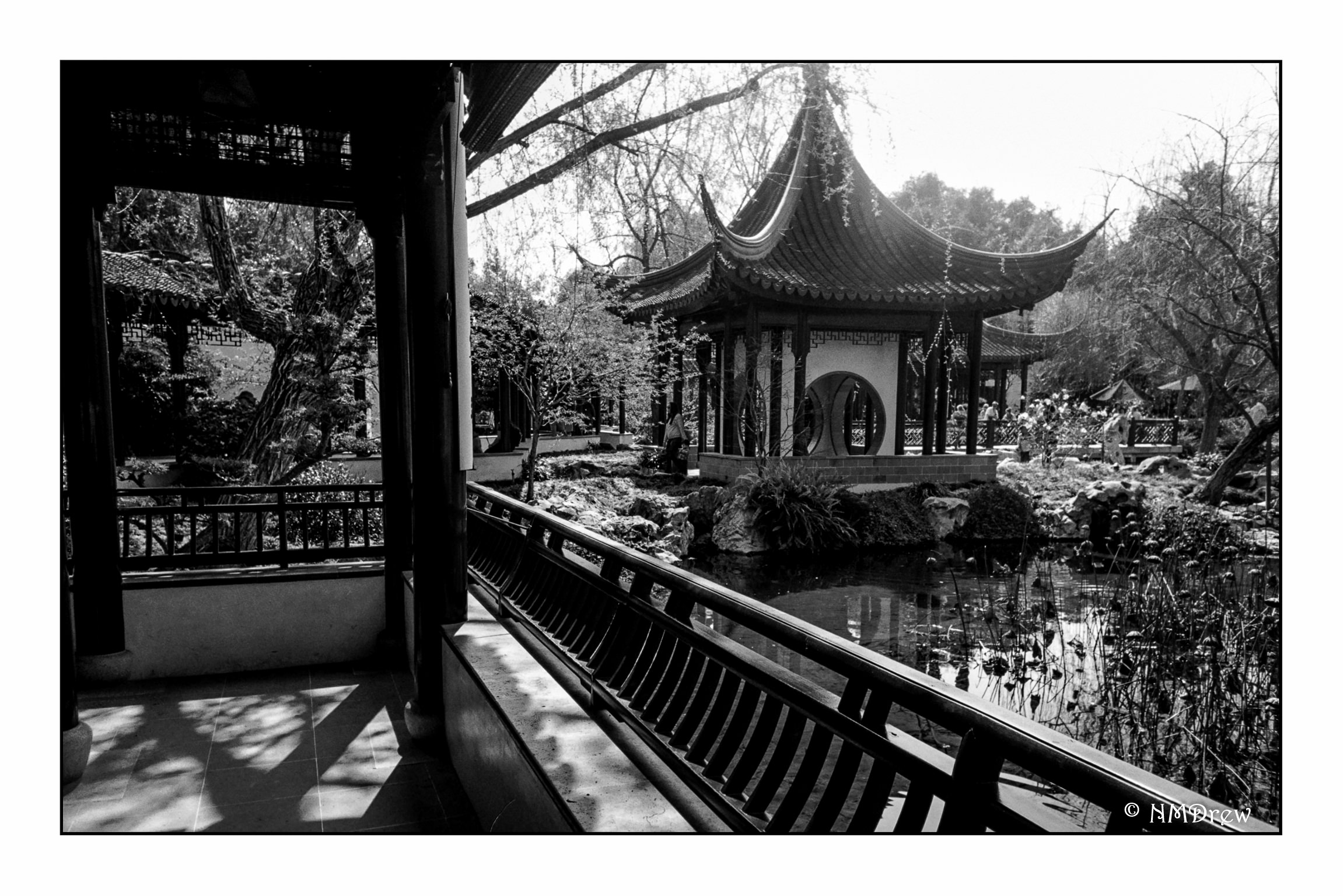
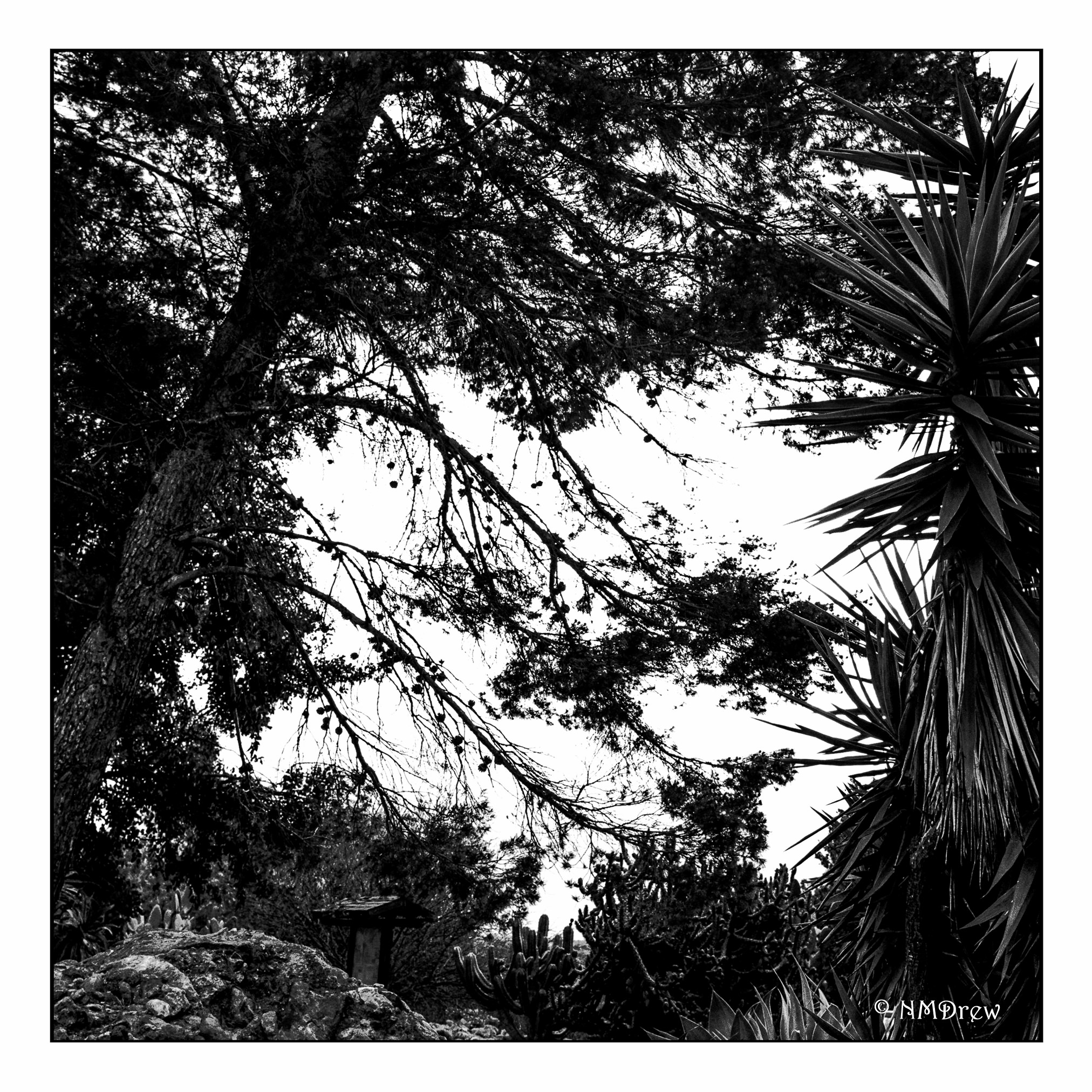
Besides acquiring a bit of old glass, I have also, as said before, been wandering through my digital archives. Here, a photo taken in March 2017 using the Retina IIIc with the Xenon 50mm f2 lens and Agfa Vista 200. Some images I desaturated to B&W because I thought they looked better that way. Digitalizing film can be quite a good thing!
When I first used this camera, I found it rather trying. It has an EV metering system which made absolutely no sense to me, even after reading the manual. Yes, I do RTFM! However, YouTube came to the rescue once again, and there are several good videos about the Kodak Retinas from the 1950s. Many consider these to be some of the finest Kodak cameras ever produced. I won’t disagree. Nearly every American in my age group has used Kodak cameras, and many were rather cheap and produced rather poor pictures. But, for a kid, they were just perfect!
This camera came to me about 4-5 years ago from Chris Sherlock at Retina Rescue, across the sea in Australia. He’s great. You can find his videos on YouTube. Playing with it again, and having more experience with older cameras. I really appreciate this camera far more than I did before. I think I am going to throw some film in the camera and see what this puppy can do yet again.
The day after we came back from our jaunt to Monterey I spent editing negatives I had processed while I was there. I scanned them and imported them into Lightroom. The film was Lomography’s Metropolis in 35mm, and I found it interesting to use, rather enjoying the colors it produces. Chances are I will order some more. For the most part, I did little editing in post as I liked what i saw, but a few had weird schmutz on them, probably bubbles that got trapped as the film was developed. Spot removal!
The process of editing images makes me look at them more closely. I worked hard to make some good pictures, and overall I was pleased with the roll. After a day of gardening and cleaning and just organizing life after the chaos of 4 days away, I sat down and just blobbed by watching various YouTube videos. They all seemed to be ones on photography. They included Ted Forbes’ channel and his “assignment” of a month using one lens length. I also watched Frederik Trovatten’s “Shoot Like . . .” series on Vivan Maier, Robert Frank, and Joel Meyerowitz. Totally by accident I came across a video about the Japanese photographer Miyako Ishiuchi.
Up front, I have never really “gotten” photography as an artform for myself. Watching Ishiuchi, I did. She explained her first three series and it made me think about photography as a theme to express emotions by focusing on one thing. That is about as easy a way to explain it. Watching Forbes’ video on one lens length helped me focus (sorry for the pun! Not!) on emotion – which one? – and one lens. Narrowing things down here. Trovatten’s vidoes provided interesting insights on how or why or what various photographers do and did.
Creativity is something that is difficult to find at times – that is, being creative and producing an artwork that is satisfying to me on many levels. These include emotional, intellectual, and proficiency of whatever medium I am using. In general, I can take a decent photo, but I have never been what I would consider to be a creative photographer. I don’t set up still lives or seek out a theme to explore. I like the technical things, such as exposure factors and what I want to see in an image, but I don’t “do” a series of anything. I love landscapes, but the heat limits my wanderings. The pandemic curtails too much travel or traveling with a chauffeur to do a safari.
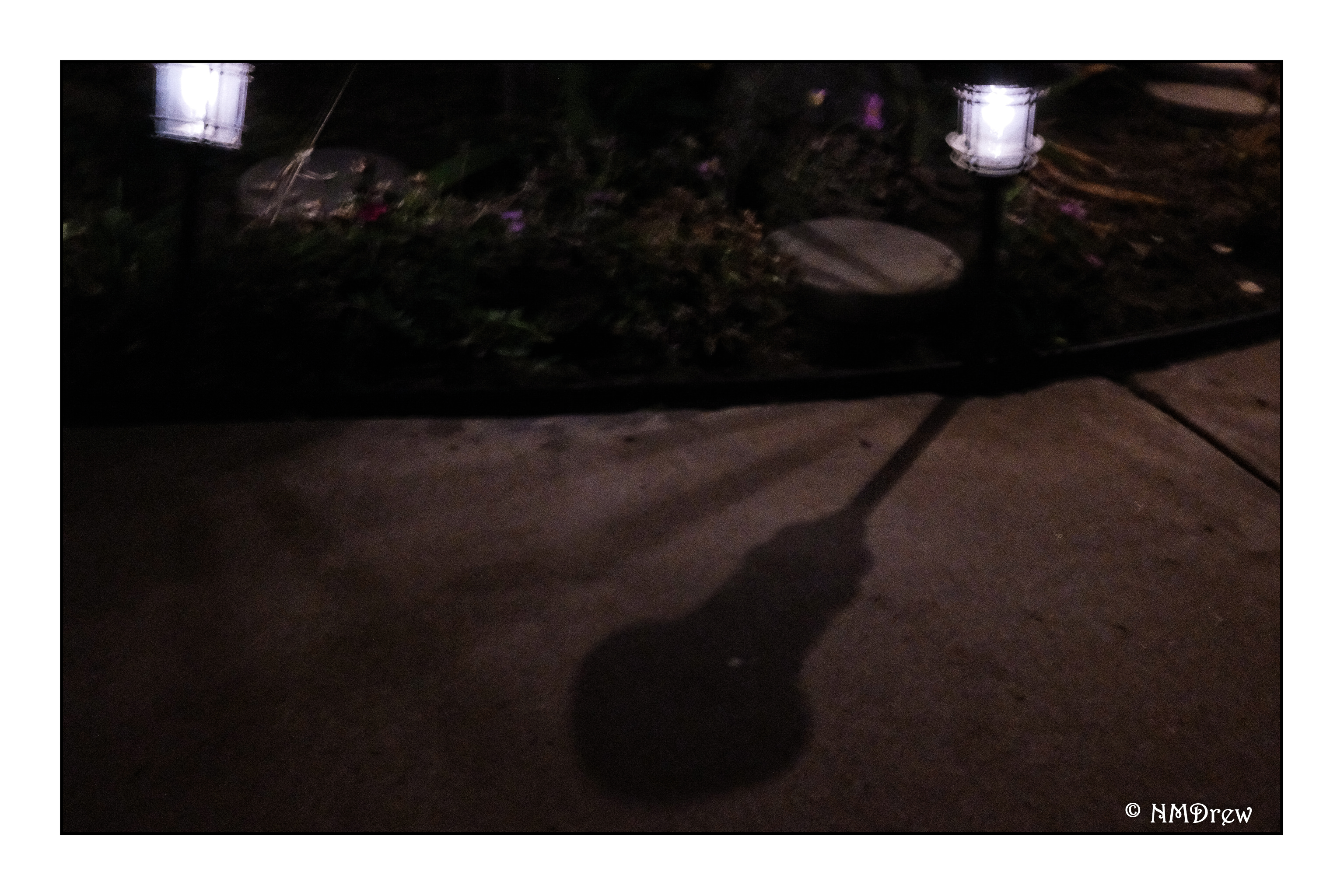
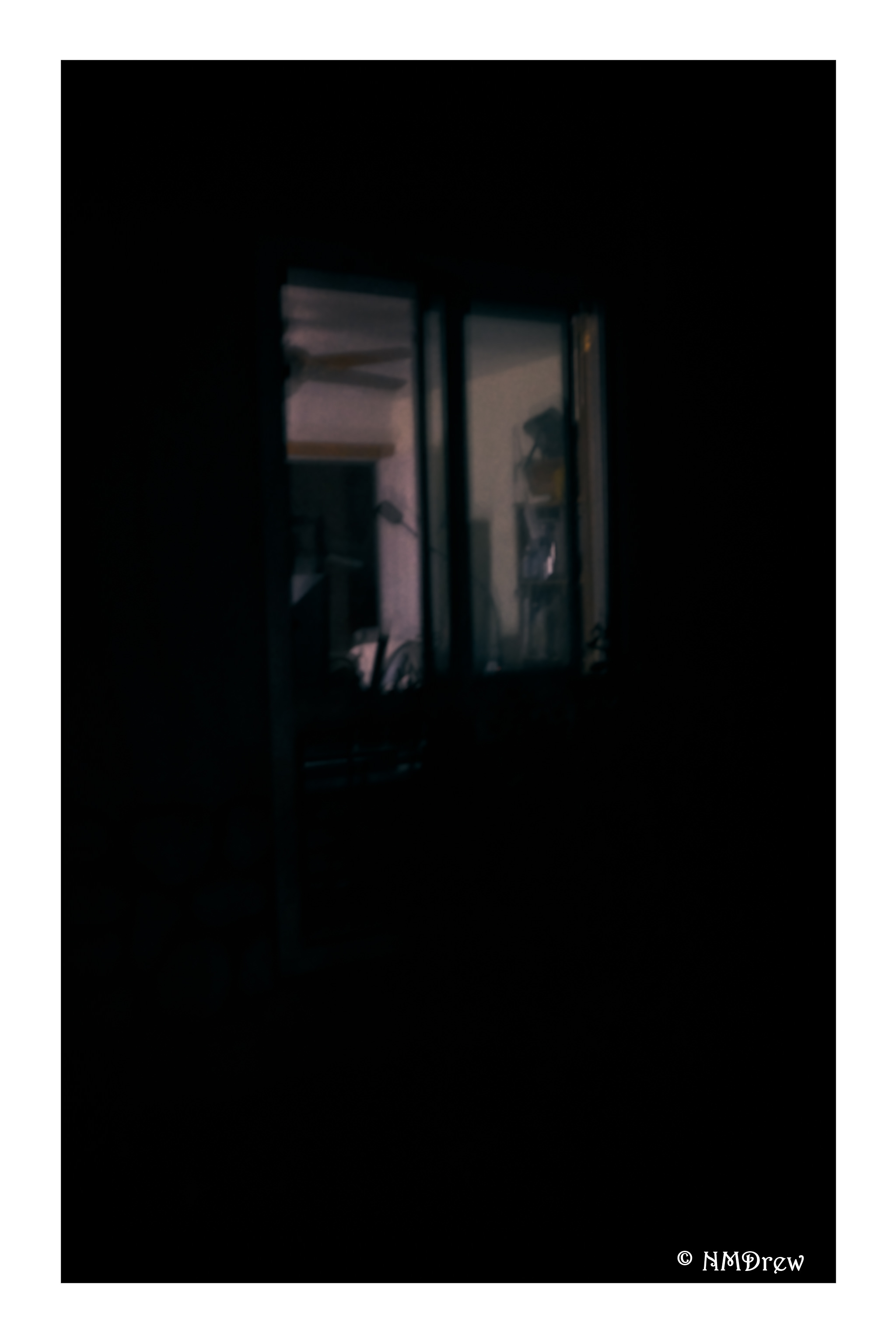
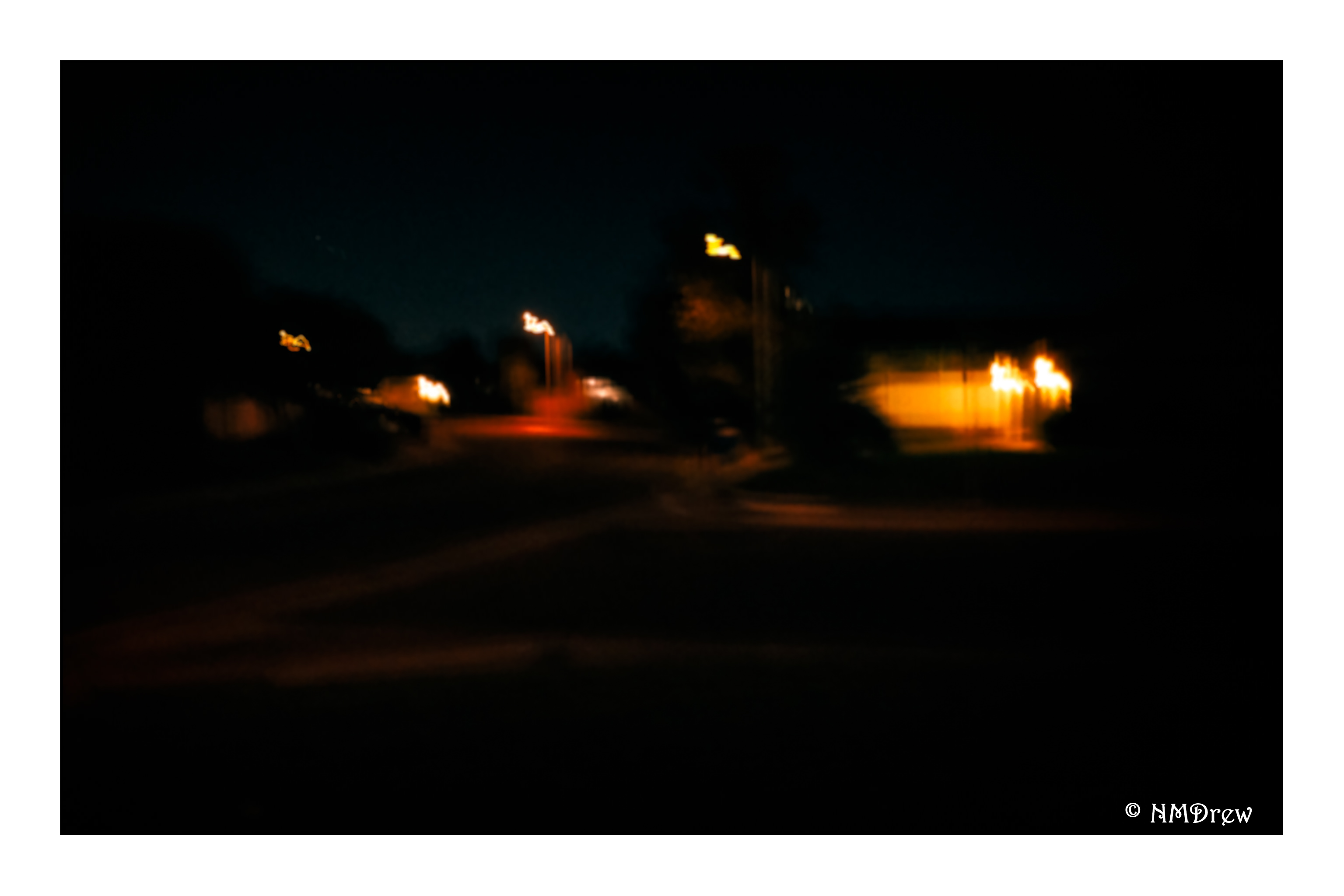
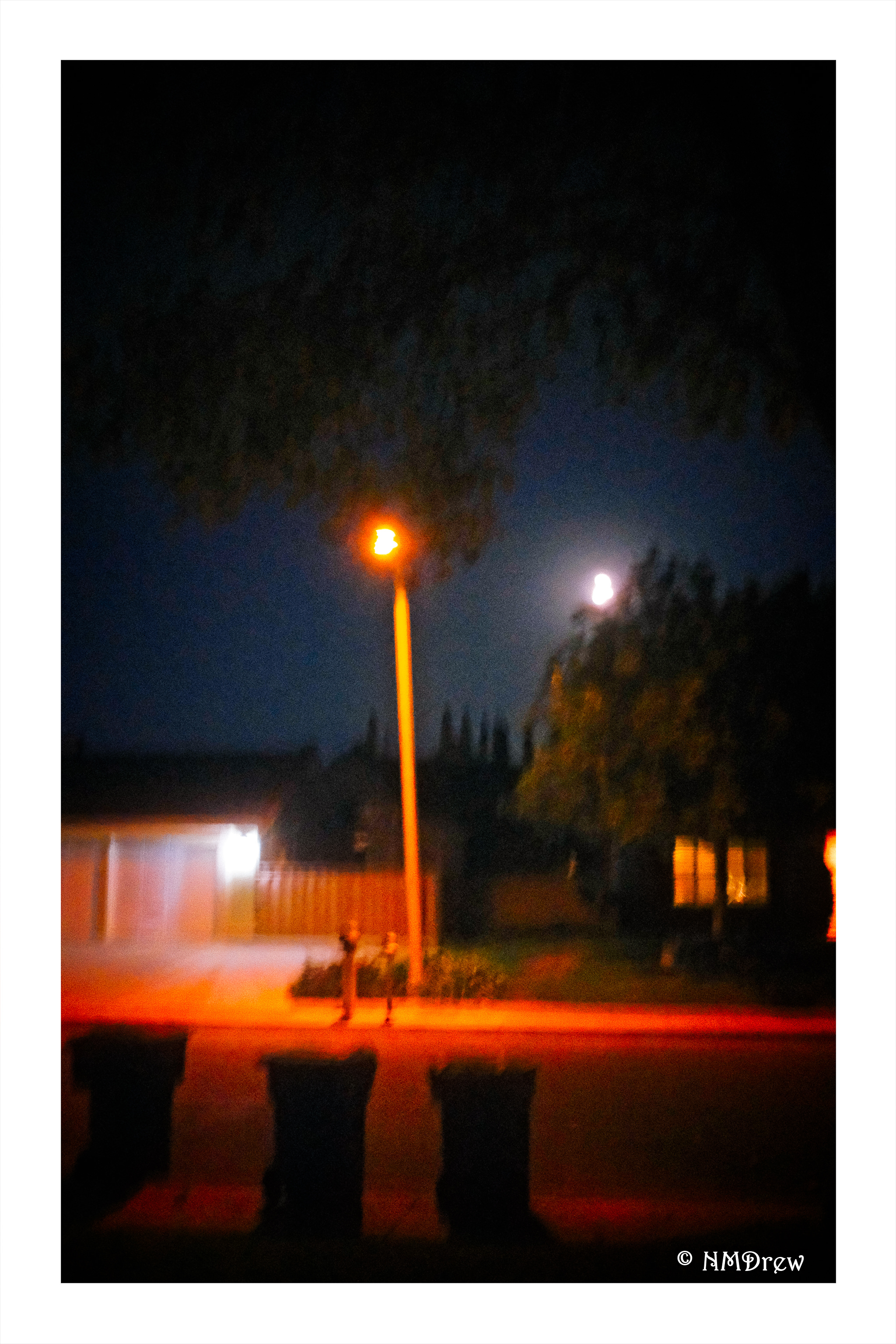
Yesterday’s video watching pulled a lot of things together for me in the area of making photos. Theme, single lens length, mastery. While I plan to continue to try my daily painting, I am also going to begin a month-long study of image making with a single lens length. The lens will be a 35mm. The Fuji X100V is a fixed lens length at 23mm and a 1.5 crop factor, equating 35mm. I have a 35mm series E lens for my Nikon film cameras. It will also work on my Nikon Df full frame. There is a lot of choice here with what I have. The theme that catches me the most is one that has intrigued me the most over the past several months: my neighborhood at night.
I live in the suburbs. It is a nice neighborhood with nice people, curving streets, greenery, a park with a creek. Nearby is a college. A small strip mall is within walking distance. I consider all these to be within the parameters of My Neighborhood.
I went out last night with this thought in mind, using the X100V, iso set at its highest and the rest on automatic. Everything was done handheld. I will need a tripod. I will need to use flash at times. This will be a great way to dig into the menus of the X00V as well as learn how to use it on a deeper level. And I will need to dig out a tripod and a shutter release cable. These same things will need to be applied to my film cameras and other digital critters.
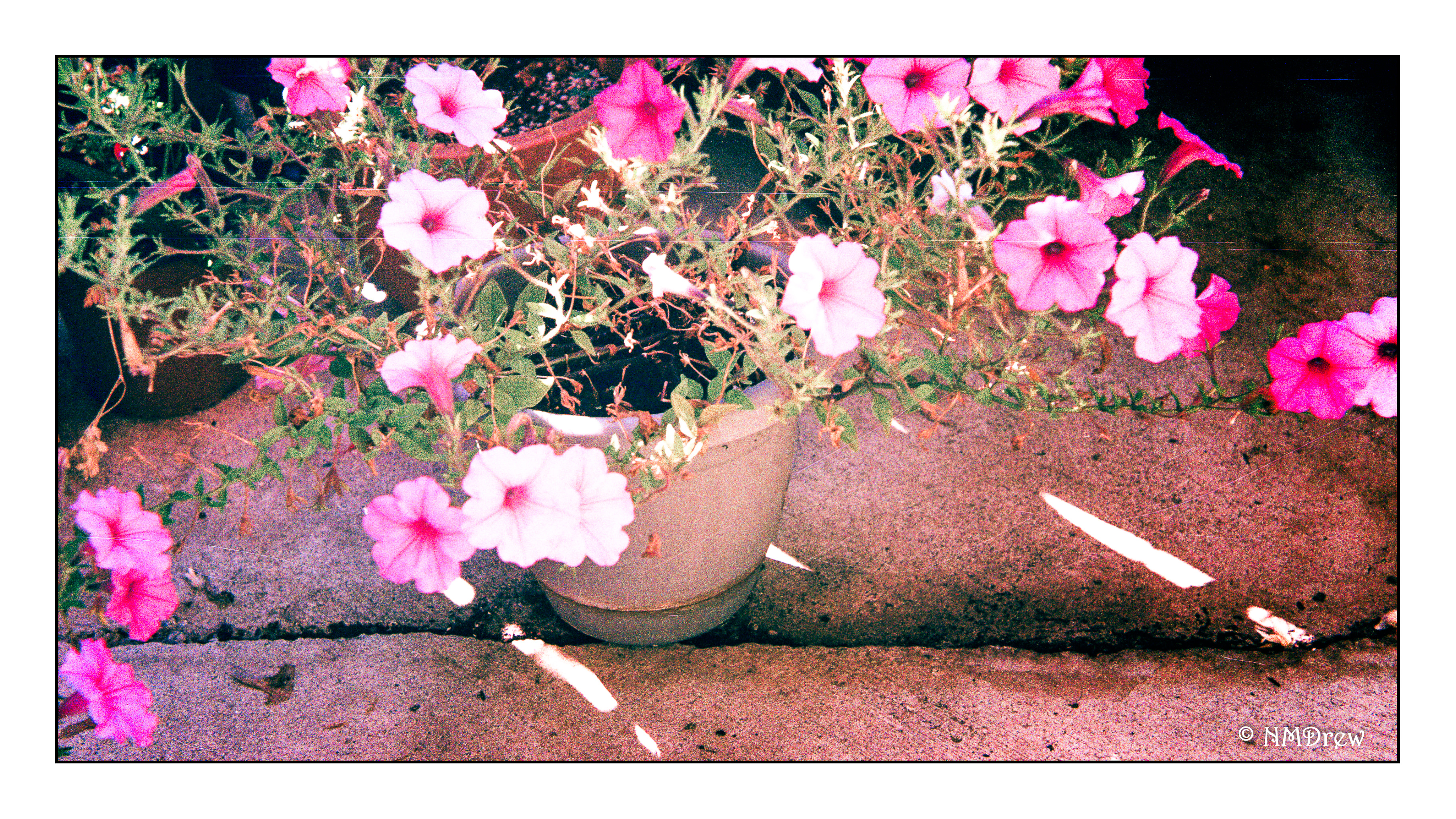
Another image from the Weltini with Fuji Superia 200. Can you say manipulated? Yeah. The original scan was dreadful. Mayhap I made it dreadfuller. I had fun, regardless.


 Ink, Yarn & Beer