This is from a summer or two ago. We drove along Hwy 49 in the central coastal area of California. It is a lovely drive – quite unpopulated in many ways. The hills and valleys spread out on either side of the road, with trees dotting the grassy slopes. Grapes are grown here, and the Paso Robles area is known for its wines. If you take some of the side roads off the highway, which is a nicely paved two-lane roadway, you can find yourself under the canopy of old oak trees, deep in the gloom of shade on a bright summer’s day.
Zeiss Ikon Ikonta, Tri-X 400 by Kodak. Scanned and processed with Epson V600, VueScan, and Negative Lab Pro.
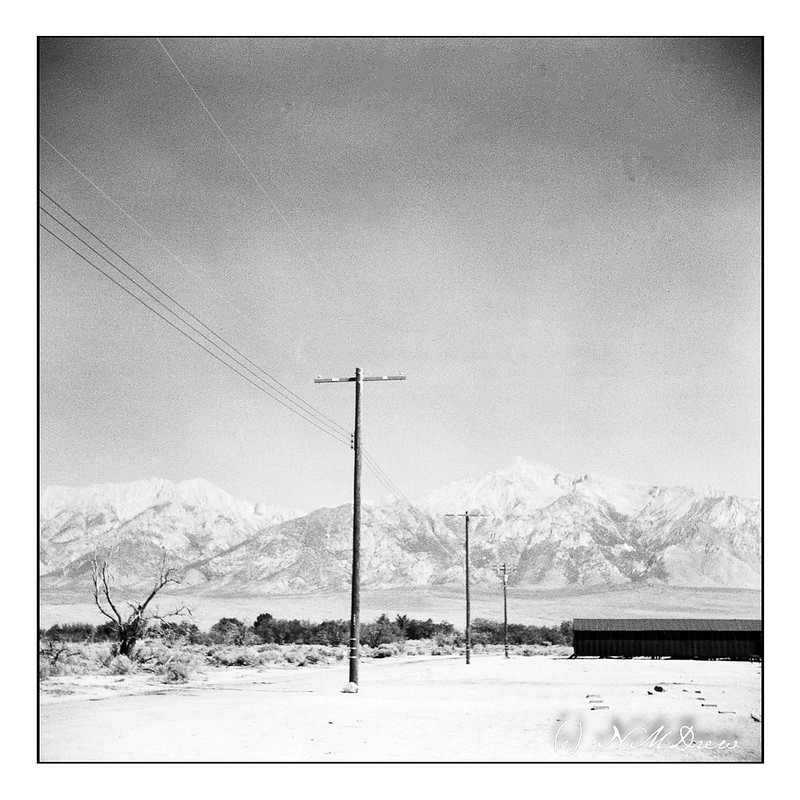
In 2021 we headed out on what was to be a 3 week long road trip. The first part was up the Eastern Sierra along Hwy. 395, stopping and staying in Independence, CA. One of the most notable places to see along this route was Manzanar National Historic Site – a not very nice part of US history. It is a Japanese internment camp which was built for imprisoning Japanese Americans, natives of this country, and therefore citizens, as well as immigrants.
I took along a digital camera, and a folding camera, the Zeiss Ikon Ikonta 521/16. Only now am I scanning the film – it took quite some time to finishing up the roll! I used Kodak TriX 400 and got twelve 6×6 images out of the roll, which is 120 film. To process the film, I took it to a local lab and then scanned it myself using the Epson V600 and Negative Lab Pro in Lightroom.
However, the trip ended when we got breakthrough Covid. We headed back home, sadly, but better safe than sorry, eh?
What is it about old German folding cameras? I have a number of them and, while they can feel clunky compared to point-and-shoot cameras, or DSLRs (or mirrorless), there is something just so wonderful about using a film camera.
This is a cropped 6×9 image from my Zeiss Ikon Ercona, ca. 1950 and serviced by Jurgen Kreckel. His cameras are well worth their costs, high or low.
I have problems figuring out how to go up or down with a camera-top viewfinder. My brain doesn’t seem to “get it” but maybe I’ll get the other half to logically explain it to me. He’s good at that.
So, out for a walk to check out the camera – I bought it last July – and trying to become familiar with the camera, and guestimating exposures. Some good pictures resulted, and some dogs. I’m better at guessing exposure factors for 100 speed film. I used a roll of 120 Portra 400 film as my test roll.
Whenever I get film back, I am always so pleased. I really do prefer it to digital, hands down, but digital has its place, too. This Ercona was fun to use, a bit of a pain, too, but whenever you have something new in hand, or something old, there is always a bit of a trial-and-error period. This happens even if you have shot with the camera before.
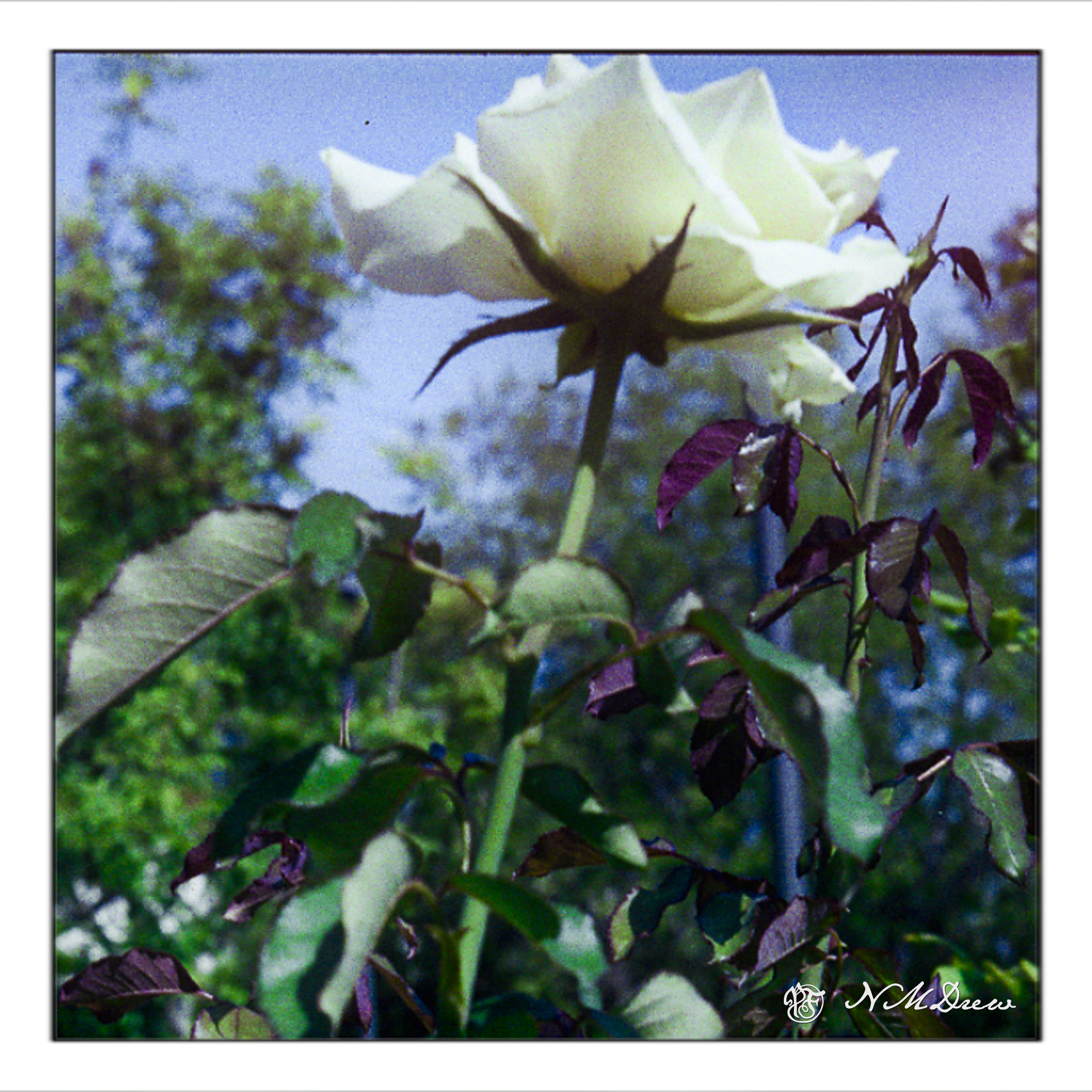
A rose by any other name, and shot with any camera, is pretty sweet – even better when you like your photo!
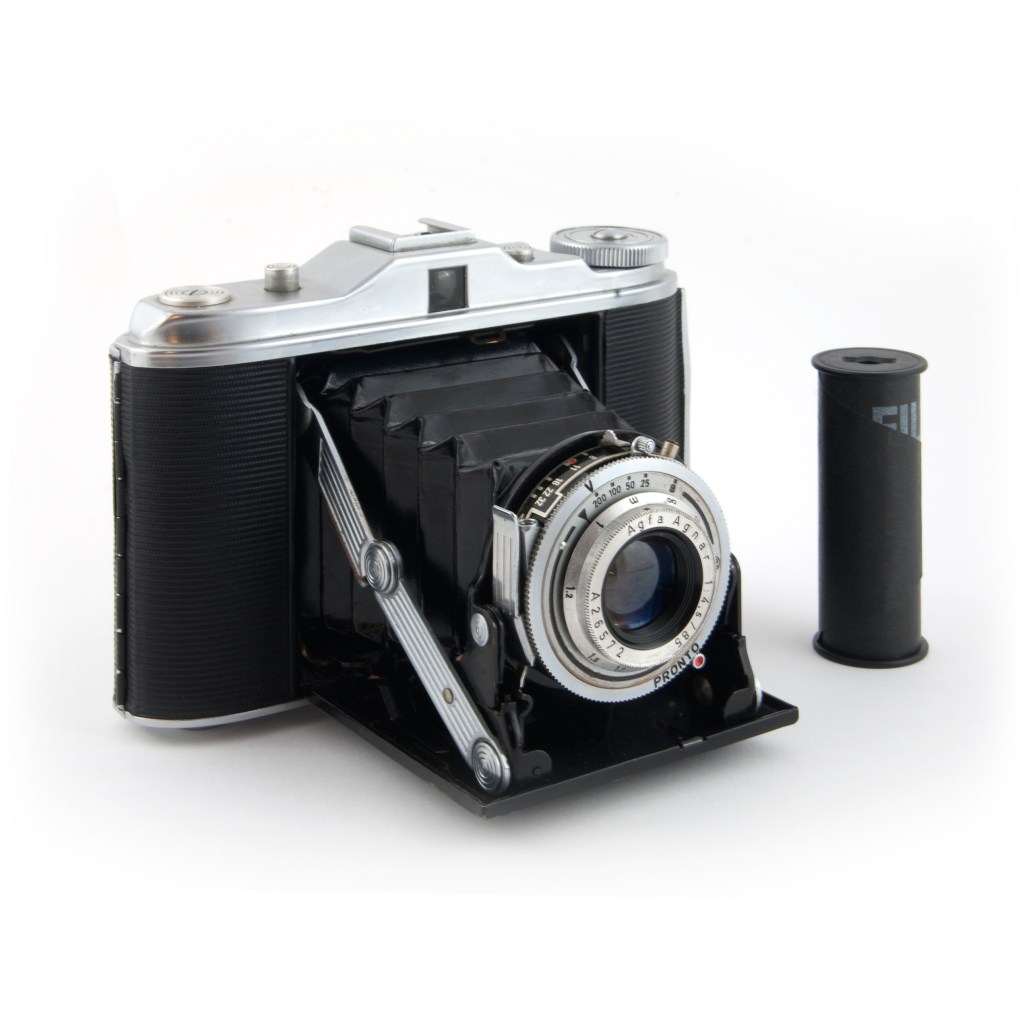
Image of an Isolette I, Agnar Lens, from Wikipedia
The Agfa Isolette was made over a number of years, sold in the US under the Ansco brand, and is a rather nice camera overall. The issue many of the later ones have is the fact the bellows have deteriorated. Apparently the later models had plastic bellows which developed pinholes and creating, of course, light leaks. I bought my Isolette II from Certo6, from whom I have purchased a number of vintage folding cameras and accessories. I have never been disappointed with the quality of cameras I have from Certo6, so here is a plug for Jurgen Kreckel!
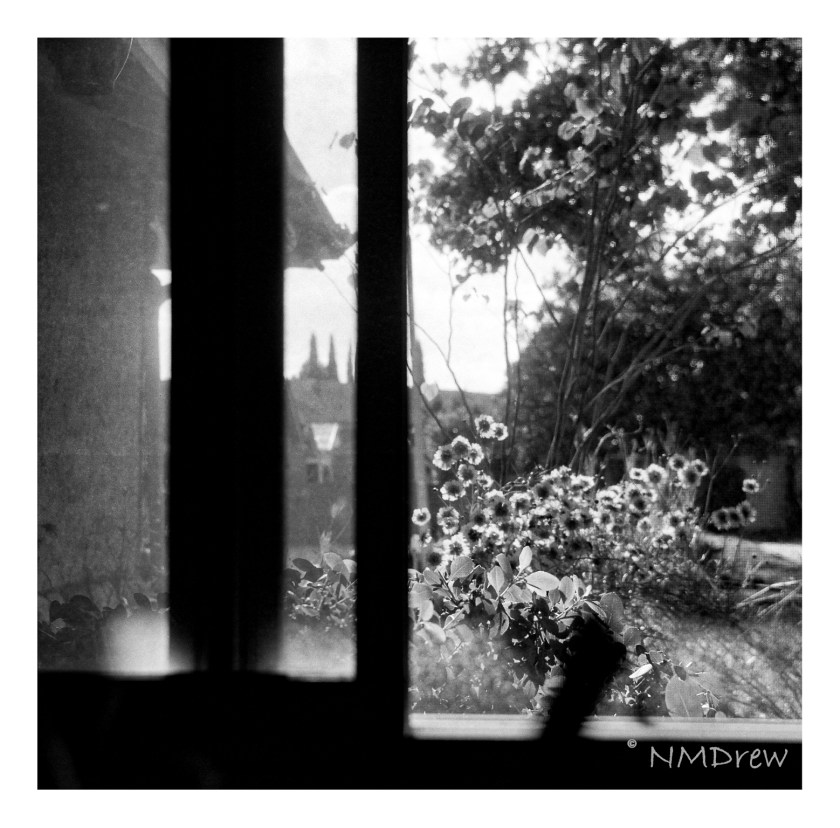
I don’t know about you, but I wander around with my interests – sometimes sewing or knitting, painting, spinning, then on to photography or drawing. It varies, in part with the weather, in part with my mood. Photography has taken a long time out of late, but with summer coming in and a pleasant spring ending, I decided it was time to re-evaluate and re-explore photography. So, with a new-to-me red skinned, black bellowed Agfa Isolette II, a roll of 120 Ilford XP2 Super 400 film, I spent a day wandering around the house and neighborhood, guestimating exposures as well as using a light meter. I got the images back a couple of days ago. All were usable, but below are the best of the lot (I think).
Up front, these photos are not SOOC – I did work on them in post. The Apotar lens is not in the same league as a Tessar, but it is a rather sweet lens. I think the issue more than anything could have been my fault in exposure. The details visible are the result of editing with LR and such, working to bring out detail, increasing contrast, and changing the image to meet my desired goals. Altogether, I like being able to take a folding camera with me – I had it in my pocket while I was oot-and-aboot.
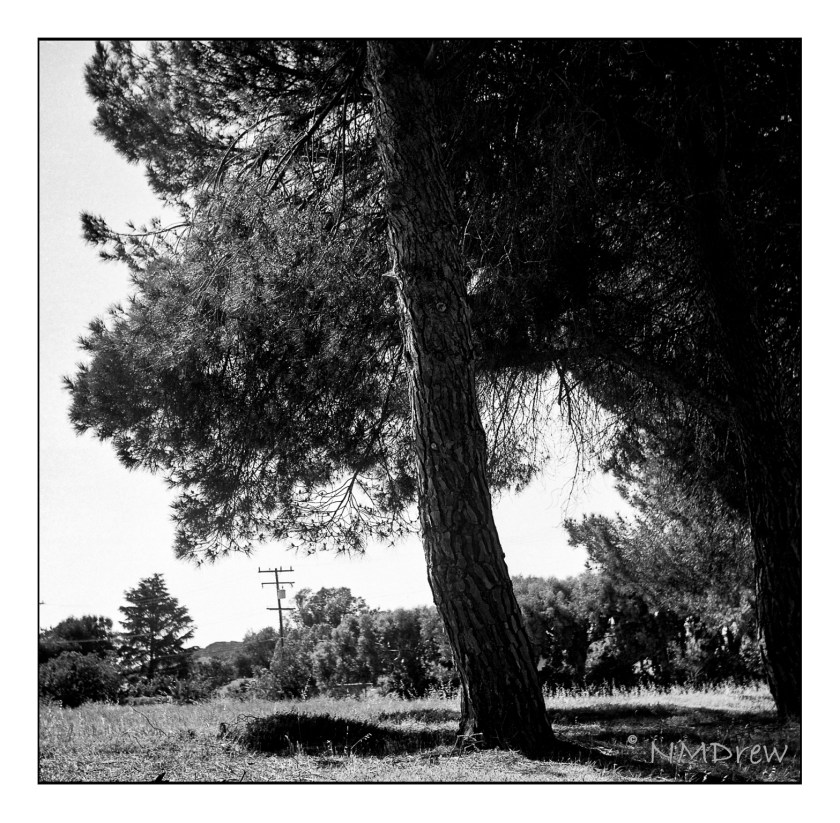
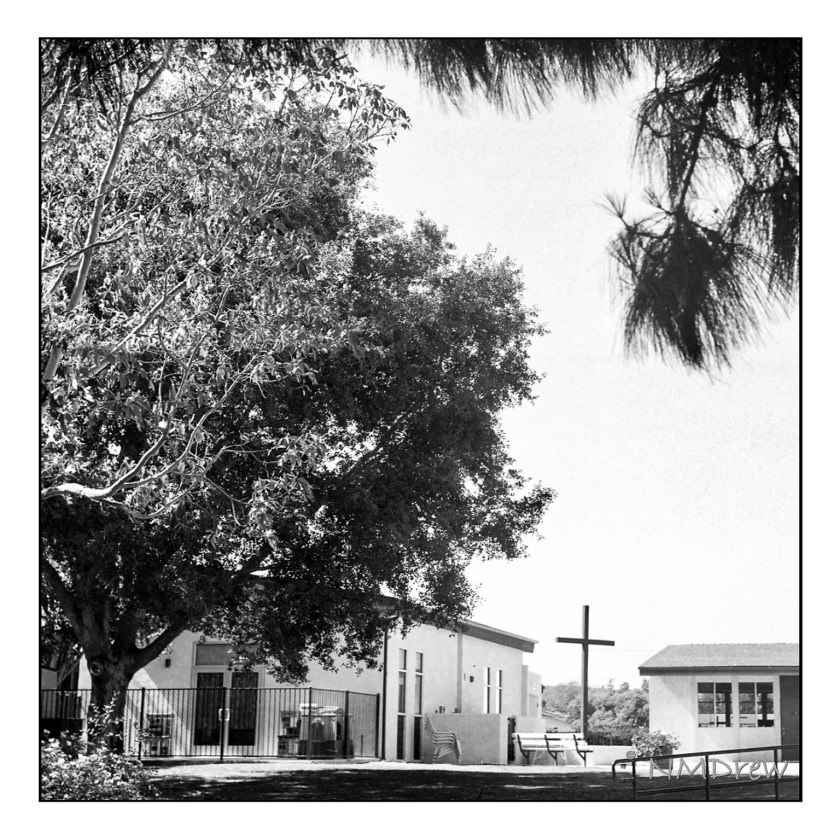
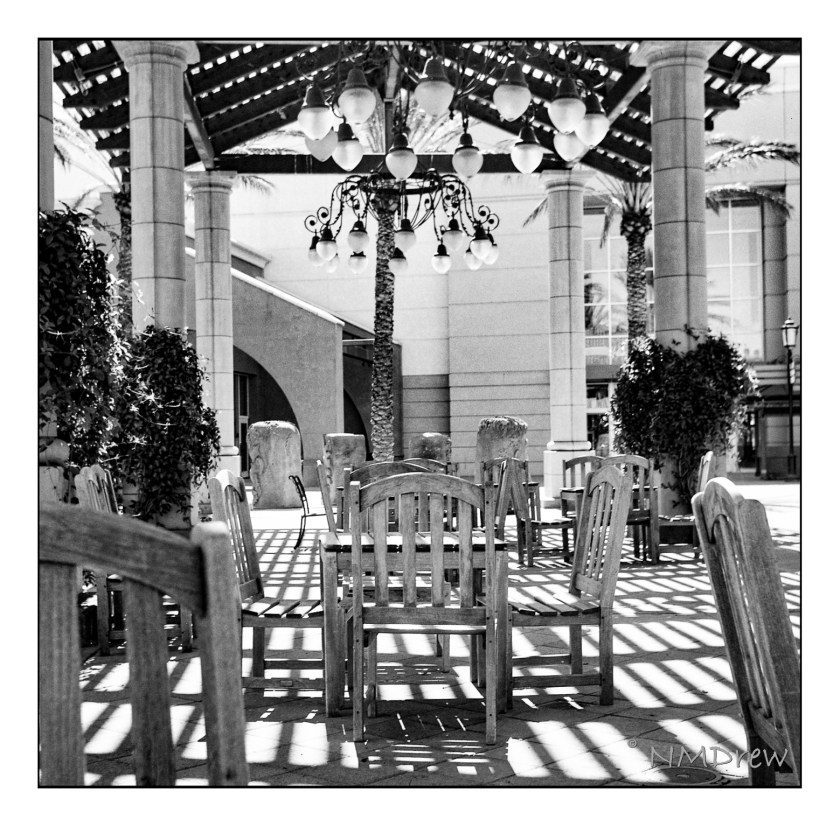
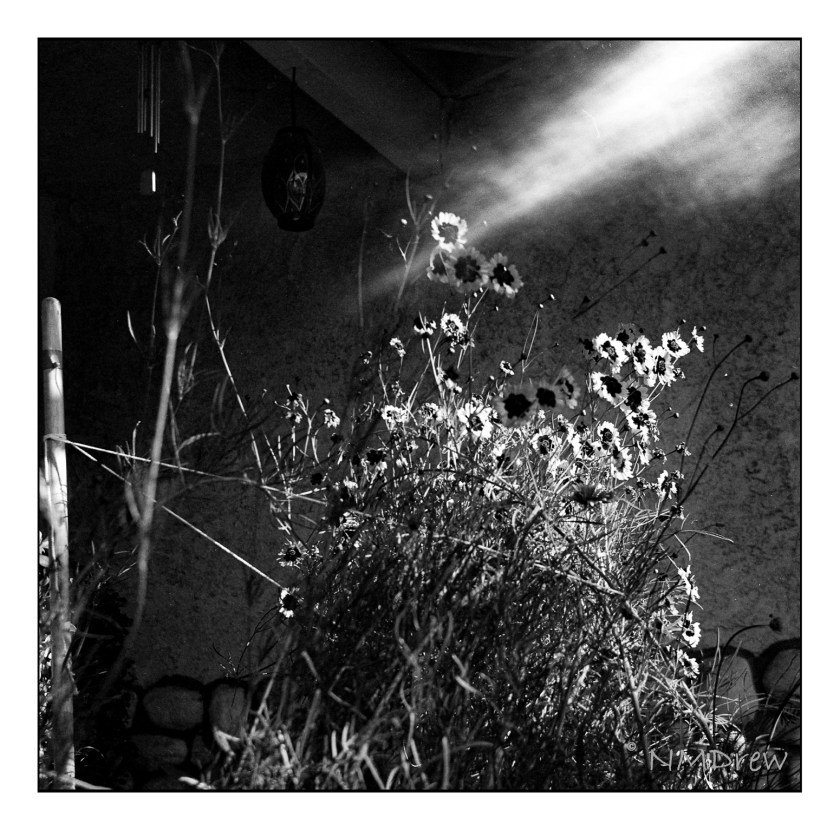
Sunflowers Empty FieldChurch SchoolPatio SeatingSunflowers and Sun FlareReady to WorkTree TexturesDill Flowers
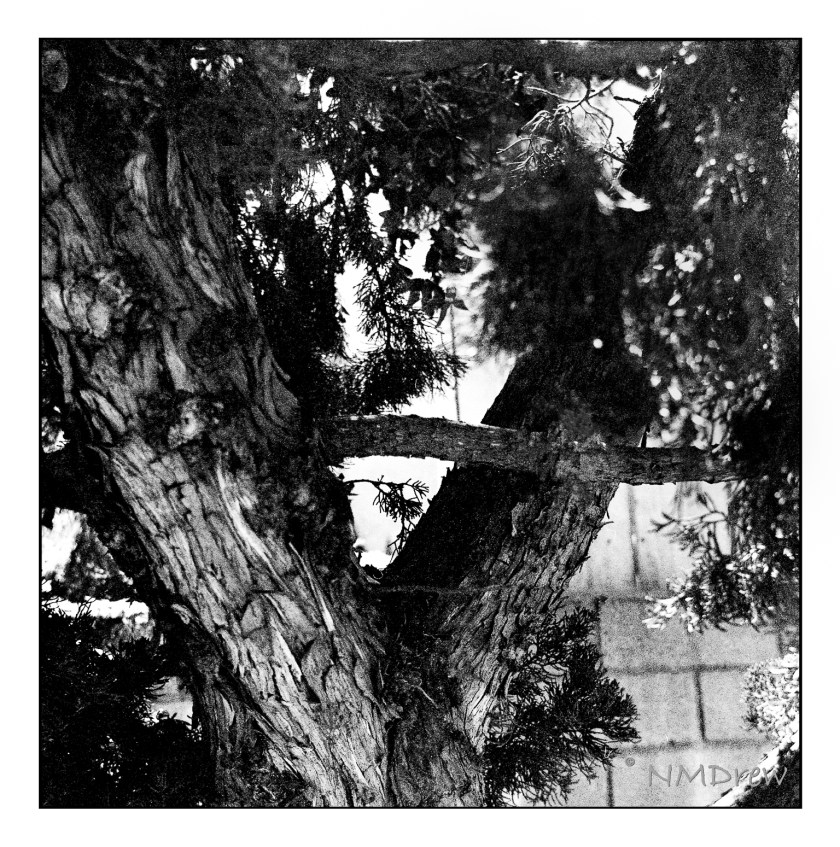
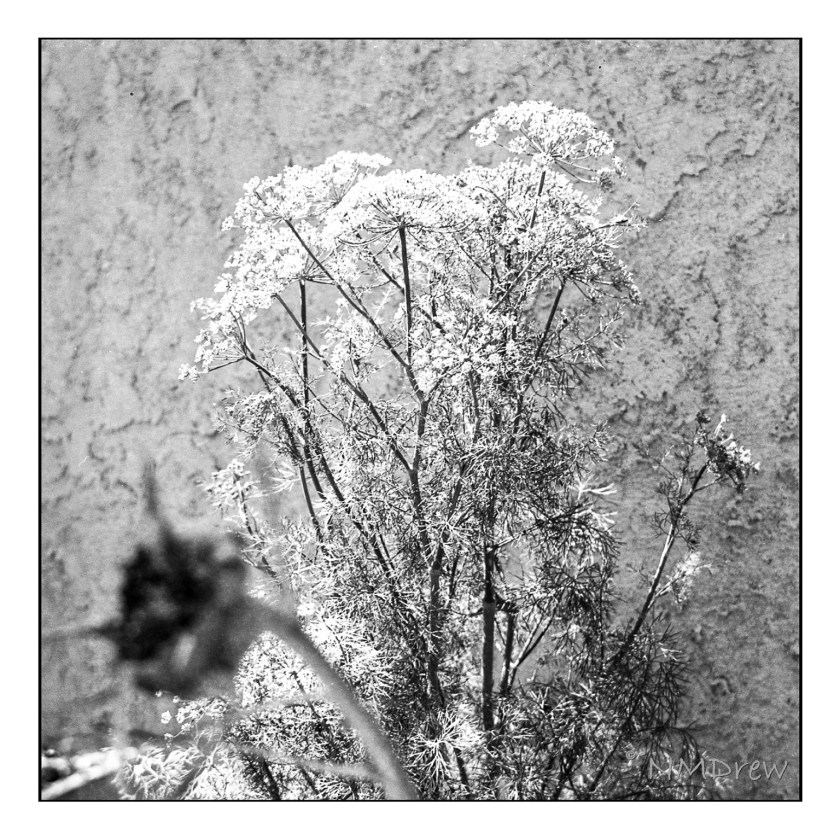
The Apotar lens is uncoated (I believe) and as a result is prone to flare. You can see it in one of the sunflower pictures. I did not use a filter at all. In particular, I think the last one of the Dill Flowers would have benefited from a yellow, orange, or red filter; the dill flowers are yellow and similar to the foliage of the plant. When I looked for pictures to make, my goals were to look for small details, such as the dill leave, strong contrast, as with the trees, and texture, as in the bark.
Altogether, the camera worked beautifully, was simple and direct. Aperture, time, and distance all need to be determined by the user. I used the Sunny 16 rule for the most part and guestimated the distances. Outdoors the usual exposure was f/11, 1/100, and about 6-20 feet (2-6 meters). Inside, most likely f5.6, varying distance, and about 1/50.
I have a number of medium format cameras, all but one being a German folder, and that one is the Yashica D TLR. What I like about the folders is their compact size when folded up, their vintage qualities (not so vintage in the 1930s through 1950s I expect), and in particular their beautiful lenses. The ones I have range in size from 6×4.5 with and without a mask, to 6×6, to 6×9. All take 120 film. The Yashica D takes 6×6 images and uses 120 film as well. However, the drawback to all of these cameras is the limitations of their lenses in length and focusing capabilities – fixed and immutable as they say. Yes, there are attachments, such as magnifying filters, but none of them can produce the variations available in a system allowing interchangeable lenses.
As a consequence, I have long been contemplating a modular medium format system, and ended up by chance or luck coming across a Mamiya 645 Pro TL with all the parts present in one package. Numerous YouTubers have really excellent videos, from short to long, from cursory to extensive detail. The video below shows the bits and pieces I have – it’s long, it’s detailed, but if you are really curious, follow along. I learned the most about this camera from it, and have watched a number of times.
Truthfully, I just dove into the purchase. I figured it would be best to get one all put together rather than trying to figure out what I needed. Searching around online, I found a Mamiya from a reputable dealer with all the parts that I knew a modular system needed for a reasonable price: A body, a lens, a film back, and a viewfinder. It has a grip, too, instead of a crank to advance the film. It’s big and heavy with everything attached – nearly 4 lbs to take a 6×4.5 image. Is it worth it? I’ll find out when my first roll of film comes back from the lab next week.
I spent about 3 days reading about each part and watching YouTube videos. I gathered PDF manuals from around the net. I fiddled and putzed. I got frustrated and annoyed, too, as well as learned so much . . .
The fact is, there are a lot of parts available for the Mamiya 645 Pro TL. It can be simple, it can be complex. It can be small, it can be big. Truthfully, I rather like small and light myself, and if I keep the critter (30 day return policy), I most likely will look for a waist-level finder and a crank to advance the film. I read about the body, the viewfinder with its auto-exposure, the film cartridge, the grip, the lenses. Everything has to be coordinated to work.
And when it doesn’t work? Pull out that dark slide!
When I take it out, I have to keep it safe in a camera bag as I have no camera strap is available that works with it with the grip in place. The Mamiya has proprietary lugs, and that is a nuisance. With a crank to advance the film, Op-Tech (my favorite camera strap) Style B attachments work, but when the grip is attached, they do not.
So, what do I think about it so far? I rather like it. The grip has that wonderful noise only a grip or automatic film advance in a camera can achieve – a click, a whir – just like an exhaust in a classic sports car! That aside, I really like medium format film photography the more I do it. Those negatives are beautiful. Scanning and editing them is not too big of a deal, and the addition of Negative Lab Pro makes them even better. I hope at some point to develop them using the Lab-Box, both black and white and color.
There are definite aesthetics in the images produced from this camera. You can find them on Flickr. You can also learn a bit about people’s reactions to the camera itself. I always like Max’s commentaries on various cameras found on his channel Analog Insights. He doesn’t go into how to use a camera, but the experience of using a camera. See what you think.
So there we are. Once I get the film back from the lab, I will have a better idea if the camera is worth keeping as I will know if the bits and pieces all work. It has automatic exposure with aperture priority using the viewfinder. I can switch to totally manual techniques. The film back advance works well from the sound of it. The lens is bright and clear, as is the viewfinder. The shutter curtain is not wrinkled. All seems fine mechanically and electronically – but the film will have the final say.
Yeah, another roll or two will be worth running through the Mamiya.


 Ink, Yarn & Beer