
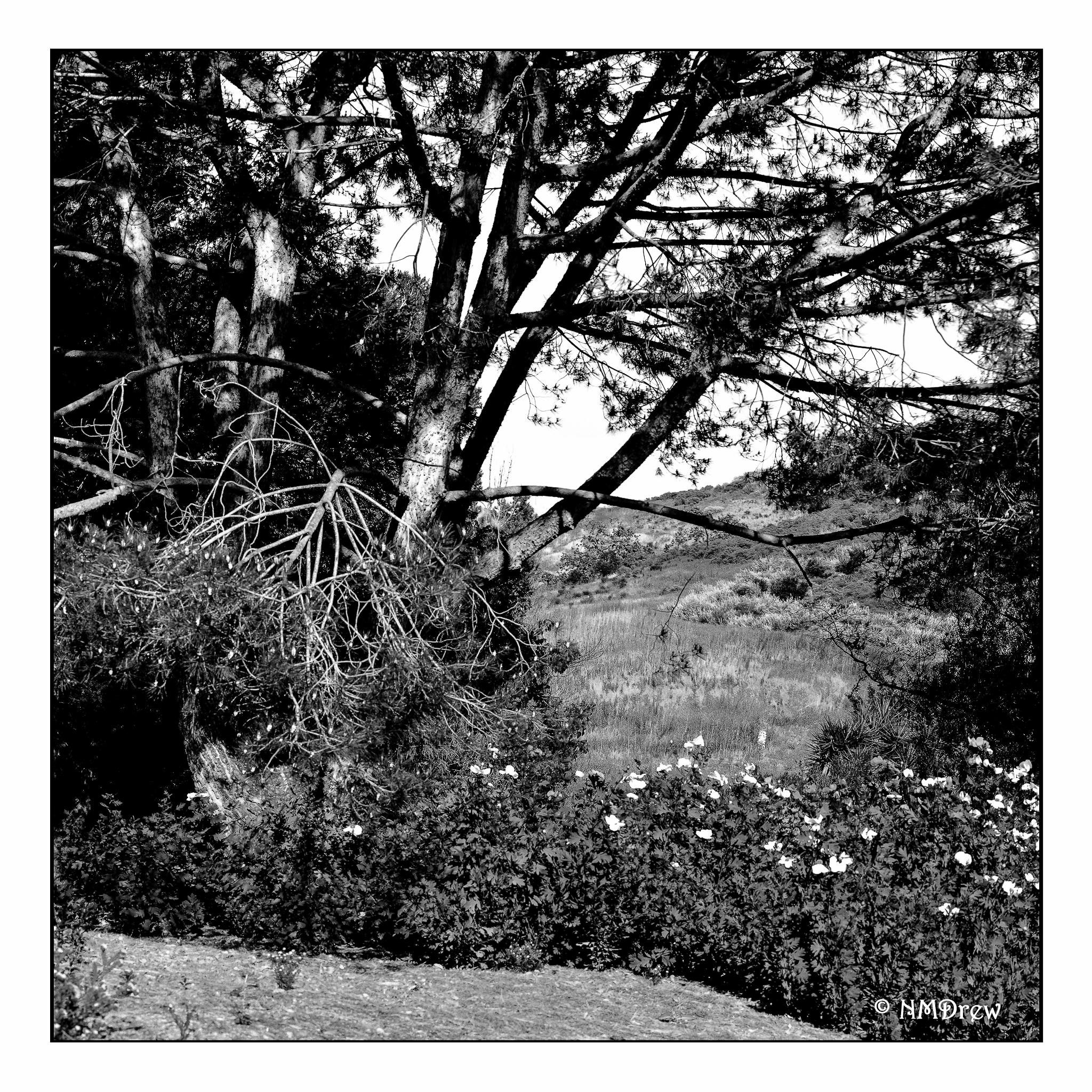
Summer Field

WWM #9: Shadow Play

Today is another gouache, and I will say it is beginning to feel a bit “natural” to be painting in gouache.
Doing all the waves the other day got me in touch with that sensuous quality the paint has when it has a specific texture, as well as the dry brush effect when a bit of scrubbing is needed, and when the paint is very thin. Each requires different ways in which the paint is controlled, by how much water is added, what is below the layer of paint you are adding, and what you anticipate adding later.
One thing I did learn in today’s painting is the value of the hair dryer – I used it so much in this painting, nearly after each layer of paint. This got the paint as dry as it should be and it kept me from working more quickly than is appropriate for gouache. The result was much more pleasing in my opinion and a lot less frustrating.
In painting this window scene, I wanted to accomplish a couple of things. One was a more “painterly” style – a bit looser than say the butterfly of yesterday. The other was to see if I could express the varying light of the shadows as the flowers were buffeted in the breeze. If you think about how shadows move, they flutter, getting lighter at times, getting darker, as the breeze moves the flowers on the sill.
Lilies of the Valley
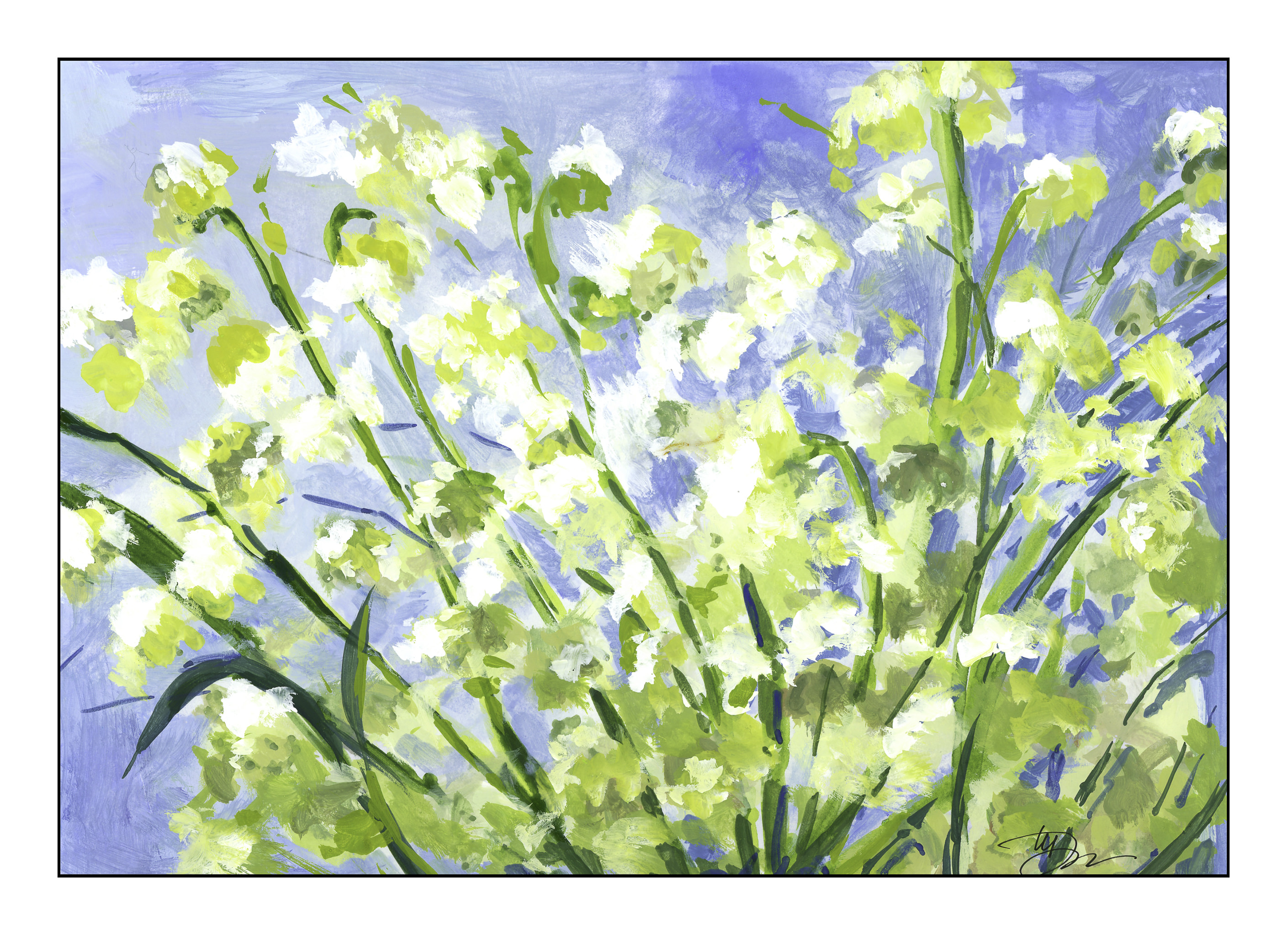
With the plumbers here tearing out the wall in the studio, I took off for a bit of the morning to do some shopping for gym shoes and clothes, pick up an item I ordered awhile ago, and visit a local quilting store. On the way home I picked up some groceries. Usually I like to spend the morning painting, but this afternoon I decided to do some as the plumbers were gone.
Again, I am working with gouache, and finding now that I have a basic understanding of it, I want to use it more and more. What I like about gouache is the fact I can build up layers, and this gives me a lot more control than watercolor – over which you have NO control (you just think you do!). Both are beautiful in their control and lack of control.
Gouache lends itself to a more impressionistic approach to color usage and painting style. That is what I find myself especially drawn to at the present. Precise, accurate paintings, or ones which have a very graphic nature to them, while attractive, just don’t fit into my personality. Here is where being messy is okay! Even better when you can cover up your mess. I like the spontaneity of watercolor and its unpredictable qualities, and I like the painterly quality of gouache.
Today the idea was to just paint. No theme, just play. As I enjoy flowers, I picked a photo from Pixabay of Lilies of the Valley. Color scheme was simple – the usual white and some black or dark blue, but essentially blue, green, yellow, and white, along with complementaries to make greys. I had a lot of fun, and while I can see areas for improvement, there really is no need to as it is practice. And practice is fun if you let it be – so, I am letting it be and enjoying the result.
This was painted using Holbein Artists Gouache (watersoluble, non-acrylic) on Fabriano Hot Press 25% cotton paper.
I even signed it with my real “painters” signature!
Going to Seed


