Skep – A New Hat!

This hat is a simple mosaic stitch pattern, with texture created using purl stitches along with knit and slipped stitches.  Although mosaic knitting looks complicated, it really is not.  The fact is, each knitted round (or round with purl stitches) is done in only one color.  The slipped stitches pull the contrasting color up from the row below.  The biggest challenge in writing up this pattern was actually in translating the written pattern into a charted design.
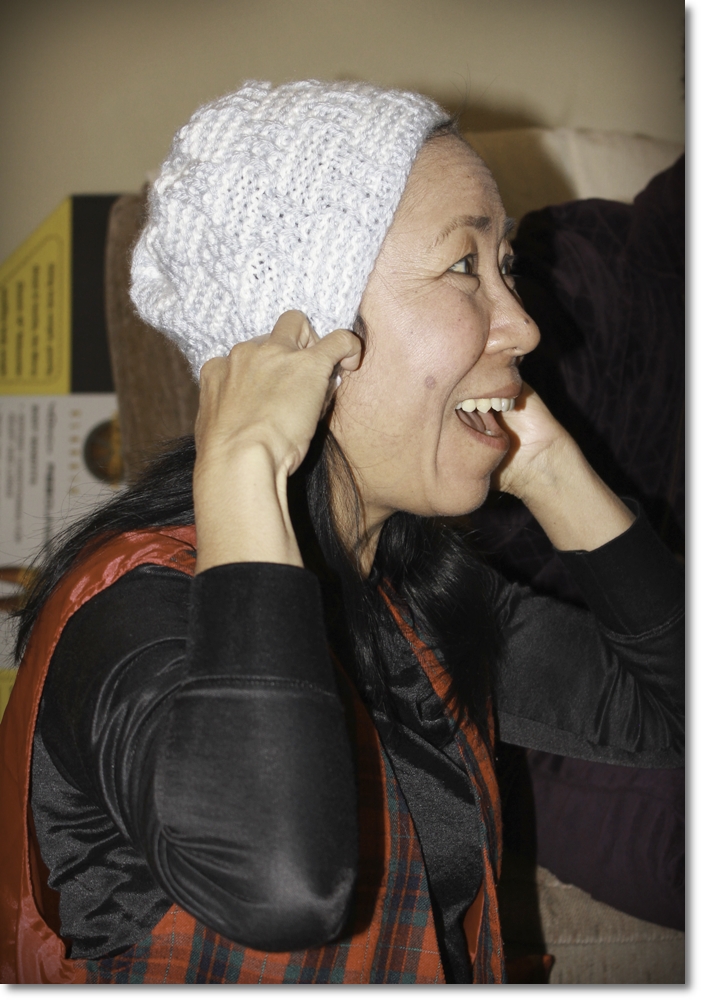
Besides the mosaic pattern, the foundation round of the hat is done in i-cord, invented or unvented by Elizabeth Zimmermann.  This creates an edge that is tidy, but a bit stretchy.  The result is a hat with a snug edge which helps the hat hold its shape.  From the initial i-cord cast on, the first round increases the stitch count, and thence the pattern commences.  You can purchase pattern on Ravelry – follow the link here, or else click on the pattern listing under my “page” column.

Although I did not make the pattern available in different sizes, it would be easy to modify the pattern for a very large head or a child, simply by adding or subtracting repeats.
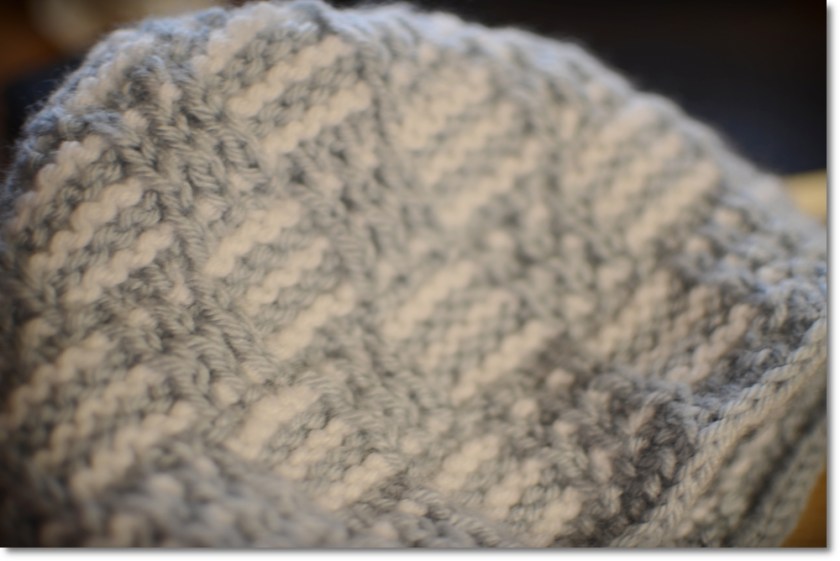
What is a “Skep”?

A skep is an old word for a beehive, made of coiled straw or grass, and shaped into a conical formation.  In the New World, there were no honey bees, and so when the Europeans settled, they brought their bees with them.  The shape and texture of this hat made me think of a skep – thus its name!

Unfortunately, our honey bee population is being challenged by viruses or some other horrible illness, and their number is dwindling.  Add to this, they are mating with African bees, which are known to be very aggressive.  Neither is a good thing.

A Bee Artist

I would like to refer you to a site I really enjoy, Pencil and Leaf, which is the blog of an artist who does wonderful drawings and painting of bees and flowers.  Buzz over to see her fine work.

A Mitten

Stephanie Pearl McPhee’s Cloisonee mitten caught my attention the other day – oodles of bright colors on the cuff – and even though I am in the middle of a few knitting projects, I had to try them out.  The cuff is what makes the mitten, and the fact you can do it in any colors you want, and as long as you want, make it a fun project.  Being a magpie, I flew to it!

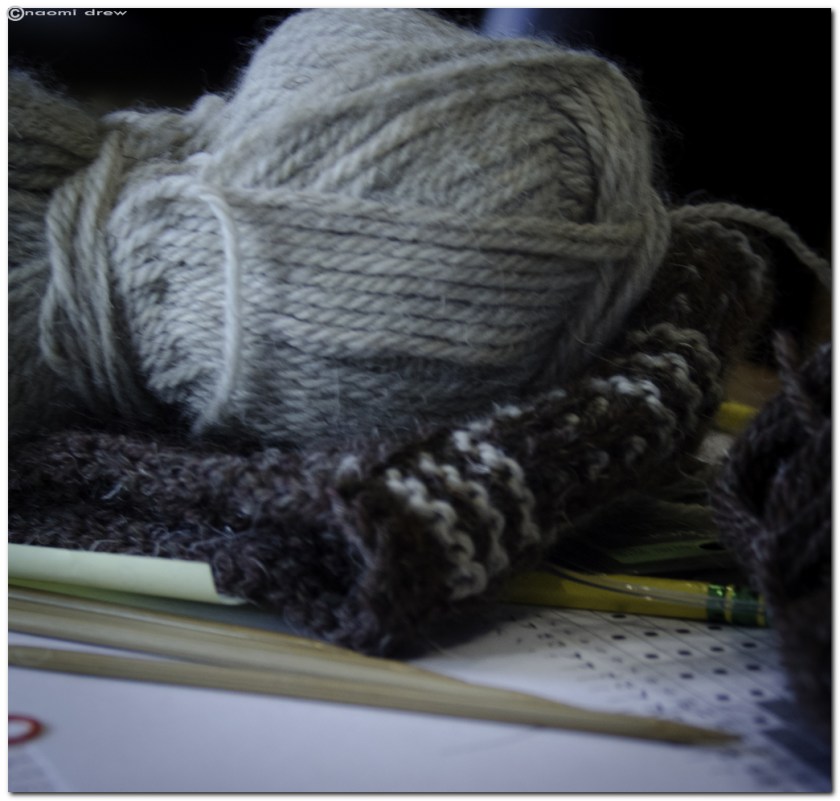
I did change the pattern, though.  I did not have any worsted weight hanging around, but a lot of double knitting weight.  I had some Heilo, some Cowboy Colors, and pushed them together until I found a pleasing arrangement.  My gauge is 6 sts / inch on size 3 needles with this yarn, so I did the largest pattern.  I also want to note that with an increase of 4 sts. after the cuff is done, and picking up only 1 st where the thumb stitches are, the knitter is still left with 44 sts. on the needle (unless I missed something).  As a result, the final decreases, done every 5th st. will not work out.  I picked up another stitch to make the final hand a multiple of 5 stitches – 45.

To Swatch or Not to Swatch

Knitting gauge is individual. Persnicketiness is too.

Admittedly, I am a sloppy knitter because I do not get myself in a tizzy over my knitting. Dropped a stitch? Oh, well. I’ll either latch it up or not with a crochet hook. Missing a stitch? I’ll look for the offender and tie it off if it is way too far down, and add another if necessary. I don’t swatch because I know how I knit. However, for the sweater for Josh, I did swatch, but not for gauge, but for the patterns. How do they look in Brava and how do they look in this color?

A sweater is a big project, and a bit of understanding of a pattern’s texture is more important to me than my gauge. The gauge takes care of itself. What do I mean by that? I mean I have been knitting long enough to know that I knit 4.5 sts / inch with worsted weight yarn on US size 7 needles. I know that massive cables will bring in a big project about 15-20%. I figure about 5% for a lot of stranded knitting. And, because I do not follow patterns except for ideas, I also know that I can change things as I go along – or rip the whole danged thing!

In writing up patterns, I always assume a gauge to be an approximation. For some patterns, it is really important, as in fancy cable work on sweaters and jackets.  If you design your own, then you are the one in control.  If you follow a pattern, you are also the one in control.  Take the time out to see if something might work for you – or not.  Everyone who knits has their own style, their own tensions, and hence, their own gauges. Comments about how hats have turned out “too large” make me wonder if the knitter is willing to analyze their own knitting style, or is caught up with following directions and assuming all will be well.  I have seen knitters who do beautiful work, but fail to consider (or take responsibility for) if their knitting is going to work with a given pattern, and then blame the pattern, not themselves.

Designing anything does require a bit of forethought, as well as a bit of risk. I mentioned in one post about photography that I’d gone to a workshop where the photographer said that no work of art was unplanned. I think that is true – sure, some things are spontaneous and successful, but not all are. Experience, experimentation, frustration, imagination, intention, repetition are all the things which lead to success in any field. Even with all the best intentions, failures can occur; however, I always think that my failure may be a success in someone else’s eye.

Knitting is an activity like any other – running, kayaking, sewing, cooking, painting, writing. It requires some focus, and can give way to that pleasurable automation of the well-trained hand. A quality of “oneness” occurs that is soothing and calming – very zen! The art of knitting is very different from the act of knitting. When it becomes an art, all your knowledge comes into play, at whatever level you are doing it. Granted, the art may be highly pragmatic in results, but it is no less an art, whatever the utilitarian need being met.

So, to swatch or not to swatch? That is up to the individual. For me, I’ll leave it alone unless I need it. I’ll dive in and adapt a bit if I need to because it suits my personality far better. However, to create a pattern with texture – that is akin to painting. How do the colors respond to this or that? How shall I use this new brush? Then I swatch, because until I see the result, I will never know. Small scraps of paper, small textured swatches. Life goes on.

Knitting Day

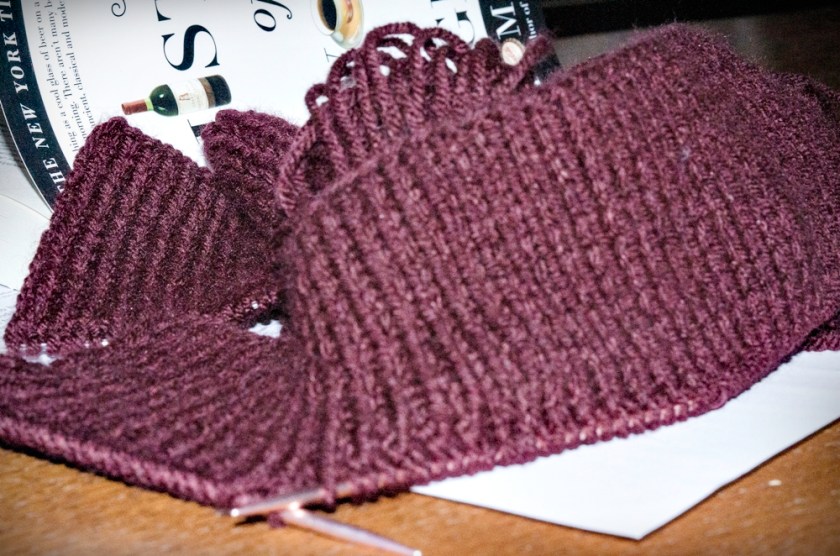
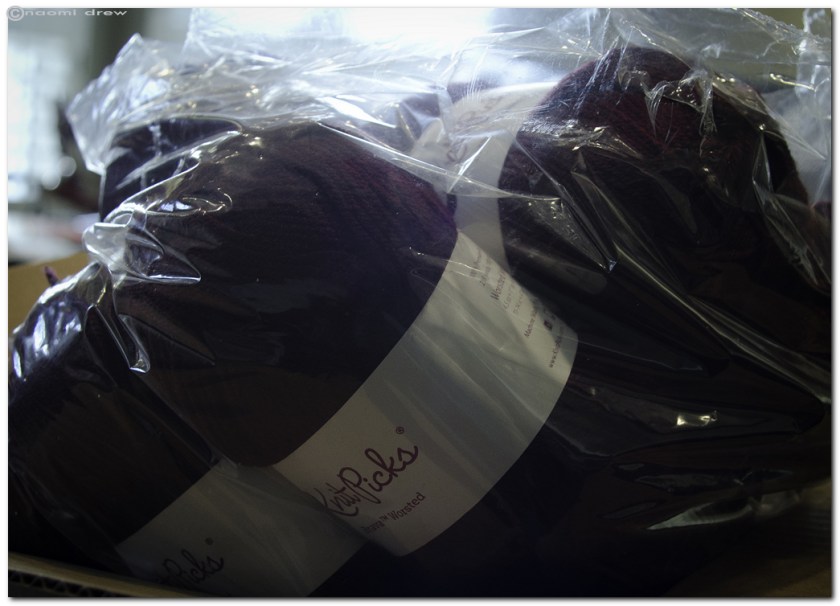
With this being a three day weekend, I’ve actually been “chillin out” quite a bit.  Yesterday, did the grocery run, and then started swatching for a sweater I will be making Josh.  It turns out he is more sensitive to wool, unless it is highly processed, than we thought.  The wool I planned to use was too much for him, which is unfortunate, as it is from a fleece I bought.  Really soft wools are not, in my opinion, meant for an overall sweater with heavy wear, so we decided to check out KnitPicks new line in acrylic, Brava.  We chose the worsted weight.  The package came yesterday, and it is actually pretty nice – soft, good twist, and the color we chose is called “currant” – the shade of dark, red wine.  Texture shows up well, it doesn’t feel plasticky -why do some acrylics just feel so dreadful??? – and hasn’t demonstrated any tendency to split unless I jab a needle into the ply.  Because the yarn is dark, texture and fancy cables are not going to be highly noticeable.  My swatch is rather large, with multiple patterns in it.  I measured it before I threw it in the wash with a couple of towels and a quilt.  I’ll measure it when it comes out of the dryer, check the feel of it, and how it looks.

In other knitting arenas, I have mittens to finish, a hat to write up and possibly a pair of socks, and my own pullover to finish.  Admittedly, like the dogs in Up!, I get easily distracted.  Photography has been taking up a lot of my time this past year, and while it is fun and enjoyable, challenging and a learning experience, there is always something to be said for old friends.  Knitting is one of them.  So is painting.  However, often the drawback to these last two is the fact that they can be too solitary (which I enjoy) and are done indoors.  The photography is great for that, and has gotten me off my tuckus and out in the fresh air.

So the plan for the day, once the bills are done, is to begin designing the sweater Josh has so patiently awaited.  I know what I want to do as far as the overall design, but the final touches are the important element.  I like the idea of texture, but not a lot that will be lost in a dark yarn and end up feeling like a wasted endeavor.  As it is a cardigan, I want a shawl collar.  Not sure about the button situation yet; my inclination is to do a crocheted edge, or an i-cord binding, with loops for buttonholes and toggles.  Pockets may be patch, but I am rather drawn to slash pockets – for these I need to pull out some of my “how to” books, such as the Vogue knitting book, or Montse Stanley, or Deborah Newton.  The entire pattern will be done in one piece, with raglan sleeves, and with as little sewing as possible.

And I will have some company – Jack Reacher is standing by!