A Good Day to Dye

Dyeing Supplies

I have been feeling really all over the map of late – partly because the puppies do require a lot of work, such as walking, training, feeding, kissing, disciplining.  They are coming along fine.  Me, I am in need of sleep.  And a change of pace.

Today is overcast along the California central coast.  We even got a few drops of rain.  I nearly fainted.  The puppies, too, were shocked, because I don’t think they knew what it was.  And because it was dreary, what better way to pass some time than dyeing some yarn?

I have powdered dyes which I use; however, I need more colors in my palette as all are toward violets and teals.  There is a black and a lime green and a red, but really, not enough for a bigger variety of color choice.  I think I will order some new colors soon.

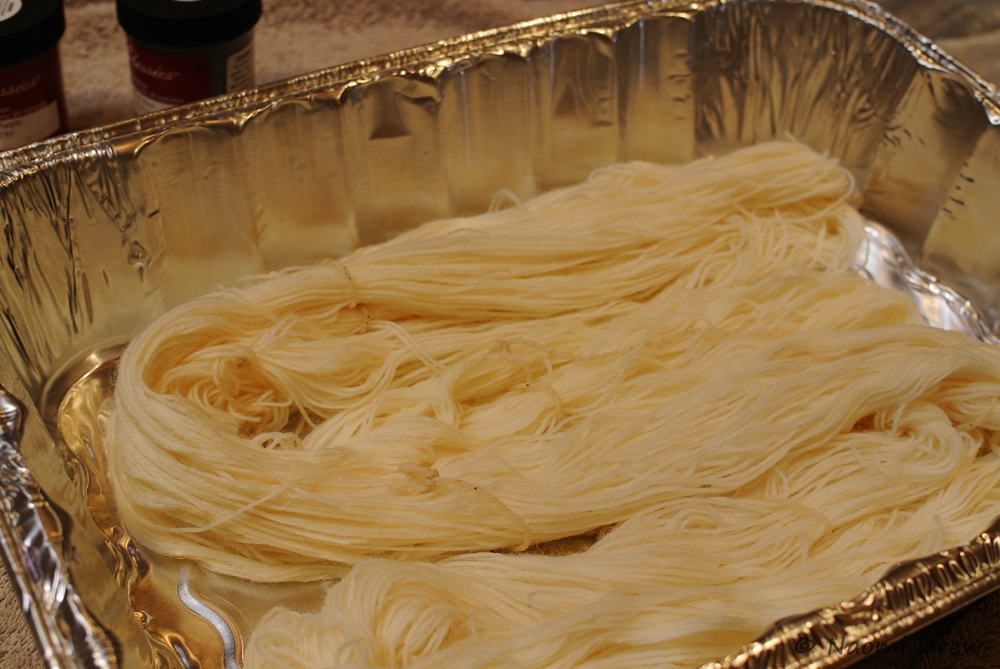
Anyway, I dug out my supplies – a couple of boxes of stuff dedicated to dyeing.  Nothing that is eaten out of is used in the process.  Pots, wooden spoons, steamers, pitchers, whatever.  I had some Bare Hare, an angora-merino blend from KnitPicks, along with their merino-silk blend.  I also had two balls of Lion’s “Sockease,” which is 75% wool and 25% nylon.

Yarn in Aluminum Pan

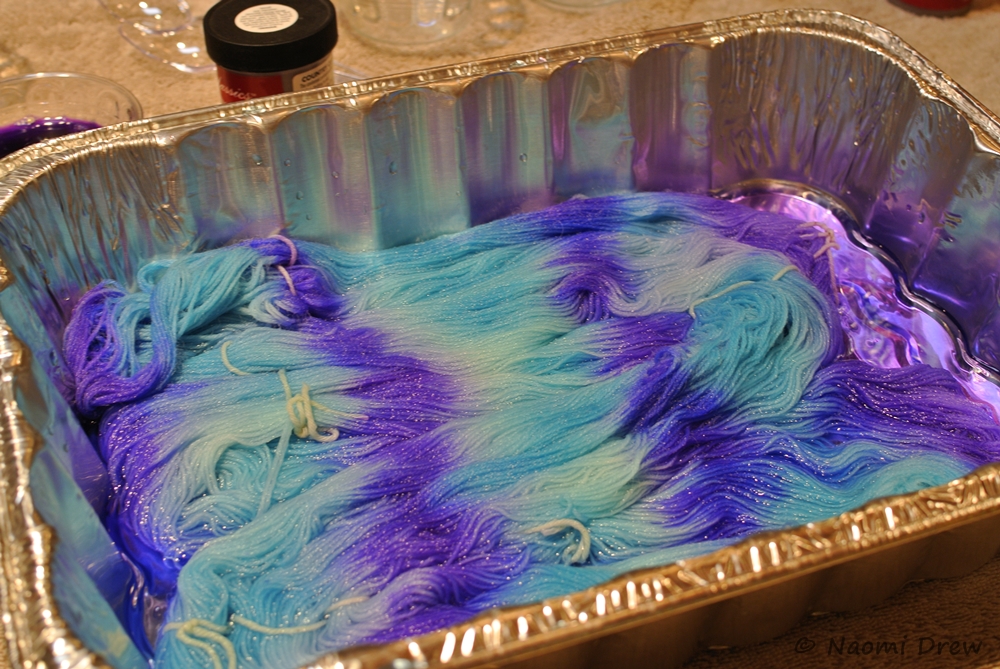
Stripes

The process of dyeing this yarn was quite simple.  In little plastic bowls, some dye powder, add boiling water, stir, and use a 60cc syringe to deliver the colors in stripes.  I poured some hot water between the stripes and patted the yarn to blend the colors, wearing, of course, my stylish blue nitrile gloves.

_DSC5188

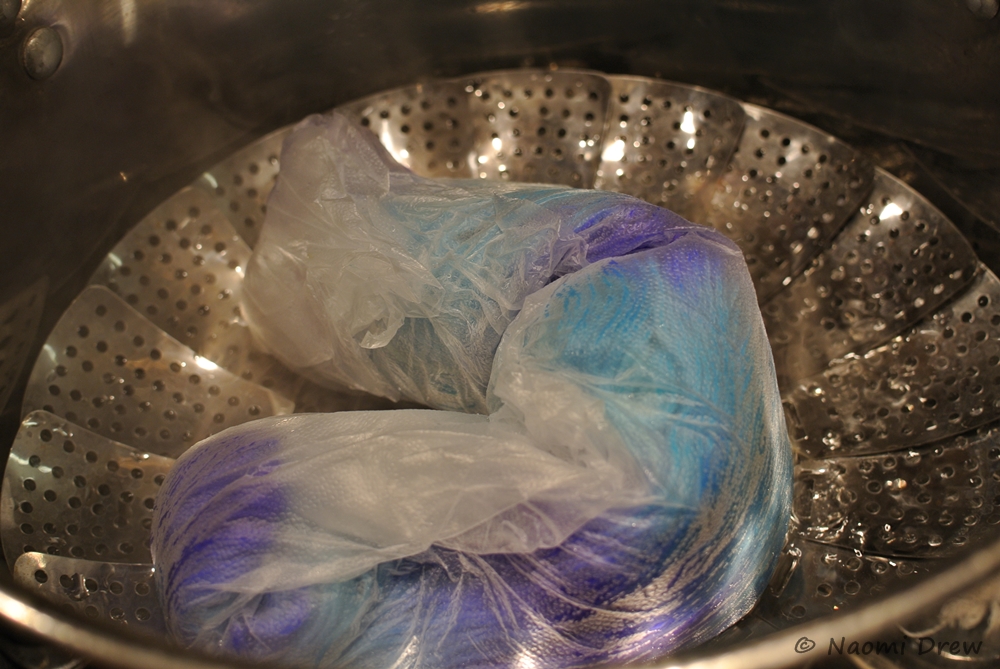
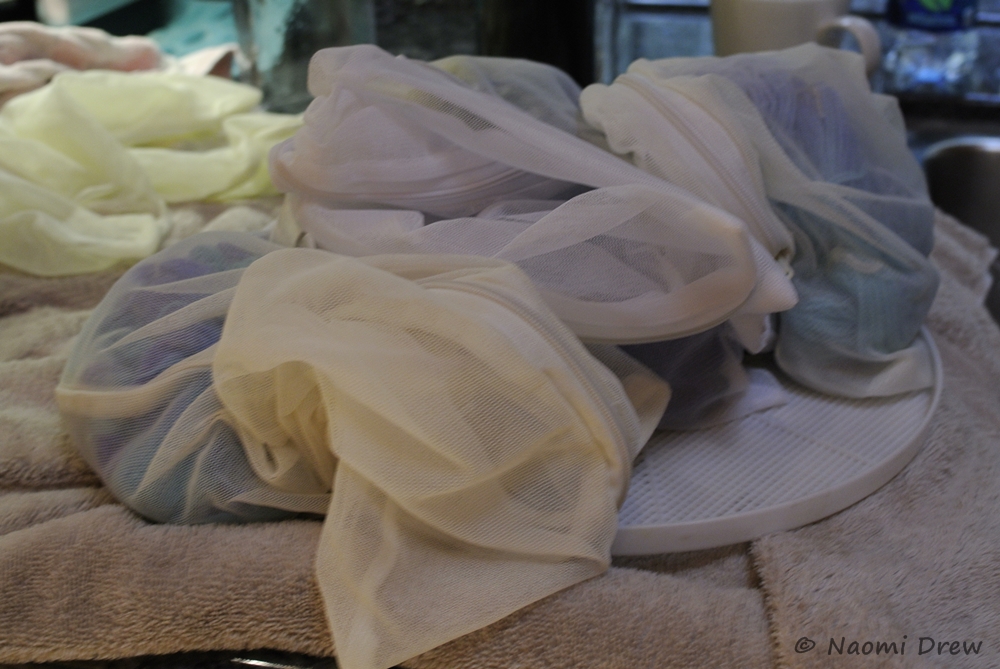
I wrapped the skeins up in plastic wrap, placed them on vegetable steamers in the boiling pots of water (water is just above the level of the steamer), and let them go to town for 30 minutes.  Then, dump onto a towel, take apart the plastic wrap, and dump the yarns into a water-vinegar rinse to cool and set the dye.  Lots of dumping.

Once that is done, put them into cool, soapy water, wash, and rinse.  You can spin them out in your washing machine, but place the skeins in lingerie bags.

_DSC5199

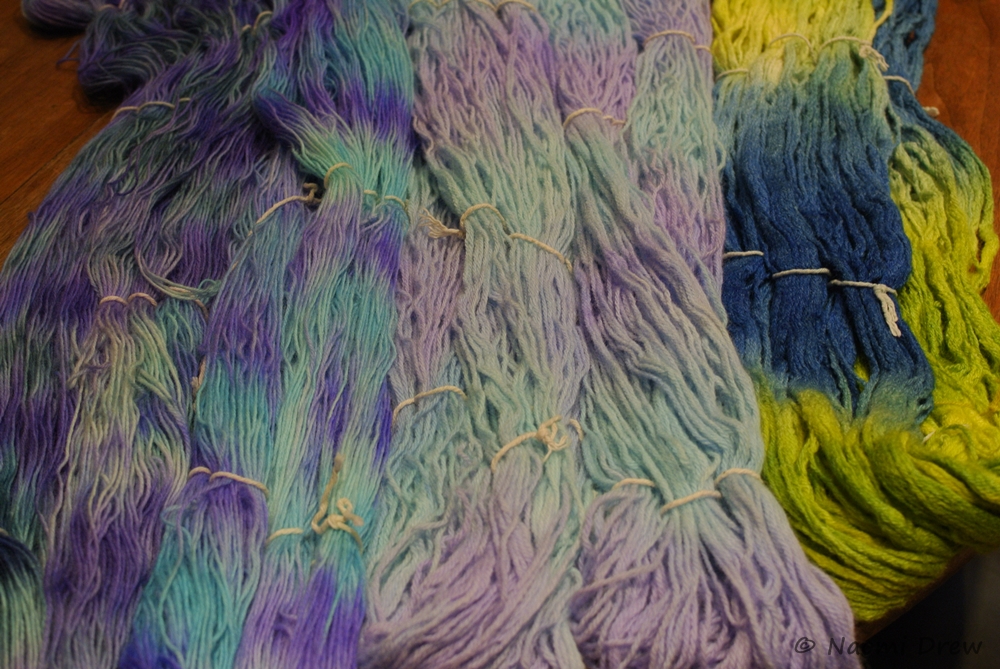
The picture below is really bad. All the colors are actually fairly nice. And mostly violets and turquoises . . .

_DSC5204

Arachne Mittens – Finished at Last!

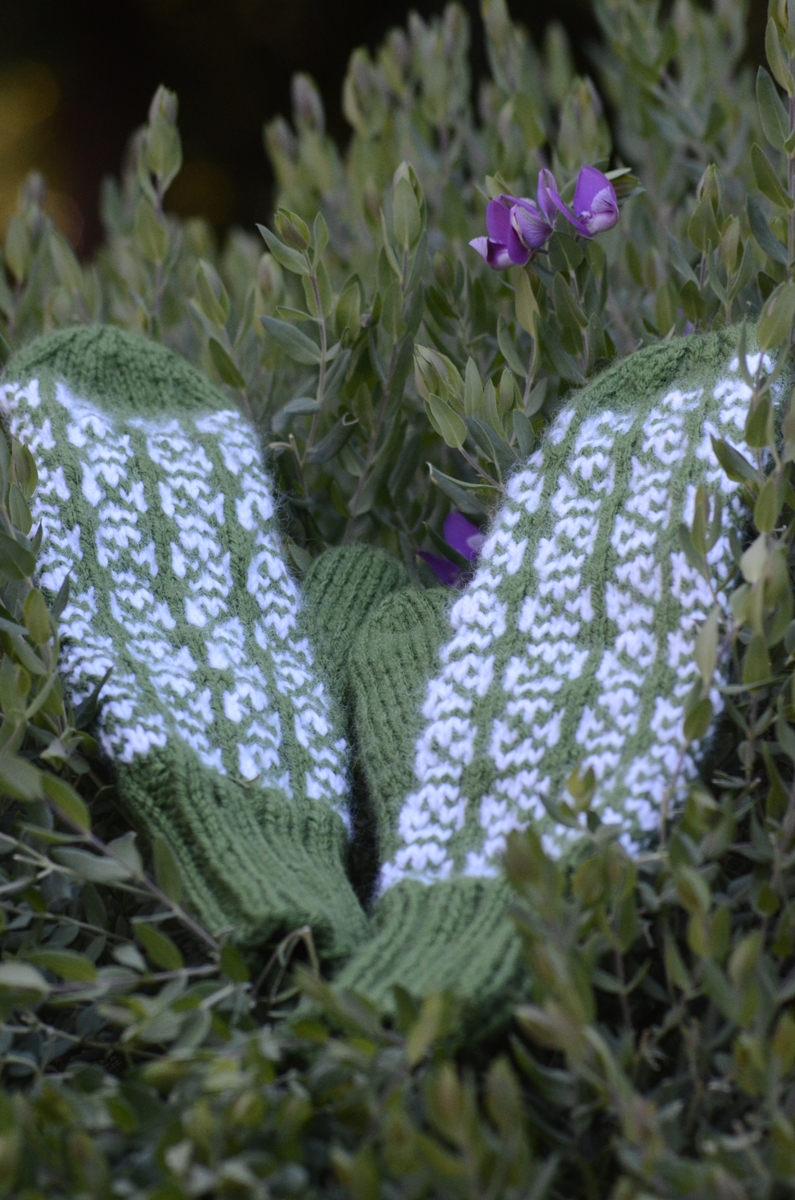
I designed these mittens last winter, in February. I finally completed the pattern – it’s nice to have some time off to finish things! Also, I admit, sitting in front of the computer to learn photography software is quite a drag, and very frustrating . . . so I pulled out the needles, and have begun to knit again.

I wanted to have solid-colored thumbs on these mittens, and practice carrying long floats at the same time.  It took a bit, and I learned, too, the need to randomize the stranding on the thumbs.  When I didn’t, the yarn got stacked up in rows, and affected the final design.  If you look closely at the picture, I did a boo-boo when I took the picture – you can see the thumb is rather puckered.  The second mitten is much nicer.

Camouflaged!

The pattern is not too hard to follow, and but for beginners, the stranding may be a bit of a challenge.  The carried yarn makes for warm mittens, and if you start now, you could have a pair for yourself – or a loved one!  – in time for the December holidays.  (Shameless plug, huh . . . )

If you are interested in buying the pattern, you can find them under “My Patterns” page, or find them here on Ravelry.  Cost is $4.00.

Spring . . .

Nothing like cold weather to make you want to be warm, but nothing beats that first hint of spring in the air.  The wind changes, the buds swell, leaves from crocus, tulip, and hyacinth emerge through the crusty snow.  In a drab winter world, that brilliant green is a visual excitement.

Soon, a new pattern will emerge here.  It is being written up over the next few days.

Skep – A New Hat!

This hat is a simple mosaic stitch pattern, with texture created using purl stitches along with knit and slipped stitches.  Although mosaic knitting looks complicated, it really is not.  The fact is, each knitted round (or round with purl stitches) is done in only one color.  The slipped stitches pull the contrasting color up from the row below.  The biggest challenge in writing up this pattern was actually in translating the written pattern into a charted design.

Besides the mosaic pattern, the foundation round of the hat is done in i-cord, invented or unvented by Elizabeth Zimmermann.  This creates an edge that is tidy, but a bit stretchy.  The result is a hat with a snug edge which helps the hat hold its shape.  From the initial i-cord cast on, the first round increases the stitch count, and thence the pattern commences.  You can purchase pattern on Ravelry – follow the link here, or else click on the pattern listing under my “page” column.

Although I did not make the pattern available in different sizes, it would be easy to modify the pattern for a very large head or a child, simply by adding or subtracting repeats.

What is a “Skep”?

A skep is an old word for a beehive, made of coiled straw or grass, and shaped into a conical formation.  In the New World, there were no honey bees, and so when the Europeans settled, they brought their bees with them.  The shape and texture of this hat made me think of a skep – thus its name!

Unfortunately, our honey bee population is being challenged by viruses or some other horrible illness, and their number is dwindling.  Add to this, they are mating with African bees, which are known to be very aggressive.  Neither is a good thing.

A Bee Artist

I would like to refer you to a site I really enjoy, Pencil and Leaf, which is the blog of an artist who does wonderful drawings and painting of bees and flowers.  Buzz over to see her fine work.