Light Industry, with Nil Rocha

I did another study, using a video produced by Nil Rocha.  As you can see, he has a style similar to Peter Sheeler – and a lot of other urban sketchers:  ink and watercolor.  Although it looks easy, it is deceptive.  It is far more difficult to achieve a good contrast study, meaning, a good light-dark balance.  I found that out with yesterday’s study with Peter Sheeler, and especially with this one.  I think I need to work out the values before I begin inking in lines.  Blah is far too easy to achieve!
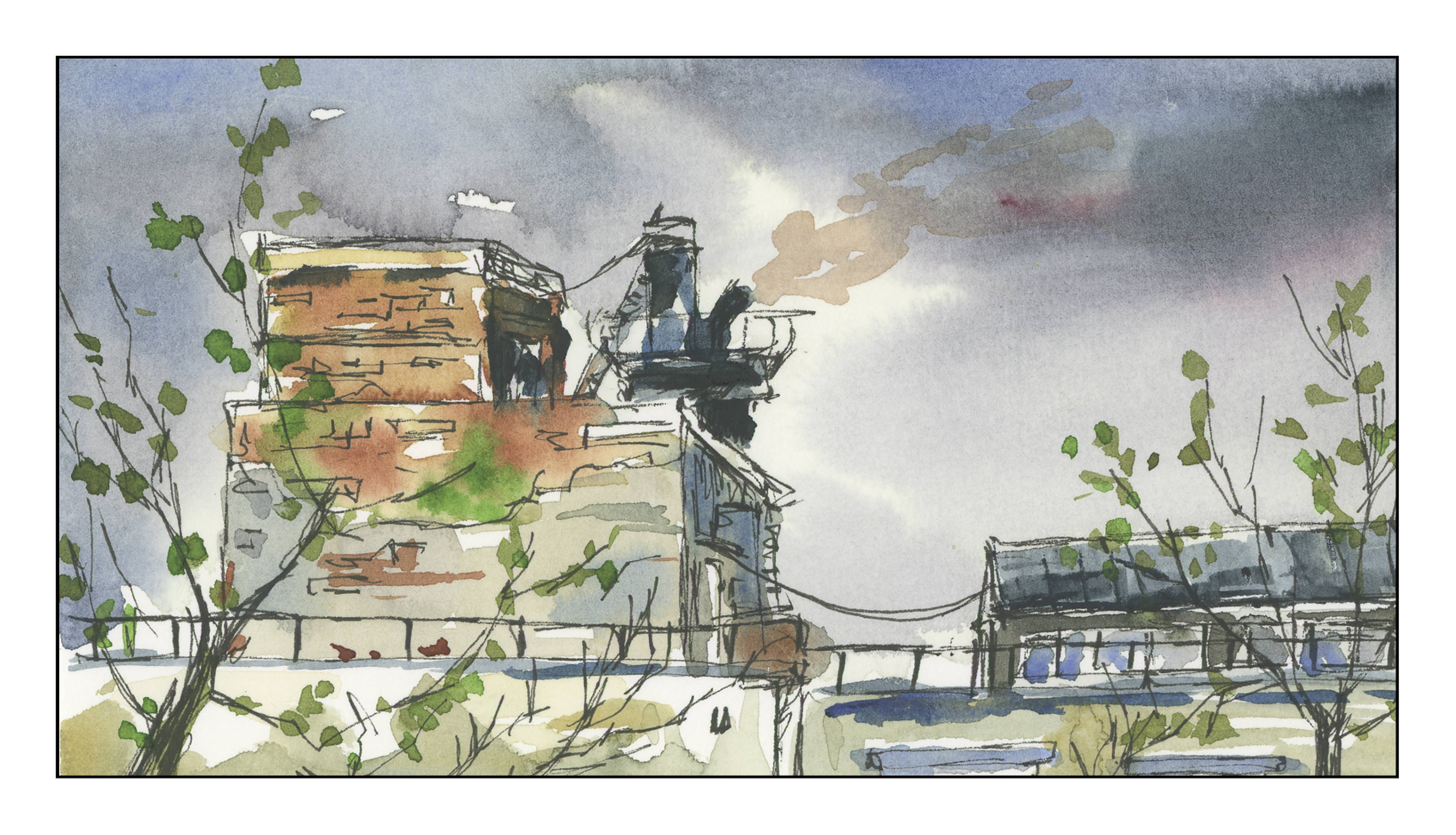
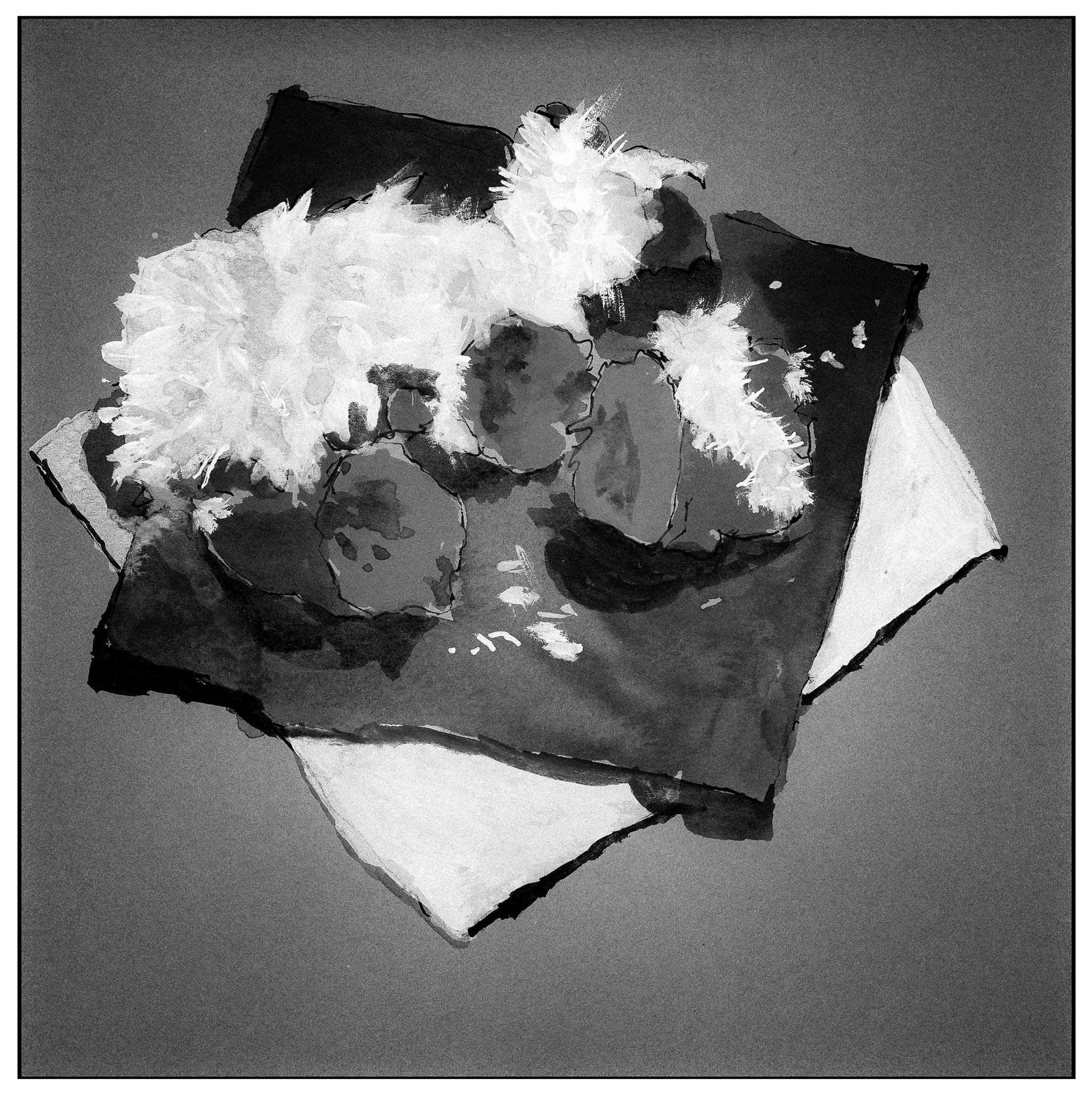
Above, in color.  Below, converted to black and white in Lightroom to check out contrast.  Sadly lacking!
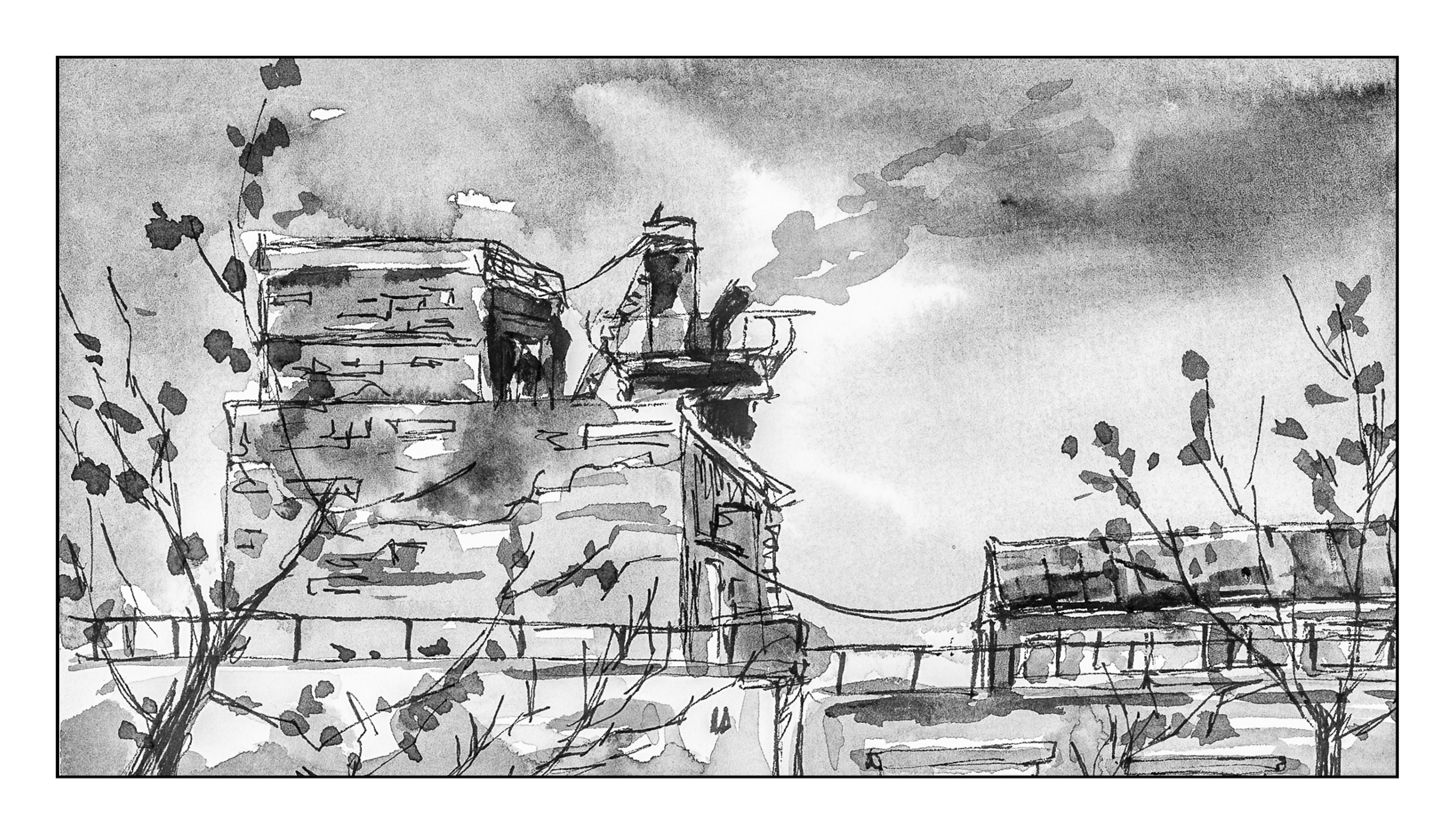
I’ve had a cold for the past week and it’s really hard to get creative with sniffles and a fever!  Following videos is a good way to learn, but more importantly they have helped me realize that I must push, push, push to show good contrast.  Middle tones are easy to create, as are lighter ones, but getting the truly dark ones is far more challenging for me than seems logical.  Something to think about . . .
Palm Tree in Hawaii, with Peter Sheeler

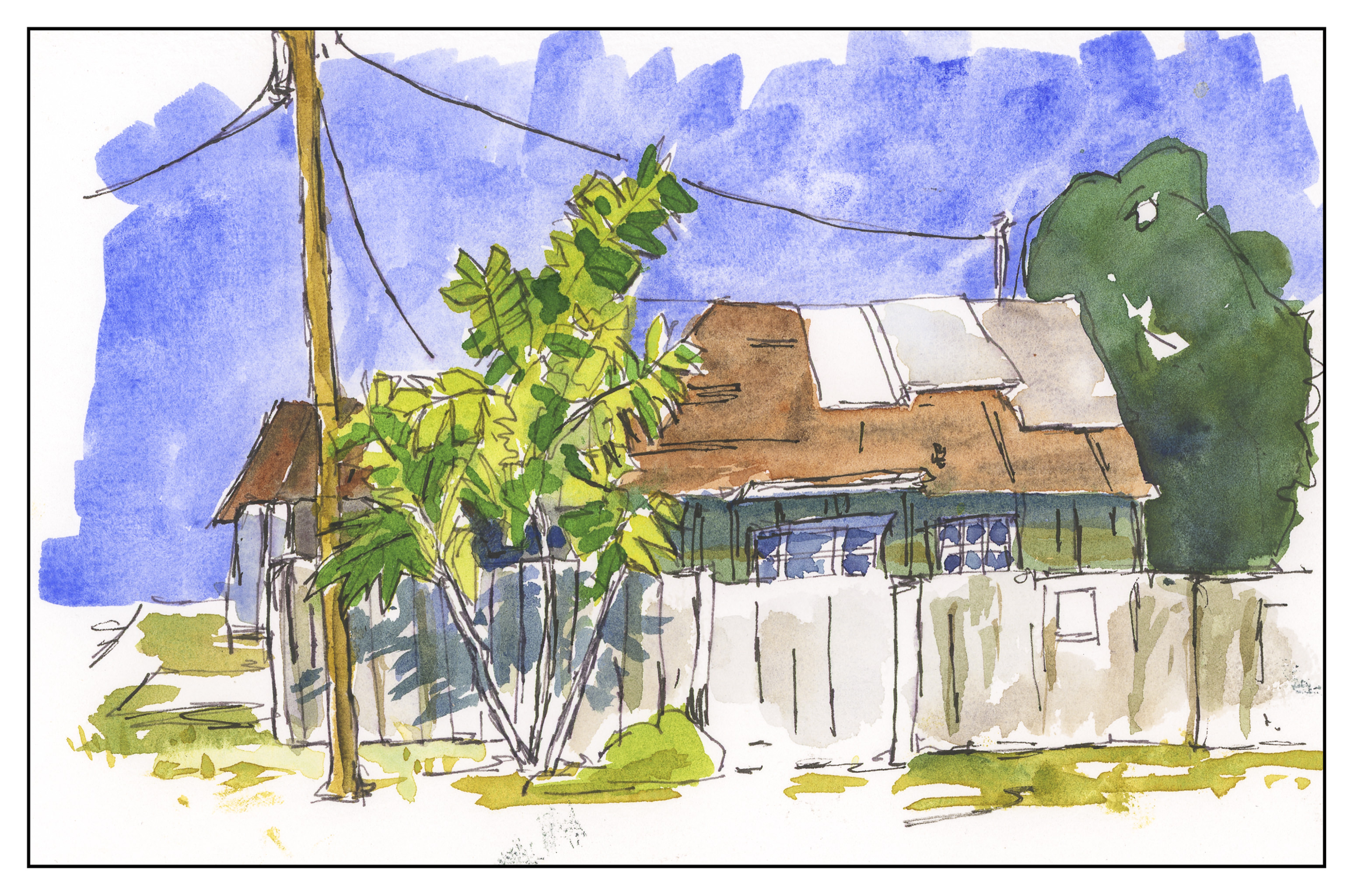
Peter Sheeler does it again – another video to learn from.  This is from Hawaii, and as Peter notes in his video, he has never in his life drawn a palm tree.  I actually think this might be a banana tree – we use them as decorations in my neighborhood.  This doesn’t matter, though; Peter’s mastery is what I wanted to learn from.  My take below.

My contrast is nowhere as attractive as Peter’s.  I am a bit more muddied.  Part of it is because I am not using either Sap or Hooker’s Green, both which I prefer to Viridian, which is part of the palette I pulled out to use.  My own preference is Hooker’s, as it is a wonderful green to add yellow or blue, for brightening or darkening.

Another comment, this is some of the Bee 6×9 paper I bought.  A bit of a sizing issue seemed to be “felt” in a couple of spots on the paper.  Still, for quick studies, I am not faulting the paper at all – I have been enjoying using it.

Watercolor Workshop, Day 3

Today was the last day of the workshop with Brenda Swenson.  She is a fabulous teacher who takes time with her students, with a personal quality that is positive and constructive.  I learned a lot from three days immersed in watercolor, and I think I turned a corner in how I handle color.  Besides being a good teacher – meaning her critiques and advice are sound – she also opened my eyes to a number of different things.

One lesson:  paint the same item 6 different ways.

Another lesson:  Use Canson pastel paper for painting!  The colors are good, the paper is 70% cottong, and those two things work well together.  Brenda brought in donuts for our first project.  Mine is below.

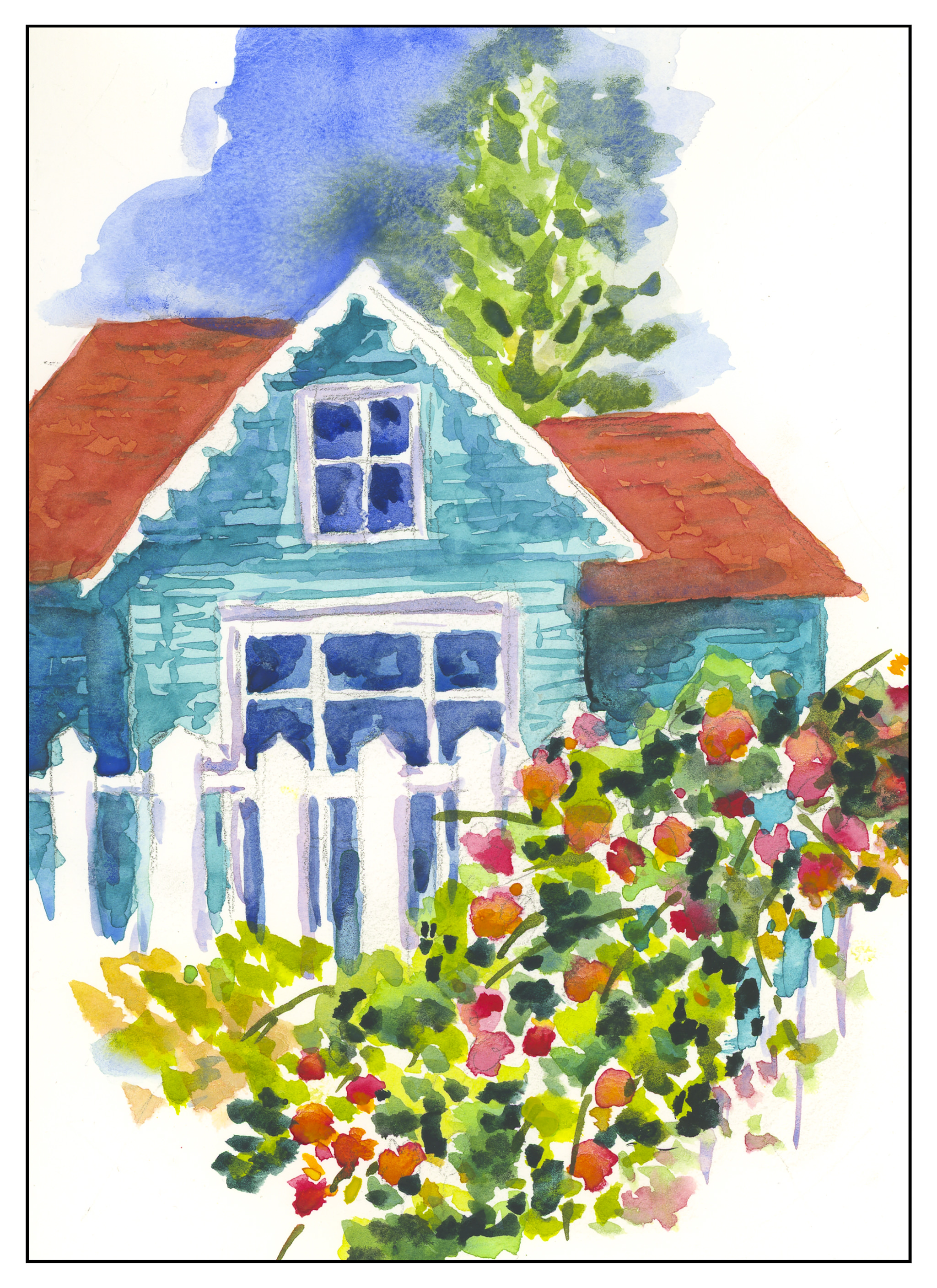
For the remainder of the day, we worked on vignettes.  I knew that vignettes were little images with white surrounding them.  So?  Well, it turns out that there is a real art to vignettes.  Making the image cruciform – in the shape of a cross – with portions of the painting touching the top, bottom, and sides (1 or all 4), but not flowing into the corners, makes for a vignette.  Key to an interesting picture is that each shape is in each corner is different than the others; additionally, work some of the white of the corners into the painting itself.  I was surprised to find myself rather calm today, rather than flighty and unfocused like yesterday.

Mine worked out fairly well.  A valid criticism was to make the lower windows somewhat greenish and warm, rather than a cold blue, to reflect the light of the unseen grass in the yard.  A glaze was suggested.

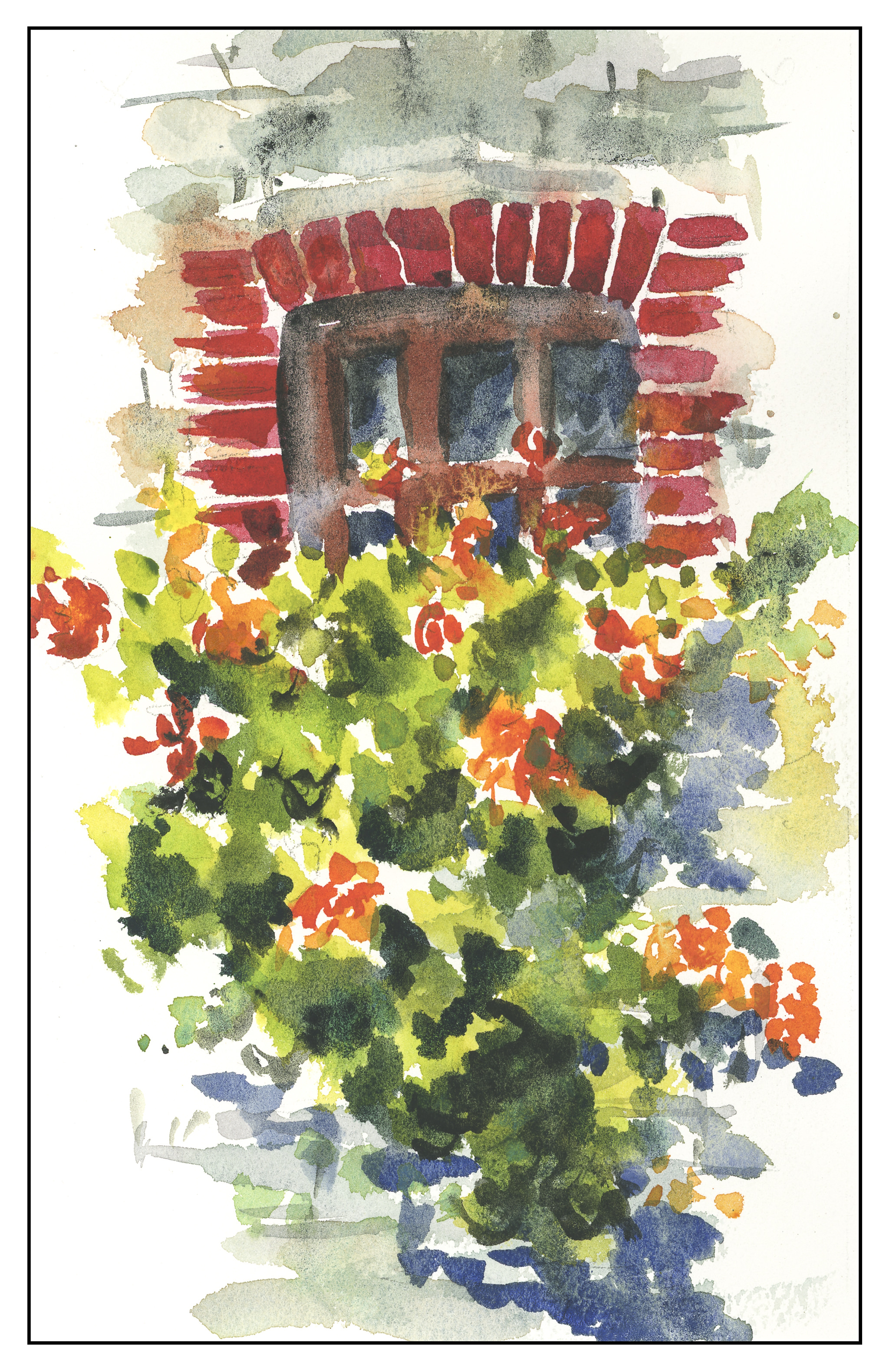
My second painting was supposed to be a vignette, but failed on the middle side portions.  I may go back in to fix it later.

Brenda provided all of us with incredible photos from her travels to use in the workshop, which in addition to unique items like plastic frogs and pecks of fake fruit, made for a really good experience.  My weekend was only too short!