Slow Down

Last Wednesday, our little photo group met up to shoot a sunset. Ā The initial place we met was rather uninteresting, so we drove up the hill in search of a different spot. Ā A good decision.

We were up above the Simi Valley, and had expansive views in all directions. Ā To the north, the mountains and plains caught the rays from the setting sun. Ā To the south, the busy 101 provided light trails to contrast the twinkling of the city lights. Ā To the east, Santa Susana Pass gave light trails if the exposure was long enough. Ā To the west, the sun was setting, and spread out over the land, sculpting hills and fields, casting long shadows on rocks. Ā Where we were also had some trails, old oak trees, rocks, and fences – what this area must have looked like before the building booms of the 60s began.

I packed the Tamron 17-50mm lens, which is great for general and landscape photography, the Tamron 70-300mm, and the Kiron 30-80mm varifocal. Ā The final and only lens used was the Kiron lens, which is a manual focus lens from the 1980s. Ā All my exposures were manual, from f/stop to aperture to focus. Ā What I should have brought along was my flash – I had misplaced my remote for it, so the flash stayed at home. Ā I could have used it for lighting the foreground Ā in some shots.

Doing a total shoot without depending on any technology except my eye and what the camera says is a good exposure is stepping back in time. Ā I really enjoyed the slowness, and the fact I needed to consider so many elements. Ā In the forefront of my mind were a few major elements: Ā composition and placement of focal points and areas of interest. Ā In each frame, I tried to look at everything in the lens, moving from corner to corner, observing shadows, light spots, lines in the landscape, perspective. Ā  It is not really hard to do, per se, but it is hard to do it quickly. Ā Becoming conscious of these bits and pieces eventually develops habits and trains the eye and mind; in turn, this will work in my favor as I continue this practice. Ā I can imagine this will work in quick-changing situations – having an eye to anticipate and prepare.

Above you can see the evolution of the final picture. Ā The very top one is a jpg, straight out of the camera. Ā The middle one is with some push of the color. Ā The sky was really quite lovely, and in retrospect, maybe I will go in and re-do the picture to keep that cerulean, rather than the ultramarine sky of the bottom picture.

Anyway, I couldn’t figure out why the middle picture kept bugging me, and then I looked again, and saw that the bright yellow spot in the middle tilted down, toward the right – it just wasn’t level. Ā In Lightroom, I rotated the picture ever so slightly, and was much happier. Ā In the bottom, final image, I pushed the yellows and the greens and used the gradated filter in LR, as well as used Viveza 2 to create a bit more zing in different areas. Ā I eliminated the spots (on the lens or the sensor – need to check) in the sky using Photoshop, and then Faststone and Photoscape for resizing, framing, and signature.

Compositionally, the lines and the light is what caught my eye. Ā The warmth of the sun on the slopes, along with their curvy lines was a nice contrast to the diagonals of the fore and middle ground. Ā The verticals of the weeds in the very front of the picture played nicely against curves and diagonals. Ā I think this is why the downward angle of the middle picture bugged me – the horizontal wasn’t there, and it is in the final image. Ā Instead, it is also a diagonal, and was one diagonal too many.

I am not displeased with this picture. Ā In post-processing the goal was to re-create the golden cast of the sunset on everything – that evanescent glow never stops fascinating me. Ā My hope is that the image does not look fake – but it could, depending on the monitor.

The above image is the middle one in the grouping above, straightened, and post-processed pushing the warmth of greens, yellows, and oranges. Ā Once more, sky spots removed. Ā Then framing and signature added.

And, I just realized now why having an electronic photo frame is not a bad idea! Ā Just a photo album in a different format. Ā Maybe I’ll go buy one . . .
Focus Stacking

A new adventure into photography – focus stacking. Ā The purpose of stacking photos is to create one very sharp and detailed image from many. Ā There is a lot of software out there, free and pay-for. Ā I am playing with CS5 and Helicon Focus.

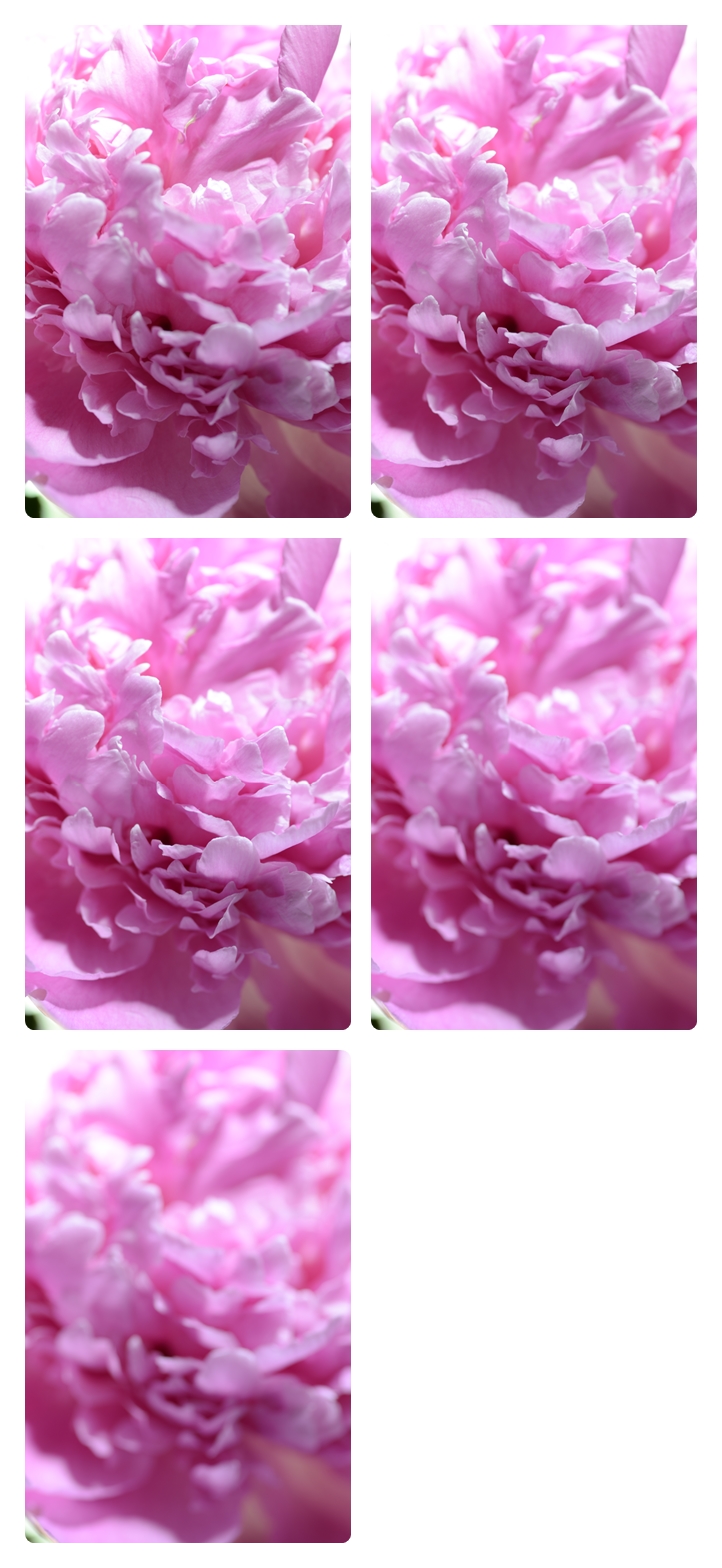
To do stacking, you need a tripod, and a steady object. Ā  I am using a peony in a vase. Ā Then what is done is to take multiple images, and focus on different parts of the object, taking multiple images. Ā This means that the focus moves through the object at different points, so what is now in focus becomes out of focus, until you have moved from front-to-back or back-to-front. Ā From all the images a final one will be produced.

This first attempt is with just 5 images, which you can see in the combination picture below:

These images were both merged into a single file, as you can see below. Ā The one on the left is using CS5, and the one on the right is using Helicon Focus.

The next one I did shooting 16 different pictures, close in, and using the macro capabilities of the Tokina 100mm macro lens (which I used for the above images, as well). Ā You can see the different pictures below:

I focused from front to back. Ā In CS5, the software got itself into a tizzy when I did all 16 – which are 16 MB jpgs, so they are pretty big. Ā So, I used only 10 or 11 of them, and got this result:

The ragged edge in the above picture shows you how CS5 works by aligning sharp edges with one another. Ā Below is the image generated by Helicon, using all 16 images:

Below you can see the result of only using 10 images with CS5 on the left below, and all 16 images with Helicon on the right:

The result is rather interesting – using only a few of the pictures for the CS5 stack, there is a nice sense of depth because the upper part of the picture is out of focus. Ā The Helicon picture ustilises all 16 images, but because the upper image is not blurred, the sense of depth is lacking – or else it shows that there are even more petals in the flower as we move along.

As this is my first attempt to do this, I don’t have much of an opinion about the final product. Ā I own CS5, but have a 30 day trial running with the Helicon. Ā The CS5 will require cropping, which is not a big deal, but the Helicon produces a very clean, elegant product. Ā And, the Helicon is very easy to use as it is a software specific for stacking.

A Pie!

There is nothing in the world of sweets that pleases me more than a fresh pie. Ā It’s work, and it is seasonal, but pie made with fresh fruit is always my idea of heaven. Ā So, for the long weekend, the pie is – as many others are making – Strawberry Rhubarb Pie. Ā This pie needs to be carefully balanced between sweet and sour, so if you are making it from scratch with a whatever-goes mentality, best to taste it before you bake it. Ā (Isn’t that another reason to bake – to eat raw dough and taste-test the ingredients?)

Method

Preheat oven to 450 F.

Pie Crust
for a 9-inch pan

2 1/2 c. flour
2 sticks (1 lb.) sweet butter, chilled and cut into 1/2 inch cubes
1/2 tsp. salt
6-8 T. ice water

Pour a cup of water into a vessel; add ice cubes. Do this before you begin the crust.

Cut together flour, butter, and salt until resembles coarse corn meal. Add 3-4 T. water, blend in gently with fork. Add another 2 T. water; blend some more. If it begins to stick together when you mash it together, you are probably ready to roll it out. If not, add another T. of ice water, gradually, testing the dough, which should stick together. Divide dough into two balls, making one slightly larger than the other.

Roll out the larger of the two dough balls onto a floured board, turning as necessary. Roll out until about 4 inches larger than pan diameter. Place dough into pie pan; drape carefully into pan to make sure dough is not stretched. Trim ends to about 1 1/2 inches outside of pan.

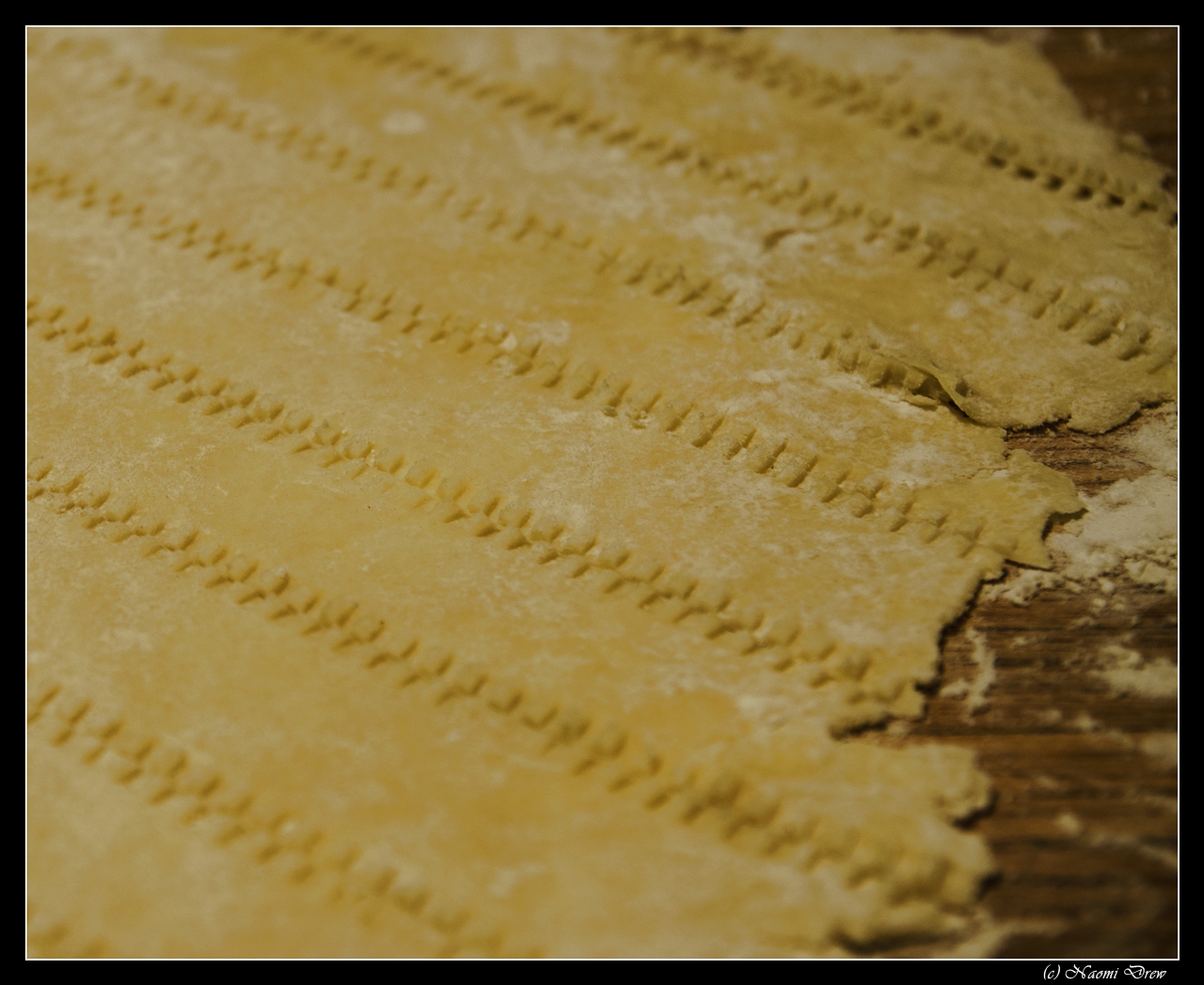
Roll out second ball for upper crust. If you want a lattice crust, cut strips about 1 inch wide. On a piece of waxed paper, assemble latticework. Cover with another piece of waxed paper. Refrigerate until ready to place on top of pie. If you want a plain crust, roll out until it measures about 2 inches larger than pan diameter on all sides.

It is not uncommon to have to patch a pie crust, and the lattice is no different. Ā For the crust, take a trimmed slice of pie dough, dampen it with water on one side, and place it like a tire patch over the part of the crust that needs to be repaired. Ā That area should also have a few pats of water on it. Ā Press to seal. Ā In the area of the lattice, if a strip breaks, or is too short, do not hesitate to repair it as for the bottom crust, but to make it look nice, hide the broken strip under an upper strip.

Strawberry Rhubarb Pie Filling

3 T. brown sugar
1/3 c. white sugar
1/2 c. water
3 c. diced rhubarb stems
2 lbs. fresh strawberries, cleaned and sliced
2-4 T. tapioca
Mace, just a pinch of fresh
Juice of 1 lemon
More white sugar to taste

Combine together two sugars and water in a sautee pan. Bring to simmer until sugars are dissolved. Add chopped rhubarb, and cook slowly for a few minutes. Remove rhubarb from pan, saving syrup and returning to sautee pan, and mix in with fresh strawberries. Sprinkle tapioca into syrup. Simmer tapioca about 5 minutes, letting water evaporate a little bit from pan. Ā If you like a bit of juice with your pie, use less tapioca, and use more if you like your pie to stick together. Ā Taste (cool it a bit!) the syrup, and adjust using the juice of the lemon, and adding extra sugar to taste. When you like the taste, pour syrup over strawberry-rhubarb mixture. Sprinkle a bit of mace onto pie. (I like it plain, or with just a hint of mace – not much as the pie itself is so good!)

Pour fruit mixture into pie pan lined with dough. Cover with second crust, cutting slits into crust if you have not made a lattice; this allows steam to escape. Brush top crust with a egg yolk-water mixture, or an egg white-water mixture, or leave plain.

Bake the Pie!

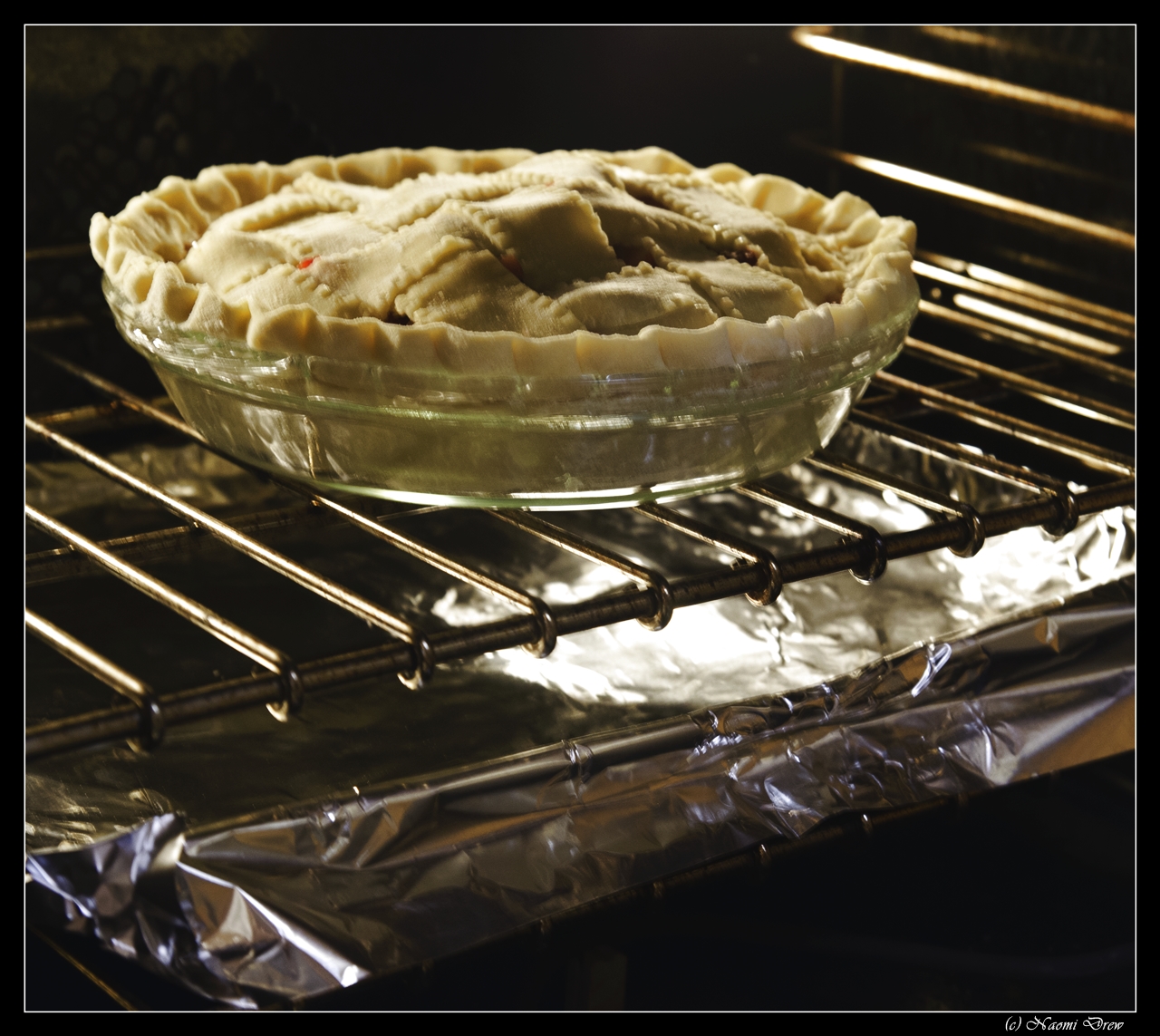
Make sure oven racks are placed with one on bottom rack, and another in middle of oven. Line a cookie sheet with foil and place on bottom rack. Place pie on middle rack. Bake at 450 F for 10 minutes and then lower temperature to 350 F, and bake another 50-60 minutes until juices are bubbling and crust is golden. Ā Cool on wire rack, or let cool in oven if really drippy.

When you are ready to remove the pie from the oven, get another pair of hands. Ā My husband carried the pie, and I followed underneath, with a wire rack crossing the foil-covered cookie sheet, to prevent goo from getting on the floor.

Serve with cream, ice cream, or just pie itself.

Lemon Verbena Cake

I have a beautiful lemon verbena bush in a pot on the patio, and each time it blooms I think I need to do something with it. Ā For some reason, lemon verbena pound cake struck a cord, and over the past several days I have been looking for something that sounds good. Ā Nothing really did, so with a few web recipes, and some cook books, I made up a recipe. Ā I dragged out the big grey monster (a.k.a. the Kitchenaid Mixer), bowls, pans, and assembled myself a cake with fresh lemons from the neighbor’s tree, lemon verbena from my bush, and a bit of elbow grease.

Lemon Verbena Cake

2 sticks (l c.) sweet butter
2 c. white sugar
4 eggs
2-4 T. fresh lemon verbena leaves, rinsed and chopped fine
Lemon zest from 1 or 2 lemons
Juice of 1-2 lemons, placed in measuring cup
Half-and-half to make one cup, added to measuring cup with lemon juice
1/2 t. salt
1 t. baking powder
1 t. baking soda
3 c. King Arthur’s unbleached white flour

Method

Preheat oven to 325 F for convection oven, or 350 F for regular oven. Ā Place rack in middle of oven.

With about a tablespoon of soft butter and some waxed paper, thoroughly grease a 10-inch bundt pan. Ā Make sure to get every crevasse and nook filled up. Ā Dust with a generous amount of flour, and tap out remainder. Ā Set aside. Ā (I took my butter and pan outdoors to hasten the process – hot sun, melty butter!)

In mixing bowl, beat together butter and sugar until light and creamy. Ā Add eggs, one at a time, beating in thoroughly. Ā Add chopped lemon verbena leaves and lemon zest, beat some more.

In another mixing bowl, sift together flour, salt, powder, and soda. Ā Alternately add the half-and-half with lemon juice (it will be curdled by now) and a third of the flour. Ā Liquid-flour-liquid-flour-liquid-flour. Ā Beat very thoroughly after each addition, scraping down the sides as necessary. Ā Be sure to really beat the batter a lot – the more the beating, the finer the crumb.

Bake for 60 to 75 minutes (1 hour to 1 1/4 hours). Ā Test by inserting toothpick into cake – if it comes out dry, cake is done. Ā Also, check to make sure that the cake is pulling away from the pan edge a bit.

Pray to the cake-baking gods!

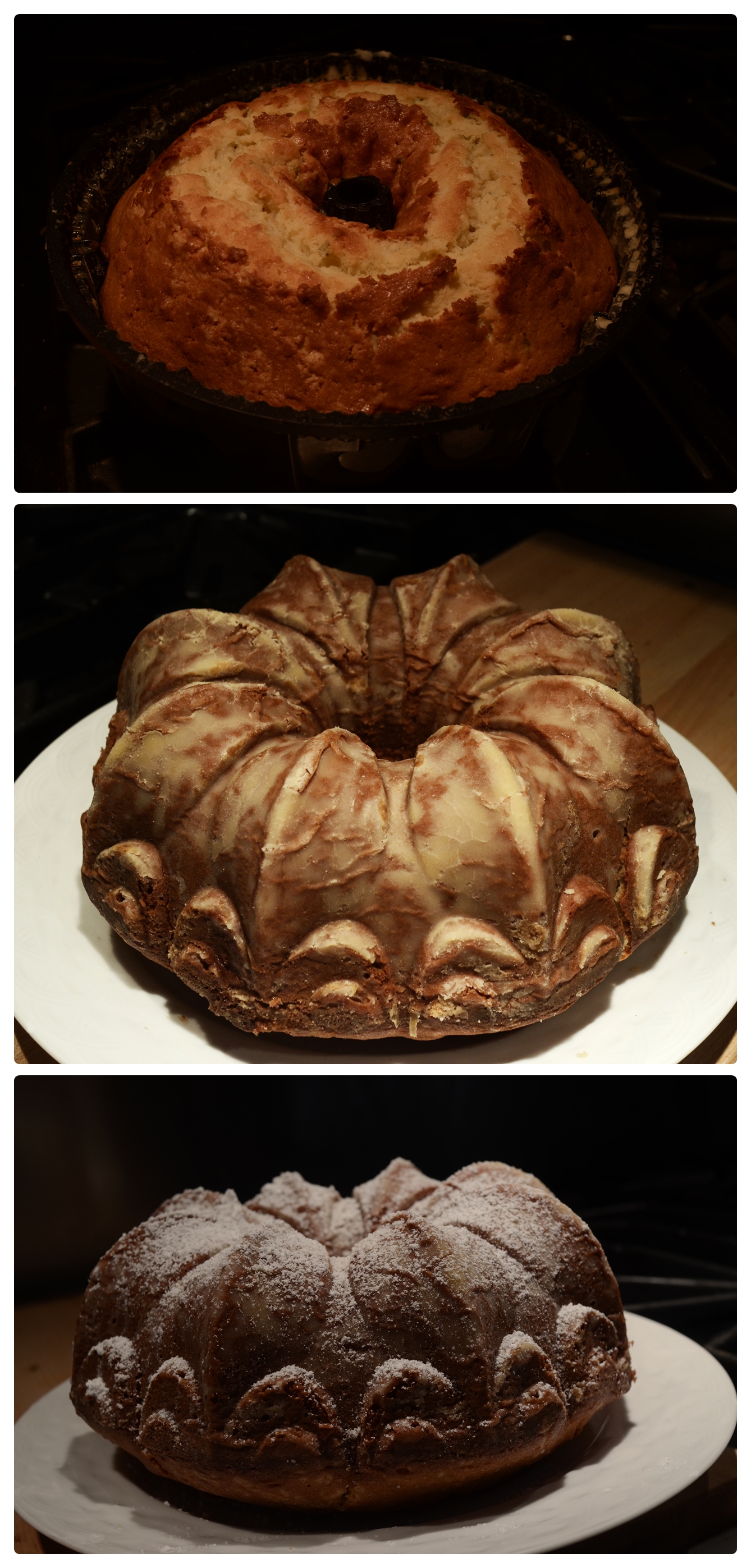
Cool cake on rack 5 – 10 minutes. Ā With small knife, gently pry away cake edges from pan; tap on pan multiple times to loosen. Ā  Ā I banged on the bundt pan with a wooden spoon after I took the cake out from the oven, and used a filet knife around the center tube and around the edges of the cake. Ā After this, I placed a plate under the cake, tapped some more, and it came out very nicely.

My cake took about 1 1/4 hrs. to bake; I let it cool 15 minutes before inverting it onto a plate. Ā While the cake was still warm, and I wanted to flatten the bottom a bit, I pushed on the cake with a towel until I was happy. Ā Also, I think my generous buttering of the pan, along with a proper cake-god dance, did the trick. Ā I finally just dusted the cake with a bit of powdered sugar, through a sieve, because I do not care much for glazes.

Altogether, I am ratherĀ pleased with myself!

Pork & Chiles

We have an ongoing love affair with pork, and with chiles. Ā Hot chiles, sweet chiles. Ā With little left in the freezer, although it is a bit warm outside, today just seemed to be a perfect day to make an oven-braised pork stew. Ā This really is a mish-mash, and despite its color, it has dried red chiles in it, and hot fresh green serranos and jalapenos. Ā Braised in an oven-proof kettle at 275-300 F, this is a dish which needs a bit of attention, can be as dry or wet as you want, and makes a delicious meal for summer or winter, depending on your mood.

Pork & Chile Stew

Pork & Chiles Stew
2 lbs. pork loin, cubed
2 large onions, coarsely chopped
3 serranos and 3 jalapenos, seeded and finely chopped
5-8 dried red chiles, sweet variety, such as ancho
8-10 cloves of garlic, chopped and smashed
1 T. ground cumin
2 T. coriander seeds, ground
2 T. fresh oregano
1 c. chopped parsley (I would use tomatillos, but don’t have any right now, and don’t feel like going to the market)
2-4 c. dark beer
2-4 c. chicken broth

Preheat oven to 275 – 300 F. Use a lower temperature for a longer, slower cook. Allow yourself about 6-8 hours of cooking and prep time before serving.

In an oven-proof kettle with an oven-proof lid, heat some cooking oil, brown cubed meat. Add onions, stir until soft. Add all herbs and seasonings as you chop – just add them and continue to stir and add until all is cut up and sauteed together in the kettle.

Seed the jalapenos and serranos under running water, being sure to wear nitrile gloves. Chop fine, then thoroughly clean up cutting block, discard pepper seeds and bits. Then take off the gloves, discard them, and wash your hands. Add to the stew.

Pour in beer and some chicken broth, to cover the meat. Bring to simmer.

Place in 300 F oven on middle rack, cover with lid. Plan to let it bake / braise at least 4-5 hours, or longer if you use 275 F. Add extra liquid if stew appears dry – you need to check it!

After about 2-3 hours of cooking, take the dried sweet red chiles out of their package. (I like Mojave brand, or just the ones in bins at local markets.) Break them up, remove stems, and sautee in some oil over low heat. Make sure they become rather soft. Then pour a couple of cups of boiling water over them in the pan (watch out for splatters!) and let soak for about 20-30 minutes. When this is done, transfer chiles and some soaking liquid to a blender, and puree the mess until all the peppers are broken up. Add this liquid to the stew, stir it in.

Continue to cook the stew for a few more hours, checking liquid levels. About an hour before you think you want to eat the stew, you can add some drained, rinsed canned hominy, or, like I did, some baby potatoes.

Serve with tortillas, shredded cheese, sour cream. Garnish with cilantro or something pretty, like more parsley or whatever you want.

P.S. The picture is not any indicator about the tastiness of this dish! I took it last night under fluorescent lighting and forgot to adjust it – and at 1600 iso. Not the best shot. However, the pan really is green – its a “lemon grass” Le Creuset Dutch oven – love it!