Puppies!

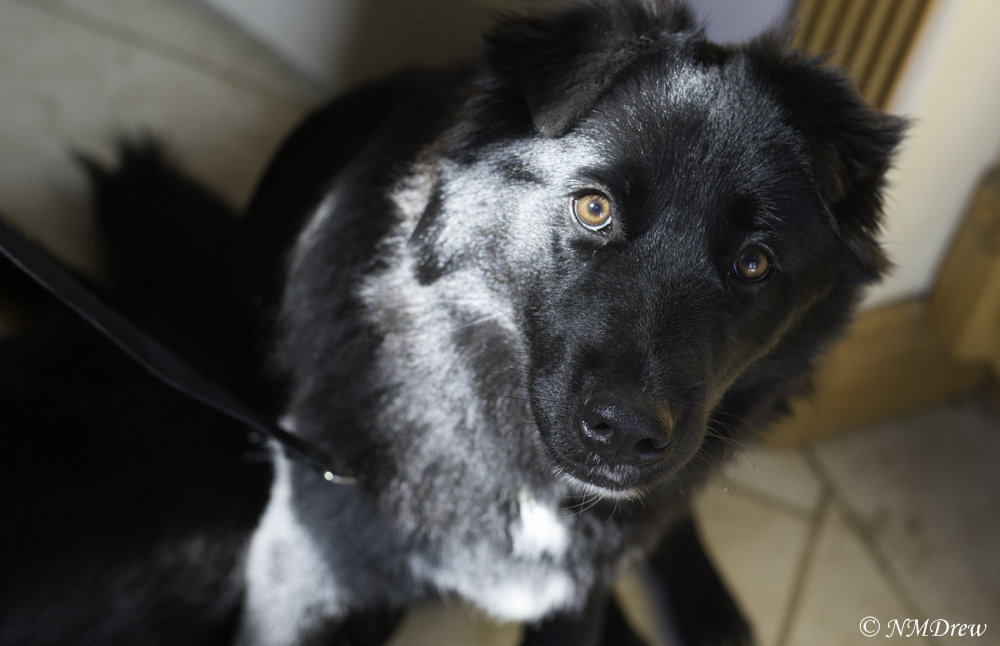
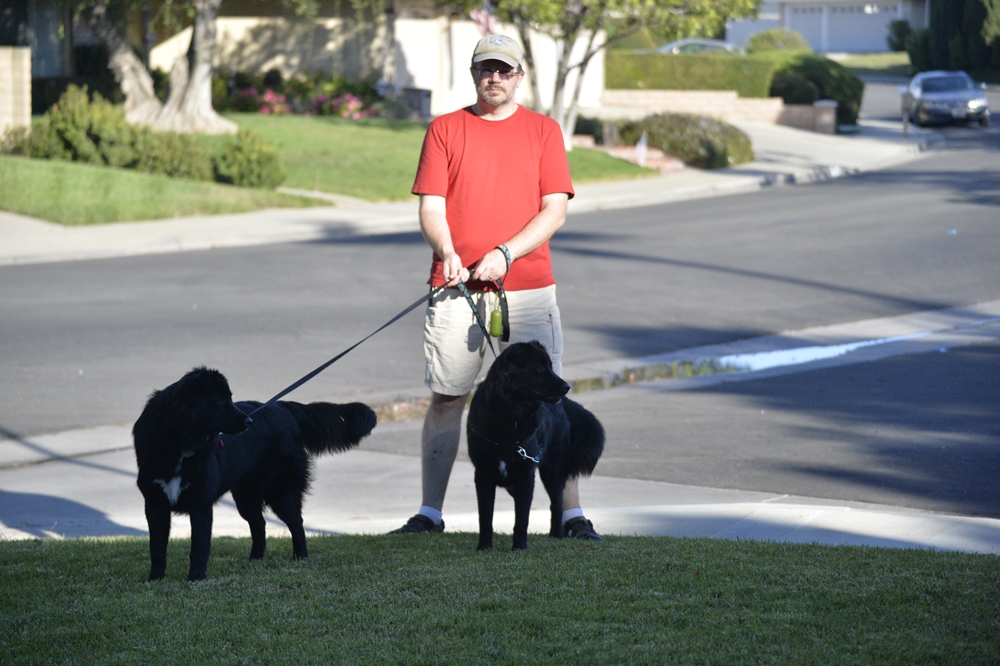
Let me introduce you to two new family members: Inky and Smudge, labrador-Aussie mix. Mellow, fuzzy, cute. 10 weeks old. From St. Martin’s Animal Rescue. Cutest little things (we think!).  Smudge is bigger (at 13 lbs.) and a dark grey, and Inky is smaller (at 11 lbs.) and blacker.

Inky & Smudge 1 BW

Inky & Smudge 2 BW

Inky & Smudge 3

Inky & Smudge 4

Inky & Smudge 5

Inky 1
Inky
Smudge
Smudge

The Heinisch Project, i

R. Heinisch Shears, Size 3 1/2

I’ve begun sewing again, and in the midst of it all, started looking at scissors and shears. There is quite a bit of history! In the U.S., two names seem to come up most often when it comes to the older manufacturers, J. Wiss, and R. Heinisch.

Most Americans in my age group are familiar with Wiss. They were the most popular scissor, as they have been made for many years, and were owned by the same family until, I think, the mid-1970s. Historically, J. Wiss came to the U.S. in the 1800s, and began to work for R. Heinisch making scissors and medical instruments. Eventually Heinisch’s enterprise failed, and Wiss, having been laid off by Heinisch and starting his own business, bought out Heinisch around 1917. Wiss is a household name, but I had never heard of Heinisch until my curiosity was piqued by seeing some very old vintage shears that were beautifully refurbished and still in use by tailors.

So, off to eBay, and a high bid brought these into my life. Sadly, they won’t cut fabric at all, and will need to be restored to sharpness. Thus, a project, with some elbow grease and some research. First of all, these shears are about 12 inches long – about 30 cm. They have a wonderful balance to them, and are easy to manipulate despite their size. The bolt is in good shape, as, it appears, are the blades. The japanning on the handles is gone. The first step to renovating these shears is to clean them up with steel wool. I will clean up the blades and handles with 00 and 0000 steel wool, being very careful not to work at all on the cutting edges of the blades.

I took a lot of photos of the shears, as they are now, and will, over time, post more. If you have any knowledge of restoration of old shears, please get in touch with me!

Shortbread with a Story

Shortbread Cookies

Driving home from work the other night, NPR was on the car radio. The story? A Tale of Two Shortbreads.  Take the time to listen to the story – it is so much better than reading it!  And then make some for yourself – it really is a great shortbread recipe.  So, thanks to the Brass sisters for this!

The Brass Sisters’ Favorite Holiday Shortbread

Makes 32 1-inch by 2-inch pieces

1 cup butter (2 sticks)

1/2 cup sugar

1/8 teaspoon salt

2 cups flour

Grated zest of 1 orange

1 teaspoon orange extract or 1/2 teaspoon orange oil

Set oven rack in the middle position. Preheat the oven to 350 F. Line the bottom and sides of a 9-inch by 9-inch by 2-inch pan with foil. Grease the foil with butter or coat with vegetable spray.

Add flour and salt to a mixing bowl, whisk to combine, and set aside.

Cream butter and sugar in the bowl of a standing mixer fitted with the paddle attachment. Add orange zest. Add orange extract or orange oil and combine. Add dry ingredients, 1/2 cup at a time, beating until completely absorbed and dough comes together. Do not overbeat or shortbread will be tough.

Gently pat dough into prepared pan. (Press down the edges with tines of fork.) Prick top of dough evenly about 20 to 25 times.

Bake shortbread 35 minutes. Cool on rack for about 20-25 minutes, or until slightly warm. Score shortbread with a knife into 1-inch by 2-inch pieces, but do not cut through entirely. When completely cool, cut into pieces along scored lines. The texture should be sandy and crumbly. Store orange shortbread in a covered tin between sheets of wax paper, at room temperature.

Shortbread will firm up as it cools. Placing shortbread in the refrigerator will help it firm up. If the shortbread is pale, continue baking another 5 minutes, watching carefully to be sure it is not browning too quickly.

Well, mine were done a bit differently.  I’ve got a cold, and my stuffed up nose seems to be limiting the oxygen my old brain is getting.  I dumped all the ingredients in a mixing bowl, and went to town until all was crumbly, but I only used the grated orange rind, and added a teaspoon of mace.  I lined a 9×9 pan with parchment paper.  Everything got patted nicely into the pan and put into the oven.  Oxygen deprivation stepped in again, and the shortbread wasn’t pricked, which is usually recommended to keep the cookies from bowing in the baking pan.  Still, they came out okay, without any bowing.  And the results are still delicious and wonderfully crumbly – but best of all, not overly sweet.

Mole for Thanksgiving

No, we did not dine on that furry little critter that lives underground.  The picture above is not a burnt mole, but sautéed dried peppers.

I made mole from scratch, using a recipe for mole poblano from Pati’s Mexican Table as the basis.  I was able to find all the ingredients in a local store which caters to the Middle Eastern, Asian, and Mexican populations, so there are far more exotic ingredients available than in the local chain grocery stores.

This is what I used:

Dried chilis:  ancho, pasilla, mulatos, chipotles – about 20-25 in different amounts.  I cut off their stems, and poured the seeds into a custard cup, to be added later on.  In a large Dutch Oven, I sauteed the chilis in oil, removing them from the pan, and draining them on towels; I did this is in small batches.

Once the chilis were done I added more oil to the pan and sautéed up a chopped white onion and an handful of chopped garlic.  Then I added about a quarter cup each of raw almonds, peanuts, raisins, sesame seeds, and pumpkin seeds.  At one point, I added all the saved seeds from the dried chilis.  Next came about a teaspoon each of whole cloves, anise seeds, and coriander seeds.  A stick of whole cinnamon followed along with a pinch of allspice, thyme, and marjoram.  These I sautéed and then added some tomatoes and tomatillos I had roasted over an open flame on a grill – two or three tomatoes and about eight large tomatillos.  The blackened skins of these were removed.  As a thickener, I tore up thin corn tortillas – about six.  Once all this was put together, it continued to simmer a bit on the stove, with a bit of stirring.

Once I was happy with the melange – it smelled wonderful! – I added about six cups of homemade chicken broth, the sautéed chilis, and 7 ozs. of 85% dark chocolate, specifically Valrhona.  From there, I let it simmer another 15-20 minutes, and let it cool.  The final step was to run it through the blender until smooth.

This makes very thick paste.  I ended up with more than a quart, which can keep for several weeks in the refrigerator, or frozen in small batches, to be used later on.

Making the mole was really easy – it only took a couple of hours as I did all the prep work as I moved along.  If I had been more organized, I doubt it would have taken even that long.

Anyway, mole sauce can be used with chicken or turkey (or moles?).  We had chicken.  I browned the chicken on all sides, and then took about 2 c. of the mole paste, and another quart of chicken stock, and put them in a slow oven – 300 degrees – for about 3 hours.  The result was heaven, and went well with saffron rice, cranberry sauce, salad, and tirimisu.

I hope your Thanksgiving feast was as tasty as ours!

Outdated

Jacket 3

This pattern dates from somewhere in mid-nineties. Original intent was a birthday present for a friend, but, like many things, got set aside because of other distractions. Now, resurrected, it surely does not appeal to me, but I am determined to finish it, even if I never wear it and just give it to a local thrift store. The experience, at this point, is the point.

Additionally, this is the very first project I ever used with my serger.  And it was the last, until, like this jacket, I resurrected my serger.  Can you believe at least 15 years have gone by for both of these??  I admit, the serger just scared the hell out of me – so fast, so complicated – but with my renewed interest in sewing, I decided that the serger was going to come out of oblivion.

Elna 2

This serger was one of the top of the line during the 1990s. It is an Elna Pro 5 DC, is a 5-thread machine, and has a really cute and convenient LCD display that one can program to put in settings for each of the many stitches it does. Unfortunately, there seems to be a bit of a problem with it because it beeps at me, and the red lights turn on and off. For now, though, I am going to use it until the jacket is finished, and then bring it in for a check up at Art & Jenny’s. I have it set up for 3-thread overlock, and for now, that is where it is going to remain. I’ve had the fun experience, already, of cutting through part of the upper left sleeve while finishing the side seams, so it got patched with some fusible interfacing and a mending stitch. Experience is the best teacher!

Jacket 2

Besides not being a talented serger-ess, I also seem to have not bought enough material to provide a facing for the yoke of the jacket. I will have to wander over to Joann’s later today and find something along the same weight, and maybe color, as the turquoise poplin. And, my threads don’t match the original I used back in the 90s . . . Gosh, life sure is tough!

Jacket 1