Cause & Effect

The quilt show is to blame for my current focus.  Looking at fabrics and looking at the wonderful handcrank machines got me to look at the machines I have strewn around the house.  There is a treadle machine in the family / kitchen area.  My mom’s old Viking (ca. 1965) – on which I learned to sew – is in the garage, along with a serger which terrifies me.  In the bedroom closet are a couple of handcrank machines, a Singer 222K, and a Janome 1000.

The treadle machine and the handcrank machines came to mind quite quickly – they really are fun to use, peaceful and soothing, and not needing to be plugged in.  The treadle was the first one to be pulled out.  Because of the help I got with the bobbin at the quilt show, it was really easy to set it up and get to sewing.

My treadle is called “The Free,” and it is in remarkably good shape.  I bought it on eBay several years ago; in fact, that is where I bought both my handcrank machines.

_DSC4605

_DSC4610_DSC4615_DSC4607

The treadle machine was rather dusty from a lack of use. I cleaned it up, dusted and oiled everything, popped in a bobbin, and threaded the machine. Off we went!

I have been using a stretchy spinning wheel band to drive it, but found that the band did not have enough width and / or torque to wind the bobbin, which is a long bobbin. I ordered a 3/16″ round band off eBay and installed it when it arrived.

_DSC4612

_DSC4614_DSC4613

Considering how old it is, this machine is still in beautiful shape. I’ve made clothes on it before, and now the urge to sew is hitting strong. The question is, which machine to use? Each has its advantages . . . but I’ll save that for another time.

At the Quilt Show

This past weekend was a two-day event, A Quilter’s Showcase, sponsored by the Conejo Valley Quilters, and held in the gym at California Lutheran University.  I went Saturday afternoon, to get out of the house, and to find some way to ignore my cold.  Of course, the main goal was to see the quilts!

Quilts are both works of art, and practical ways to use up small bits of material to make useful objects, such as bedclothes or pillow coverings.  Over the years – probably from the 80s on – wall hangings and other forms of quilting have evolved.  Not being a quilter does not mean I do not admire the skill, patience, and creativity involved in their making.  I don’t know if I have the patience for them in particular – I need to be moving, not glued to a sewing table or indoors.  Anyway, enough about me – let’s look at some of the offerings!

_DSC4599

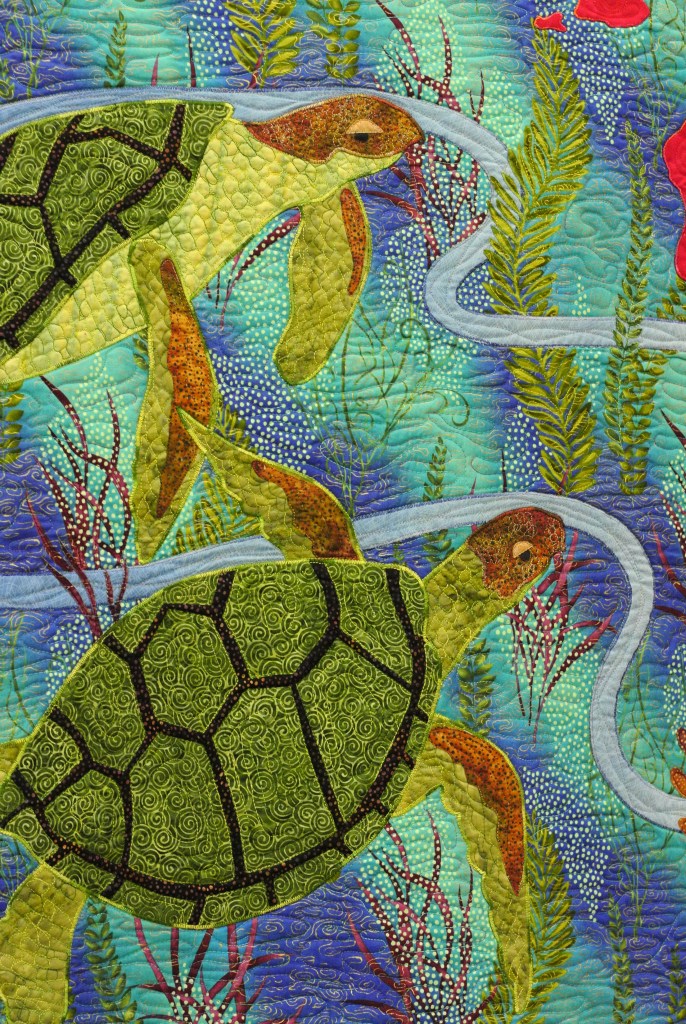
First, the set up was really nice.  Along the periphery of the gym were the vendors, mostly quilt stores, some local, some from further away.  Everyone was really nice.  Locally, we have Cotton & Chocolate Quilt Company.  I liked their display, which was colorful – I especially liked the quilts hanging up.

Cotton & Chocolate

The inside portion of the gym was somewhat of a labyrinth. Individual quilts were hung up, like paintings on a wall. Clothespins attached to the side of the quilt allowed the viewer to peer at the reverse of the quilt by using it as a handle – a good idea to keep quilts clean, and to satisfy the curious. There were a variety of quilts, from pictorial to traditional, most new, but some from the 1800s and 1900s.

_DSC4591 _DSC4594 _DSC4600

_DSC4572

_DSC4588

_DSC4601

_DSC4567

_DSC4575

_DSC4577

_DSC4597

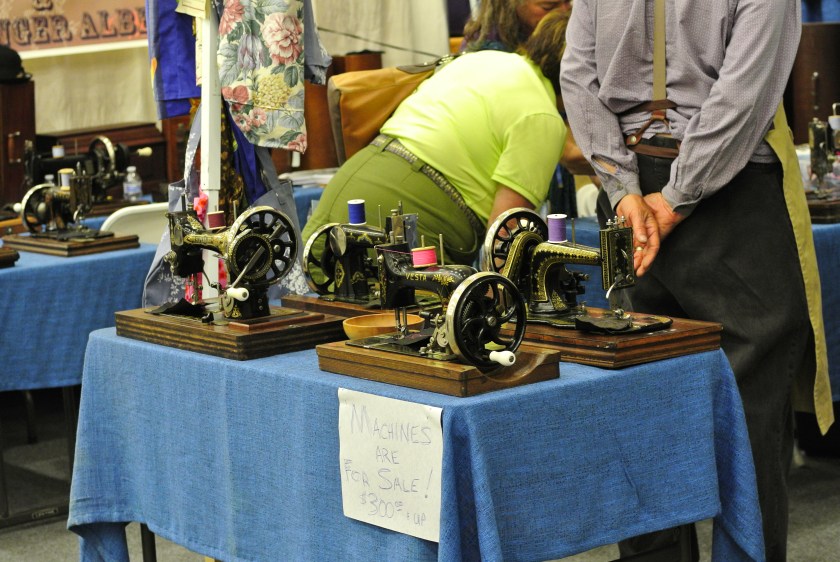
The vendors were mostly quilt stores, but you do need machines and thread and needles besides material to quilt. Businesses selling sewing machines were there – I didn’t see my favorite store, Art & Jenny’s from Ventura there – but there were plenty of other local businesses with great machines and friendly, knowledgable staff.  My favorite featured hand crank sewing machines, and quite a few of them.

_DSC4604This store is called Sew Cranky, and as you can see in the above picture, they had oodles.  If I didn’t have a couple of hand crank sewing machines of my own, I would have gotten one.  If you have never used a hand crank machine, it is very peaceful – no long electrical cords, slow motion, and you can take it outdoors, even if it does weigh a ton.  The decals are wonderful, and the click-click sound of the shuttle is soothing.  Treadle sewing machines are just as nice, but a bit less portable.  And, they do have attachments which compensate for the straight-stitch only of many older machines.

Communities, such as the Conejo Valley Quilters, connect people to arts and crafts, to resources, and open one up to the variety and talent found within one’s own neighborhood.  Their value may seem neglible, but in reality, our own lives become enriched from such venues, much more than we can appreciate in the moment.

A Pause Between Seasons

Woodland

Fall is coming; you can feel it:  the air is cooler, the light is more gentle.  Where trees lose their leaves, the season can be filled with color.  Here, where I live, the color change is not so apparent.  From summer on, the hills can become very brown, and the plants are adapted to dry climates.  Colors do not tend to be riotous.

Puzzle

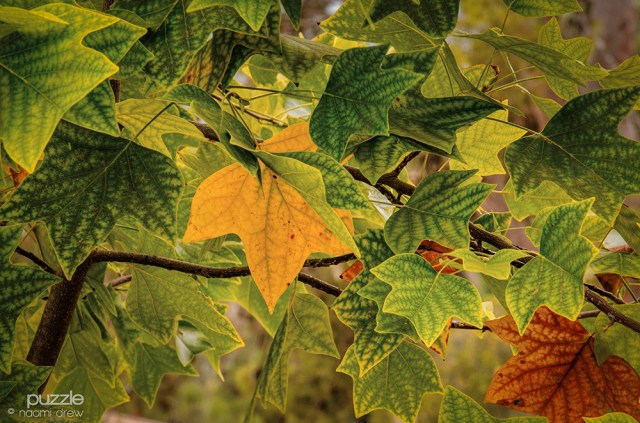
Nonetheless, there are subtle changes.  Some leaves change colors gradually, an orange one here and there, turning brown, and falling off one at a time.

Tulip Tree Signed

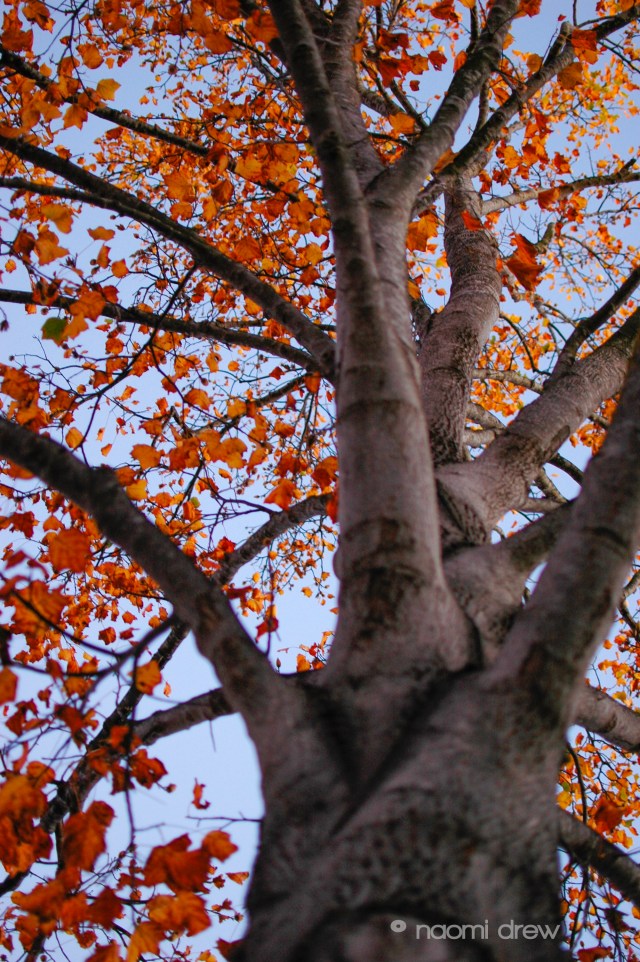
Occasionally, one finds trees which are spectacular, such as the tulip tree in my front yard – it is a brilliant orange and yellow display with a suddenly naked tree.

Flower & Fruit

Other plants bear fruit, while they continue to flower.  And others drop their flowers before they drop their leaves.

Fallen Flowers

Suburban southern California is home to both native plants, and plants from all over the world, but each plant has its season to grow and reproduce.  The beauty of nature is found if one takes the time to look.

The Nikon V1 and 32mm f1.2 Lens for Botanical Photography

Multiple reasons routed me to the Nikon 1 system.  A DSLR with a big lens is heavy, so when the Nikon 1 system first came out, I looked, but did not like the initial prices, nor the lack of lenses.  Also, I wasn’t too sure if it would be successful enough to invest in.

Time passed.  When the V1 dropped significantly in price, I looked again.  Seeing images shot by Steve, by Craig Litton, Joe Marquez, Sue Wotton and others at Steve Huff Photo pushed me to look at it.  Finally I bought it.  Since then, I’ve added lenses to the bag, but when the 32mm f1.2 was announced, I was seriously interested, and bought one when I could catch it in stock.

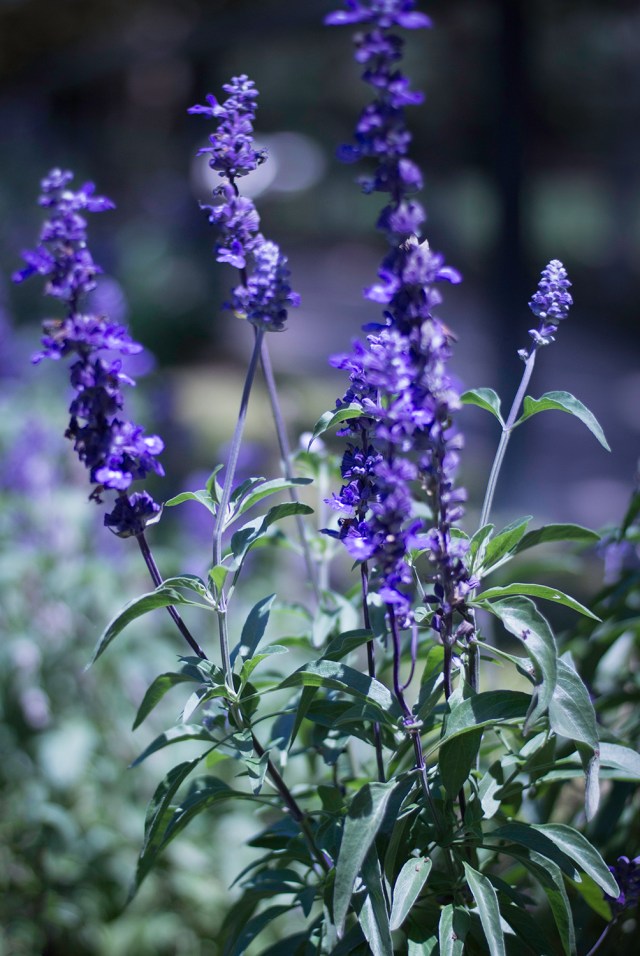
There is no one area of photography I prefer, but flowers have always given me a great deal of pleasure, especially wildflowers.  As it is late in the summer, nearly all our wildflowers are gone in the heat of Southern California, but locally we have some rather lovely gardens with flowers in bloom.  When I finally had some time to test out the 32mm lens, at f1.2 to f1.6, I shot a series of flowers and leaves, using both the auto and manual focus.

The beauty of the lens is the ability to isolate a flower from either background or foreground.  Bokeh varies with what lies in front and behind of the subject, and with the 32mm f1.2, it varies in quality.  It can be rather nervous when leaves in the background are small and fine.   Other times, distance or background blur beautiful, creating an element of serenity.  Color, contrast, and detail are well rendered.  The three pictures below show how the manual focus allows for choosing one’s focal area, and show how the foreground, middle ground, and distance can be chosen.  Click on them to see full detail.

_DSC4480

_DSC4481

_DSC4482

Altogether, I am very pleased with the ability of the Nikon V1 and the 32mm for taking pictures of flowers and other plants.  Some post-processing can add to the beauty of an image, but even just out of the camera, most images are pleasing and need little work.

Dahlia

Fallen-1500Fern-1500Hollyhock-2PurpleSaber-Lily-1500

Lens

As a birthday present – a bit early – I got the Nikon 32mm f1.2 for the Nikon 1 cameras.  I have the V1.  This lens, equivalent roughly to an 85mm lens, has a separate manual focus element on it, unlike the others in the Nikon 1 series.

Yesterday, I went to a local garden, and took a series of pictures.  Some I used the automatic focusing, on others I used the manual focusing.  I need to figure out how to use it.  The main, point, though, of the excursion was to simply evaluate the lens at f1.2, to check the bokeh, to check the accuracy, and to simply see how it worked.

Follows are some of the shots, with some post-processing, just because that is what I do, but I did very little sharpening because that was the main focal point – observe the depth of field of the lens.

Overall, I am quite pleased with the lens, but there is definitely a time and place for such a wide open f/stop.  Click on the composite picture below, then click again to enlarge it, if you want to see more of the details.

Nikon 32mm f1.2