Art?

I cannot say that working with a computer and software is any form of art.  Maybe it is, but I don’t see it.  To me, the computer is a tool, and mastery of the tool is one way in which art can be created.  Writing and designing the software is an art – it requires a vision and a goal, and like art, software evolves and changes, sometimes for the best, sometimes for the worst.  (A lot of times, software becomes increasingly kludgy as it evolves.)

This is what I mean . . . here is an original picture, below, of water lilies taken at the Hollywood Forever Cemetery.

Water Lilies

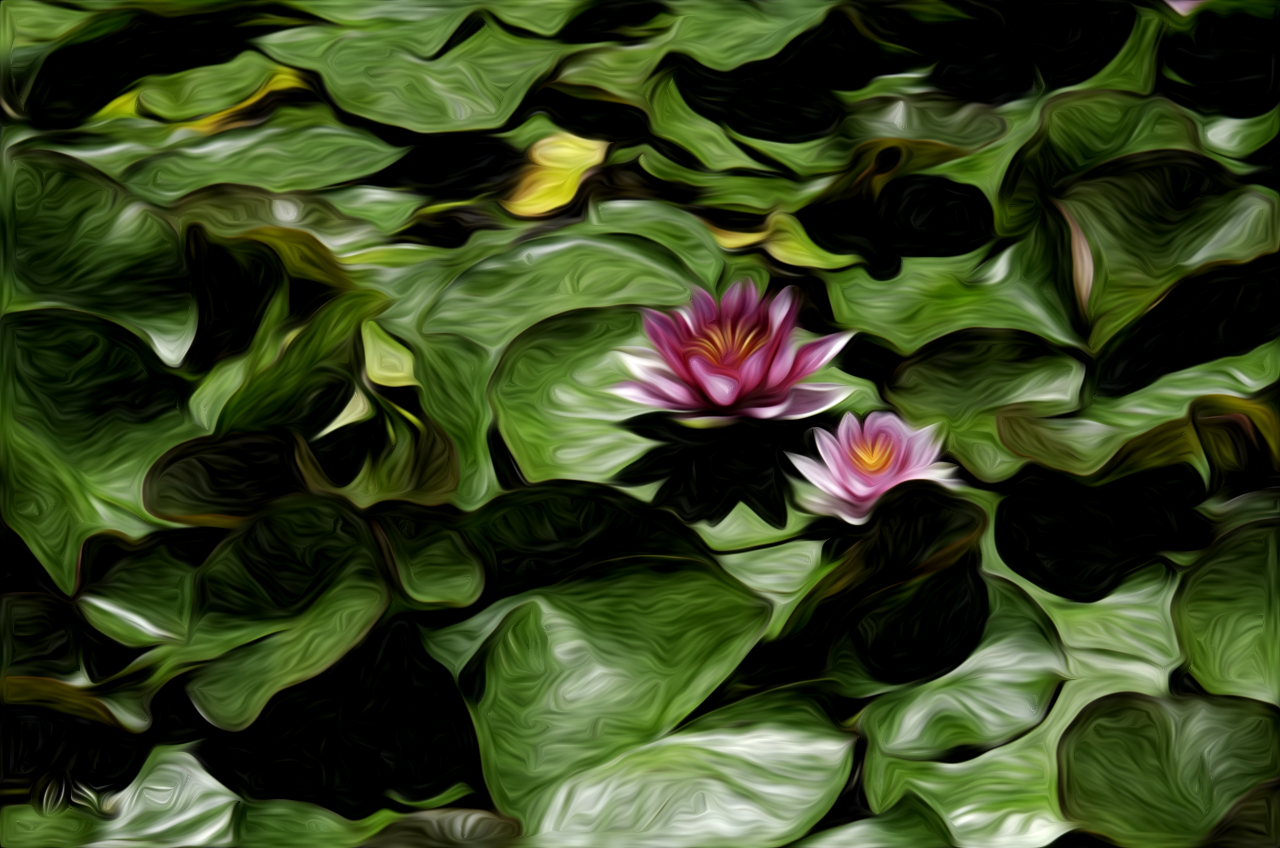
This next image is edited in the pixel bender filter in CS5.

Water Lilies and Pixel Bender Filter “Oil Paint”

Finally, this is the same image, with increased contrast added in CS5.

Water Lilies – Pixel Bender Oil Paint – Increased Contrast

Is any of this art?  Or is it just manipulation?  I don’t think I would ooh! ahh! over any of these, nor would I pay good money to hang these on the wall.  But, they are fun to do!

An Afternoon in Thought

With sensing a bit of accomplishment in the field of photography, it is beginning to take a place for me in the world of creativity.  I am beginning to see what I could not see before.  This ability to relate to photography pools it into other arts, specifically, painting.  Consequently, I am re-reading about and re-evaluating the works of Georgia O’Keeffe, and as an extrapolation, the life and works of Ansel Adams, both whom I admire as artists.

Georgia O’Keeffe – Blue & Green Music – 1921

Their creative viewpoints resonate with my own.  While I doubt I shall ever meet their productivity, or creativity, I can appreciate their work as individuals.  What interests them interests me – looking at landscapes, parts of things, plants.  The natural world in color and in black and white, both lush and sensuous, and stark and contrasting.

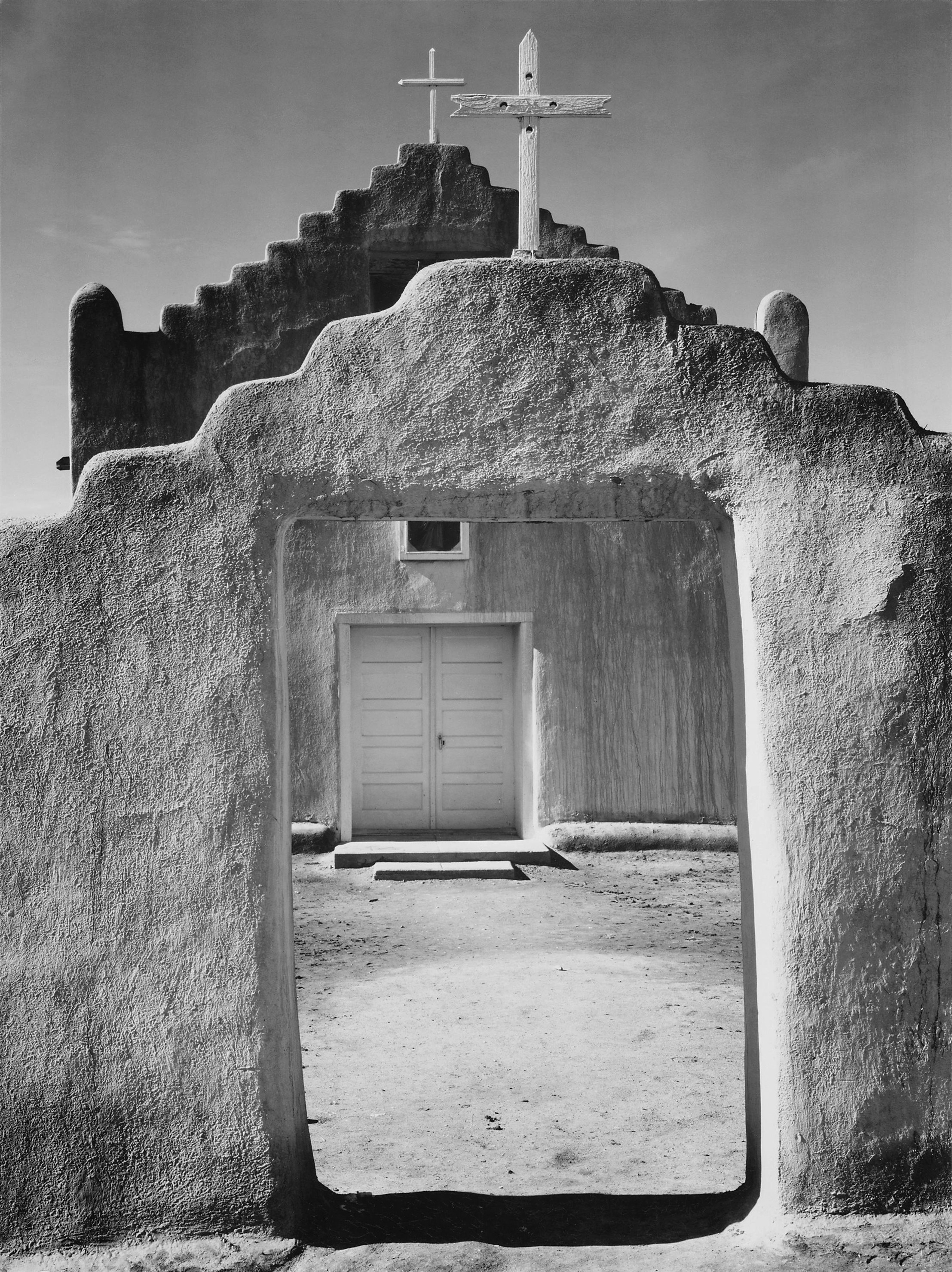
Ansel Adams – Church, Taos Pueblo – 1942

In particular, I like the fact they do not put people in their works.  I cannot think of a single painting by O’Keeffe in which there is a person; few photographs by Adams include individuals.  And that is not to say I do not enjoy images of people, but it is more likely I am not going to go out of my way to pursue then.  People like Kirk Tuck and Vivian Maier are wonderful photographers, both of whom photograph people.  Kirk works often in his studio, but also does street portraiture; Maier, on the other hand, was a street photographer at its finest.

I may at some point venture out to take pictures of the random person, but for now, the textures and colors of the world around me intrigue me enough to focus on them.  And perhaps I shall begin painting again – my period of apprenticeship in photography may be ending.

That Feeling of Love

There is a sensual quality in art, in the process of doing it, and in the process of thinking about it.  It is this tie-in between the internal world and the external world – the perceived, and the produced.  For me, this is a very critical part of anything I do which is creative – it is akin to falling in love – it is emotive, sexy, exhilarating, dangerous.  It is an altogether sensual experience, not just as in sexy, but in that all of my being melds together in the process of creating.  Today, I felt that in working with pictures I have taken – this means, a part of me “gets it” – and a part of me is now mastering something, a part of me can think about what I want to do, and move toward that vision.  While a keyboard may not produce the same tactile pleasure a brush and paint and ink and paper produce, there is color – always, always color.  Or a lack of color.  There is shape.  There is contrast.  There is mood.  This is love, this is being, this is emotion, this is spirit.

Long Boats & Nyckelharpa

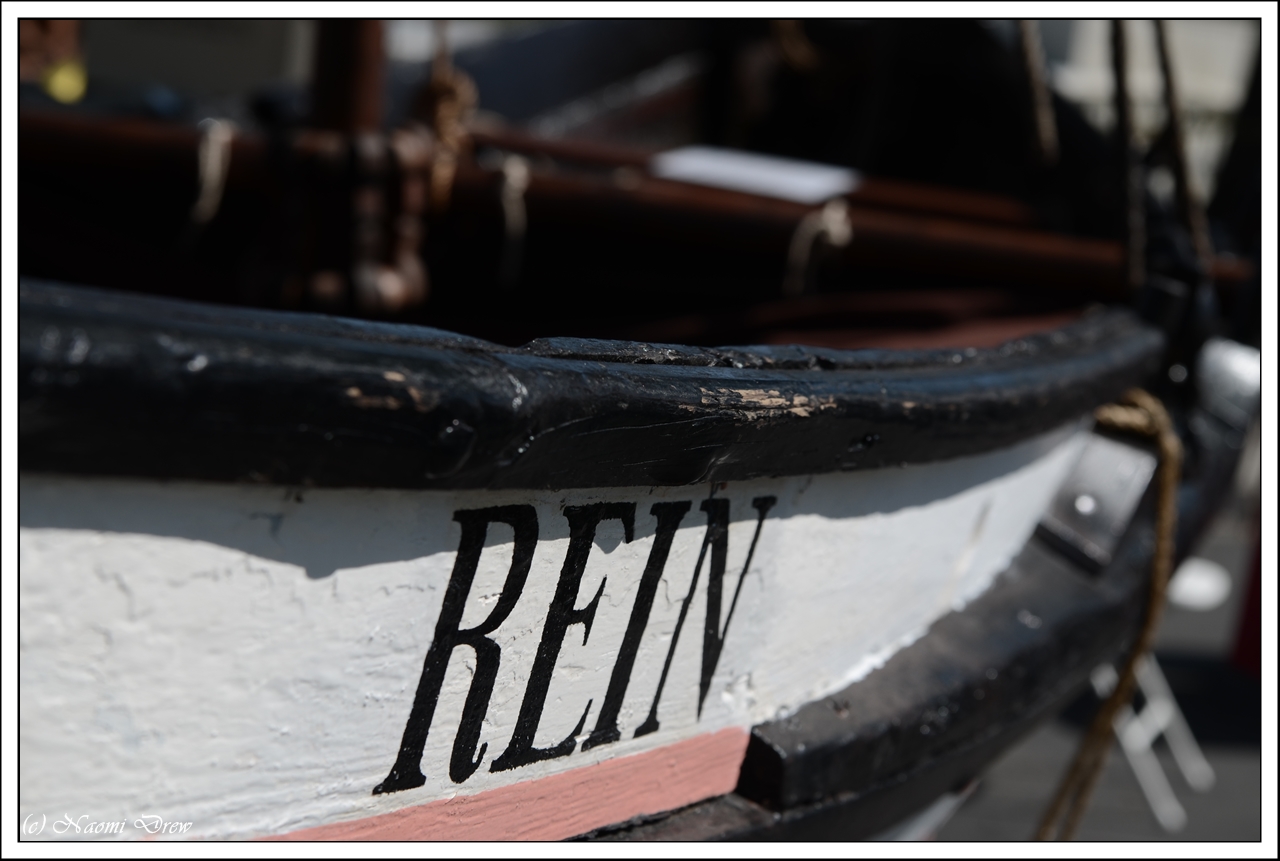
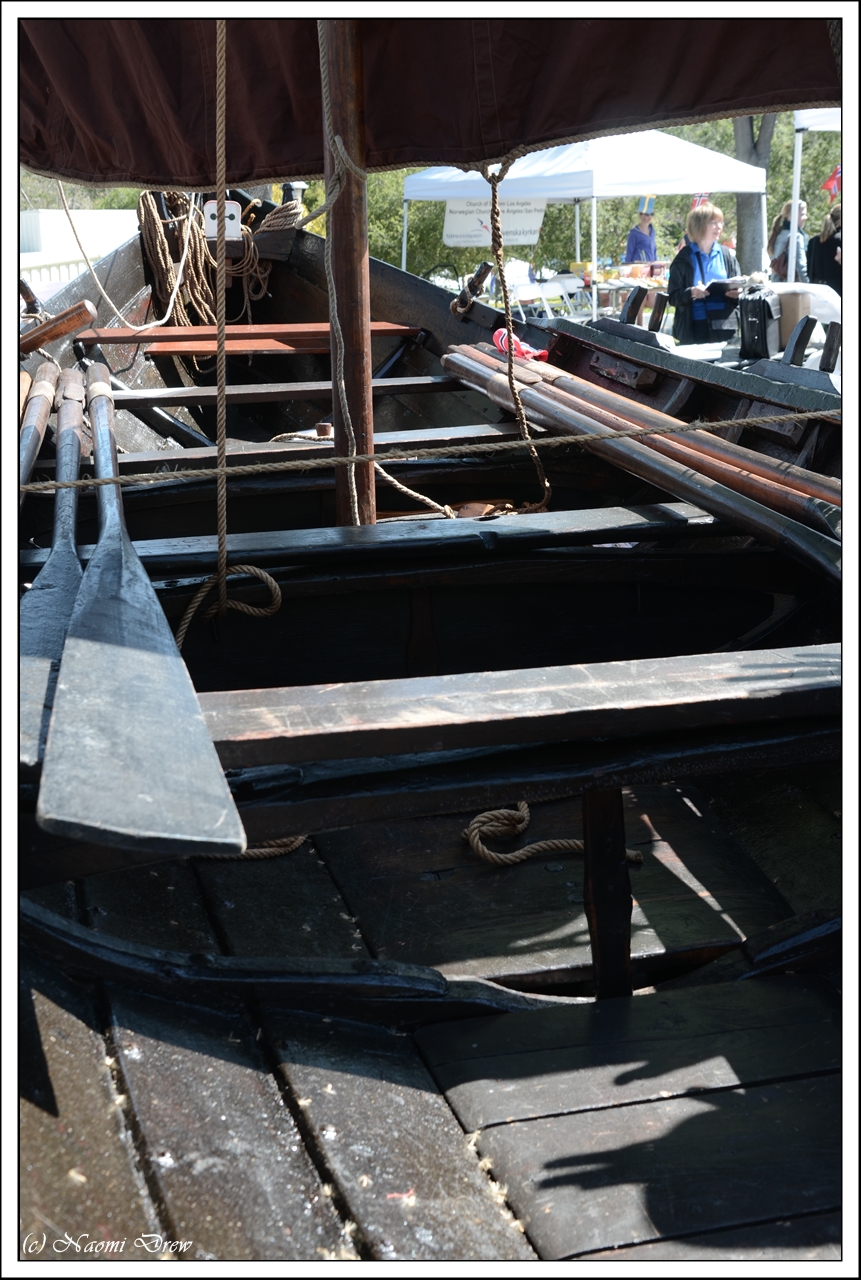
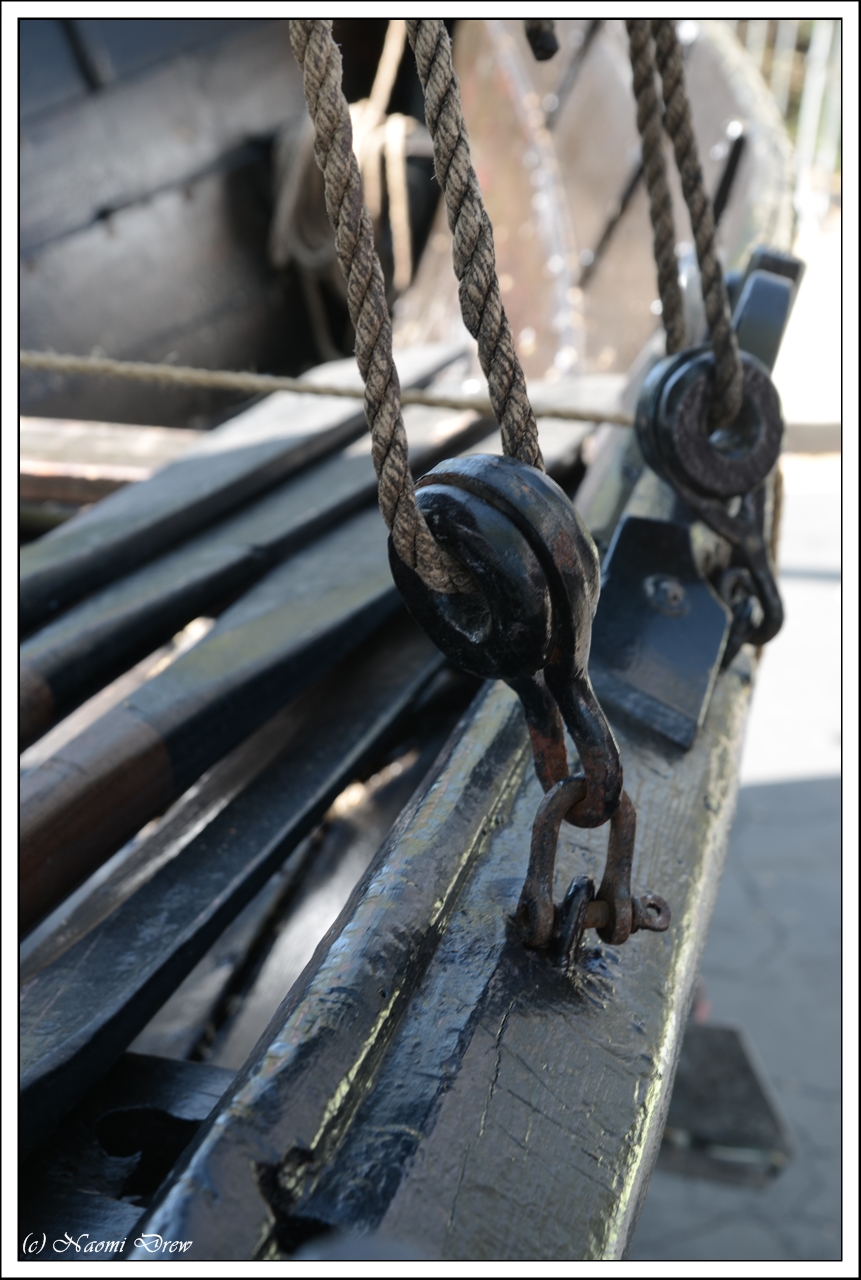
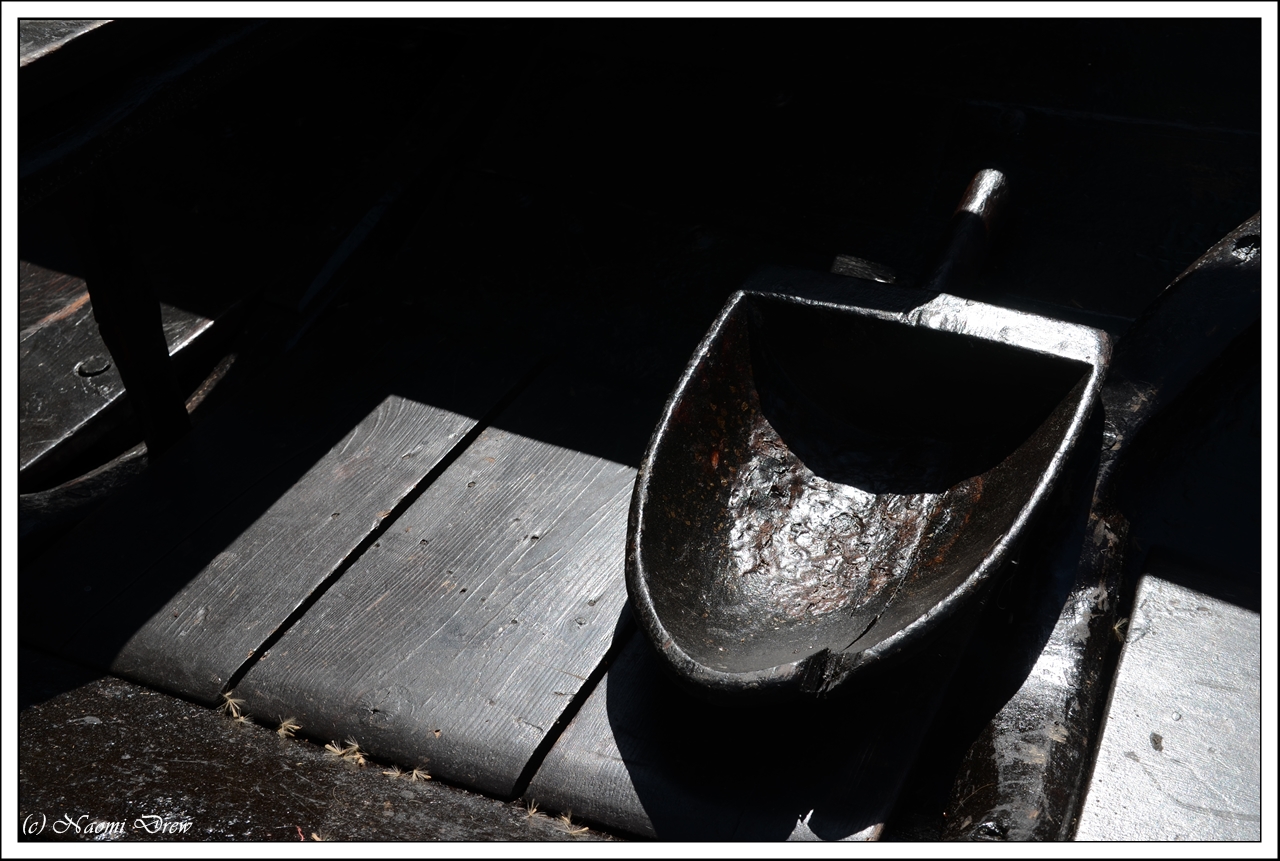
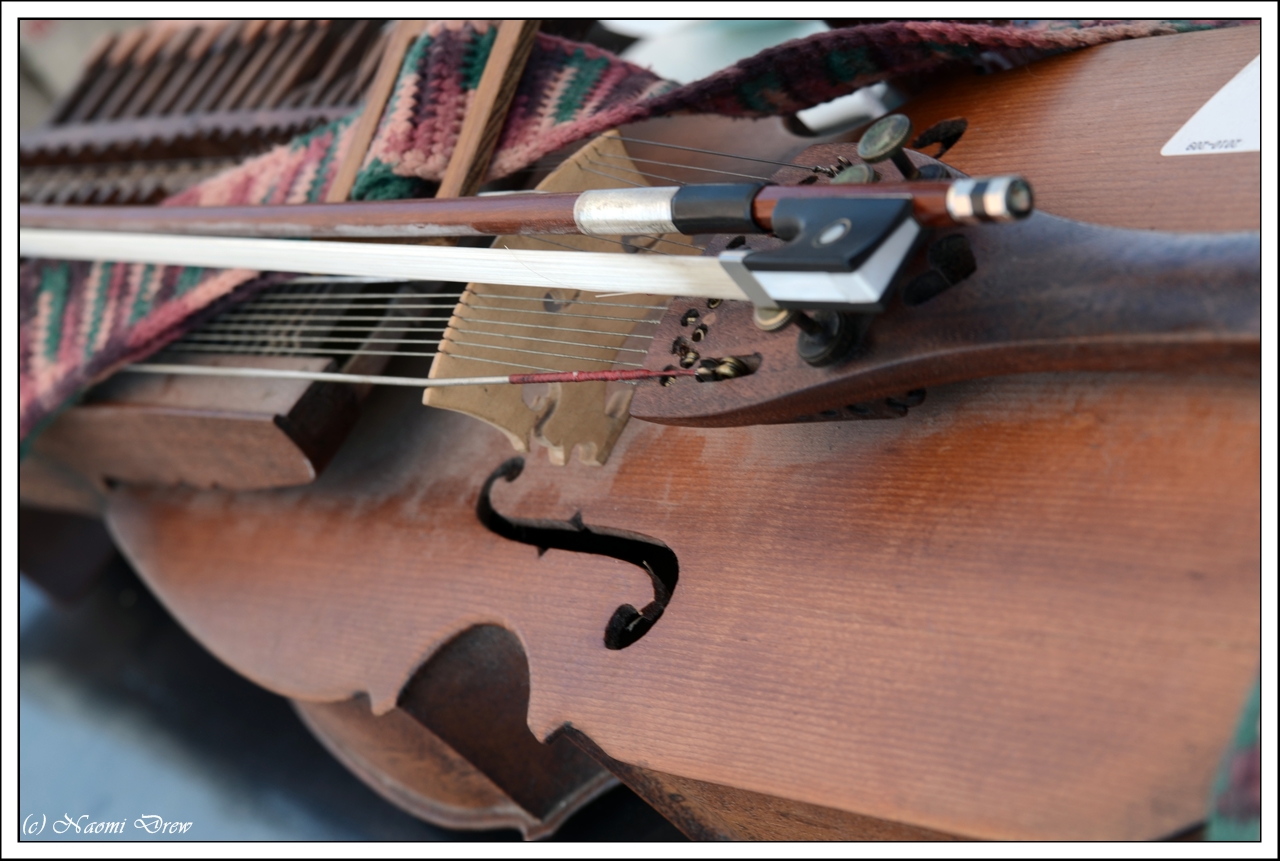
This morning I wandered over to the Scandinavian Festival at the local college.  It was not big and noisy, but rather small and quaint, and probably not as busy today as yesterday.  As with every cultural fair, there were things worth looking at and things worth avoiding.  What I enjoyed most was a display of two boats, former fishing boats, rowed with oars and moved by square sails, and a wandering violinist playing a keyed Swedish violin, called a nyckelharpa.
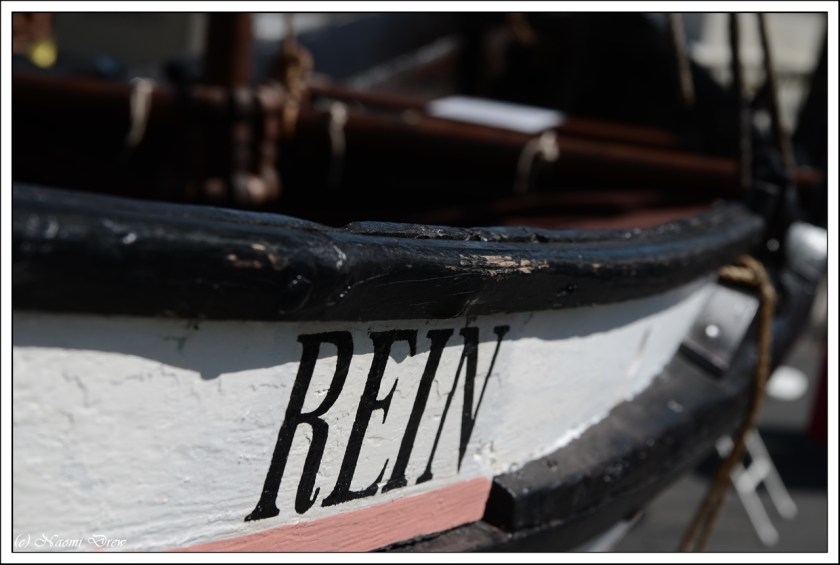
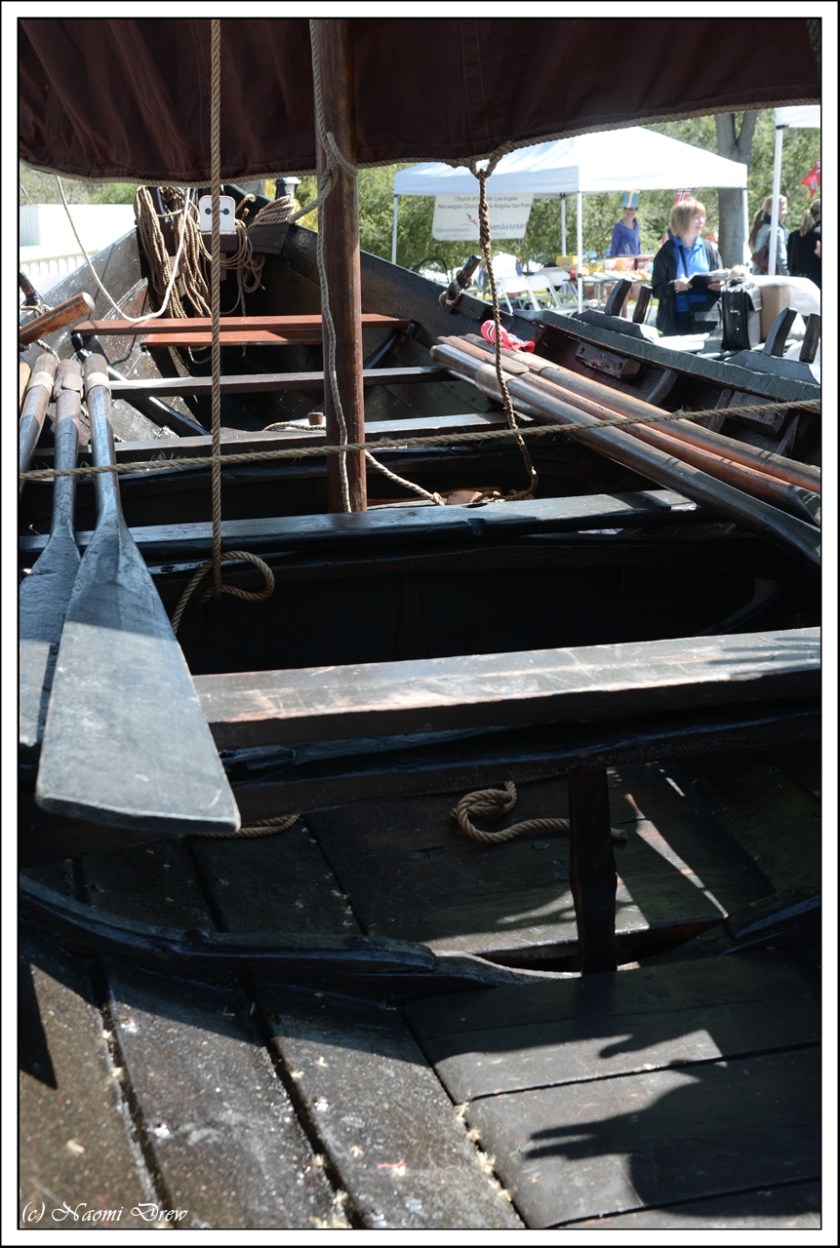
The boats were built in the 1800s, the last of the long boats built in the traditional style of boats used in Norway, using methods and design handed down from the days of the Viking ships. If you want to learn more about them, the gentleman who provided the display is Olaf Engvig, the author of books on maritime history and the use of iron in ship building. Very interesting man!
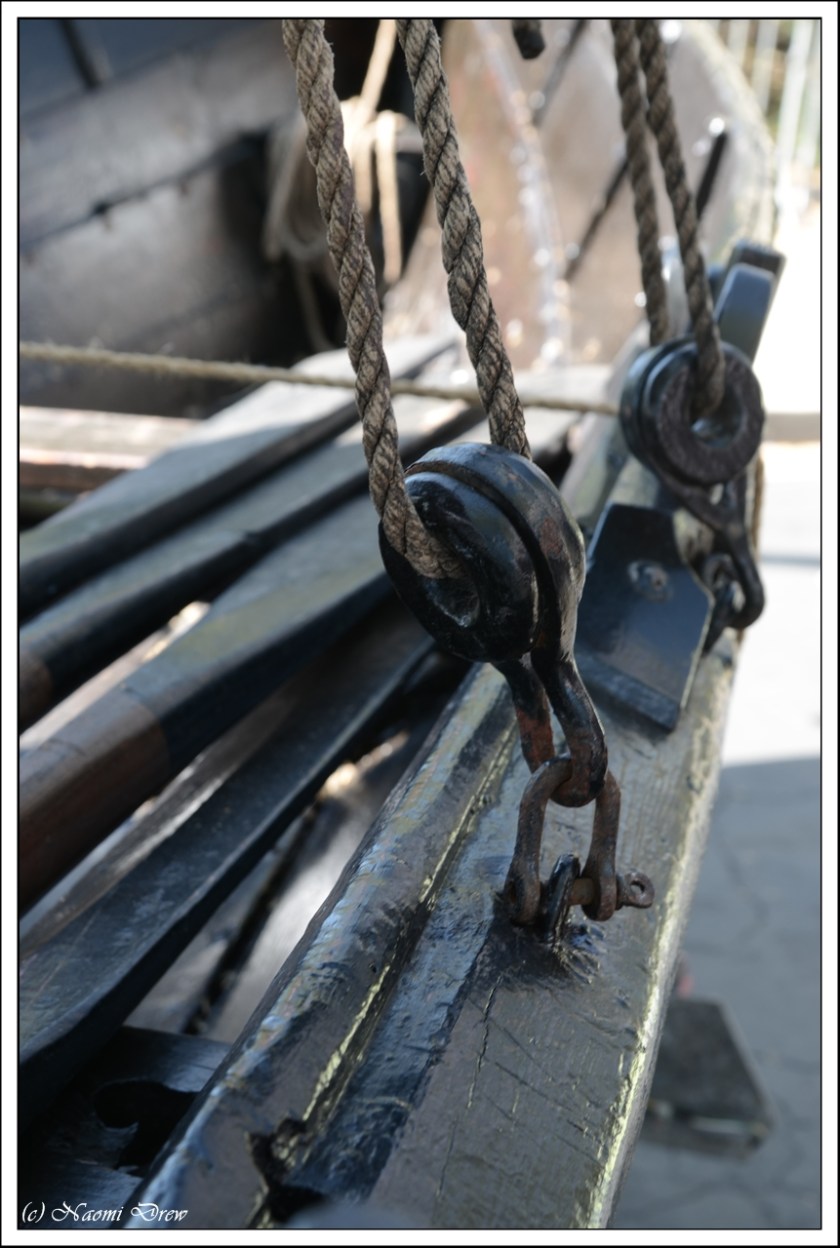
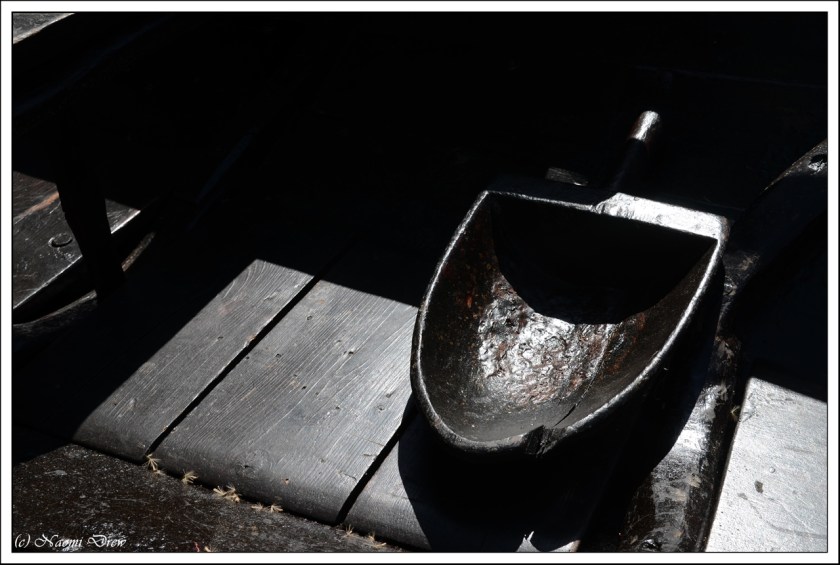
The boats, of course, have new lines and oars and sails and rudders, but the planking and iron rivets are original.  Square-rigged ships are common throughout the world, but I think that nobody used them better than the Vikings or the designers of the clipper ships.  These two boats were particularly interesting as there is no boom on the sail, so the boat is easily maneuvered by line and rudder, and no one needs worry about a cracked skull!

I next met the violinist, a pleasant and talented man who was obliging in every way, from answering questions and playing tunes and posing for a portrait.
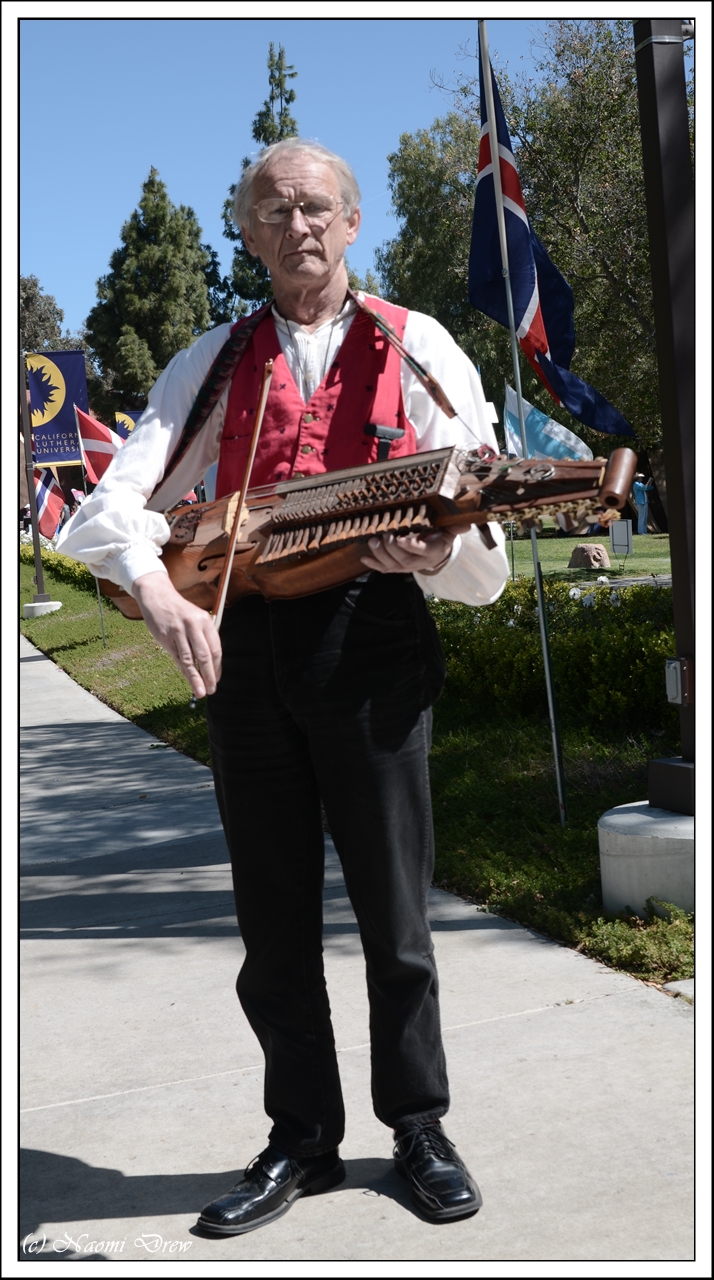
I have never heard of a keyed violin, but according the link to Wikipedia, the keyed violin has a long history. Take a look at it to get a better idea of the keys along the violin’s neck.
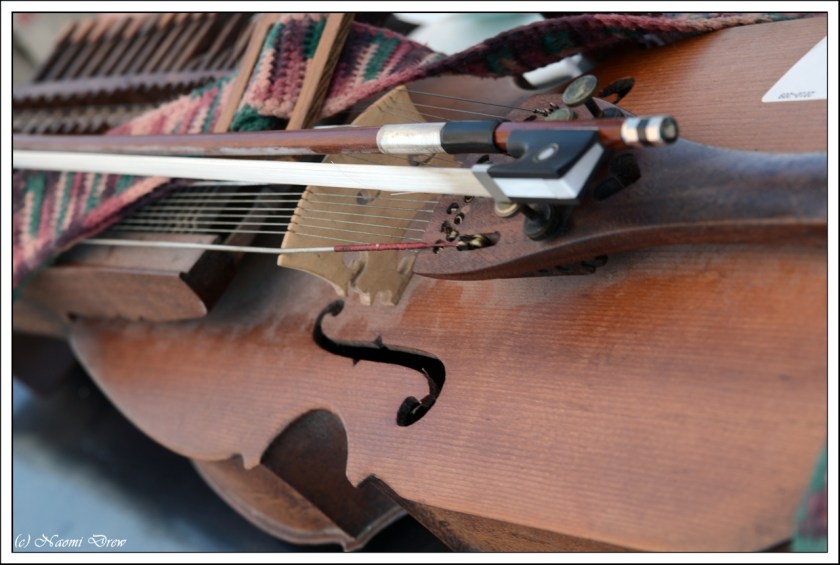
My first look at the nyckelharpa made me think it was a very simple instrument, something like a guitar played with a bow. It is most definitely not! Just constructing one must be painstaking. There are keys, three in a row, throughout the length of the instrument’s neck.  I wonder if this is an easier-to-play instrument than a traditional violin, but as I have never played a stringed instrument (other than a piano, if that counts!), I wonder if talent is needed to handle the bow as well.  Whatever, the musician played beautifully, and kindly posed for his picture as well.