I should have gone to my Pencil Portraits class . . . but it was raining and cold and it’s outdoors. I’m a wuss, enjoying snow and ice from a distance. Thus, biting cold, frost, and snow fog. Wander along the road, beneath the trees, and remain in my snug house with a cup of cocoa and blues a-playing in the background. Not a rough life.
I carry a lot of things in my pockets. I put my phone in, my keys, money, a small wallet with ID. At times my pockets carry lens caps, tissue, paper towels, pens or pencils or markers. If I can stash things in pockets, I would rather do that than go out with a purse slung on a shoulder.
A pocket is a bag– or envelope-like receptacle either fastened to or inserted in an article of clothing to hold small items. Pockets are also attached to luggage, backpacks, and similar items. In older usage, a pocket was a separate small bag or pouch.
That works for me. Pockets have been found as bags to carry items, such as with Otzi the Iceman, bags worn under clothing with slits to access them, and so on. It’s good to have them to carry things, leaving hands free. Backpacks and other types of bags (fanny packs, butt bags, whatever, be you English or American 😉 ) are all useful ways to tote.
And then there is a “poke” – a dialectical word for a pocket, used in mountain areas to this day in the US. “A pig in a poke” leaves a lot to the imagination.
So, why pockets?
Sewing. I love sewing, and have decided to work on expanding my skills as well as knowledge. Hand sewing is an art I have long enjoyed, and have set myself the task of improving those skills, such as hand sewing a 17th century shift in linen. (Nearly done!) I have also collected some books on medieval clothing, Tudor, and Regency era clothing. Hand sewing was done in all those eras. But, as I also like modern clothing, I have decided to improve my machine skills, such as with my serger / overlocker and coverstitch machines. All this in addition to my first love, painting.
Back to pockets.
Burnley & Trowbridge have a whole YouTube series on sewing pockets that tie around your waist, accessible through your clothing. Very simple and elegant. Here is the first video in the process:
And there is a book that I just bought, by Barbara Burman and Ariane Fennetaux:
Definitely a great read so far – scholarly, thought-provoking, and a great look at the humble pocket.
However, is it just utilitarian? Nope! Pockets can also be works of art, with fine embroidery, as seen on the cover of the book above. They are also included in the wardrobes of dolls form long ago. You can read about pockets at England’s great Victoria & Albert Museum.
Besides the V&A, VADS has a whole series of pictures and information about pockets – 373 to be exact – of accounts of material bought for pockets, paintings with pockets, dolls clothed with pockets, children and adult clothing with pockets. Scroll through it – it is a stunning resource for pockets and all kinds of other things. Words cannot describe the visual richness and historical treasures found at these sites. Here is an image of a doll, skirts flying, and pocket showing:
And so, I will leave you with thoughts of the humble pocket. I have plenty on me today – two in my fleece vest, two big ones in my pants. I am a very happy girl, I assure you. If it ’twere true I had on socks, I could also use those for pockets. (We won’t discuss my underwear.)
Pocketses are truly precious. Gollum knows. So do I. So do you.
I like the idea of being independent of experts as much as possible. Maybe being as self-sufficient as possible is a better way of expressing it This way I don’t have to wait for someone to do something for me which I can do on my own. A lot of things are best left to the experts, but a lot of daily stuff doesn’t have to be that way.
The experts I absolutely insist upon are accountants for taxes (I used to get the 1040-EZ back with corrections as the English is nonsensical as far as I am concerned), auto mechanics, and doctors. Appliance repairmen are often overpriced and not as good (and inexpensive) as my husband. He is good at figuring things out and fixing them. He can research things on the internet and then buy parts. I am no good at fixing those kinds of things.
However, I do think about the things I can fix or figure out how to fix on my own. I can deal with computers pretty well, software and hardware. I can adjust small mechanical things. I can sew clothes, cook, preserve food, garden, and jerry-rig a lot of stuff. I can knit and weave and spin (oh, what a domestic I am!). If I had hand-powered tools I could do a lot of carpentry, but I don’t like high speed electrical tools, except maybe drills. And handheld sanders. Things that go too fast annoy me.
And, I do like sewing machines. In the past few months I have bought two to work on. One I got working, and then something went wacko, so I am going to have to get in touch with my mentor and have him help me out. Another one had a stuck feed dog area, but that I figured out and with oil and heat got it working again. Computerized sewing machines are not for me to fix, but the ones I have run beautifully, so I am not worried about those. However, cam stacks and upper thread tensioners are things I might want to take a try at one day.
When I think of it, though, I don’t want to fix sewing machines a lot, like in doing it on a regular basis. Instead. I want to know enough to make the little fixes they might need, and know enough about them to troubleshoot and fix issues. I had to find this out by actually working on some machines. That knowledge and experience is definitely a worthwhile skill to have.
I come from and married into a family where doing and making things is part of daily life. My father could build a house, plumb and wire it, as well as sew and farm and build things out of metal and wood. He was an engineer who designed air planes and fighter jets. My mother could do a lot of things, too, more on the domestic front, but she studied engineering and was a television cameraman in the 1940s. My married-into-family sew, knit, bead, build harpsichords and furniture from scratch, and bake and cook, manage TV news stations, do music and video editing, and build airplanes and cars from scratch. These are all skills, old and new, that make for creativity and self-sufficiency.
Self-sufficiency and self-efficacy are intertwined and make for a happier life than relying on someone else to fix or prepare or supervise one’s life. It doesn’t mean you are separate from everyone. It means you are able to rely on yourself, rely on others, and others can rely on you. Skills bring people together, and this, in turn, community and connection and interdependence.
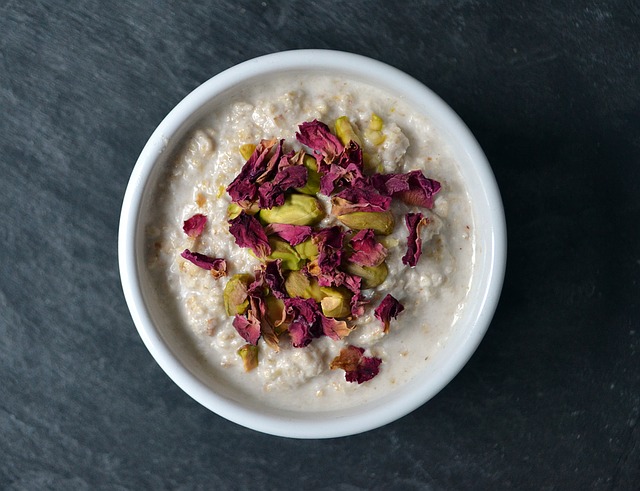
I got distracted by my monkey mind. Luckily, no fires, and enough saved to have breakfast. Oatmeal is perfect on cold mornings, with raisins, walnuts, and yogurt. I’d go for brown sugar, too, but as I am addicted to sugar and could happily main line it, I try to keep it toned down in my daily life with a square or two of Valrhona 72% dark . . .
I got the first of my two Covid vaccines yesterday, the Pfizer version. I can return in the next 3-6 weeks, per the County, for the second. I don’t understand how people cannot take this virus seriously, but as my husband pointed out, many people in the generation after me (like from 1812 on) have not seen or had the diseases I enjoyed in my childhood – chicken pox, measles, polio, diphtheria, etc. That may well be the case. However, I wonder about their failure to realize or understand science and so on. Certainly I don’t get people who follow conspiracy theories, such as those proposed by QAnon – and I know some who think such things are true.
Having worked with people who are schizophrenic, I do understand that there are different versions of reality for different people. And, in novels, I love a good conspiracy theory! However, there are some that are just too weird to think of as real.
What is reality? What is belief? What is a potential not yet seen? Think about TV – it wasn’t “real” until the last century. Airplanes in 1903. There are things we imagine that may not come about for a long, long time, such as travel and colonization of other planets. These make for great stories – but what about germs and virus and other things on those planets to which humans are not immune?
Belief is defined as an acceptance that a statement is true or that something exists. But is that belief grounded in fact? Some religious people say that in order to pray, you have to believe. Others say in order to believe, you must pray. That is a dichotomy. Also, what we now know to exist was often a myth or a thought or a potential reality at one time.
Well, enough rambling. Time to get the day moving along with the excitement of doing dishes and other mundane tasks before wandering about in my own planned fun activities!
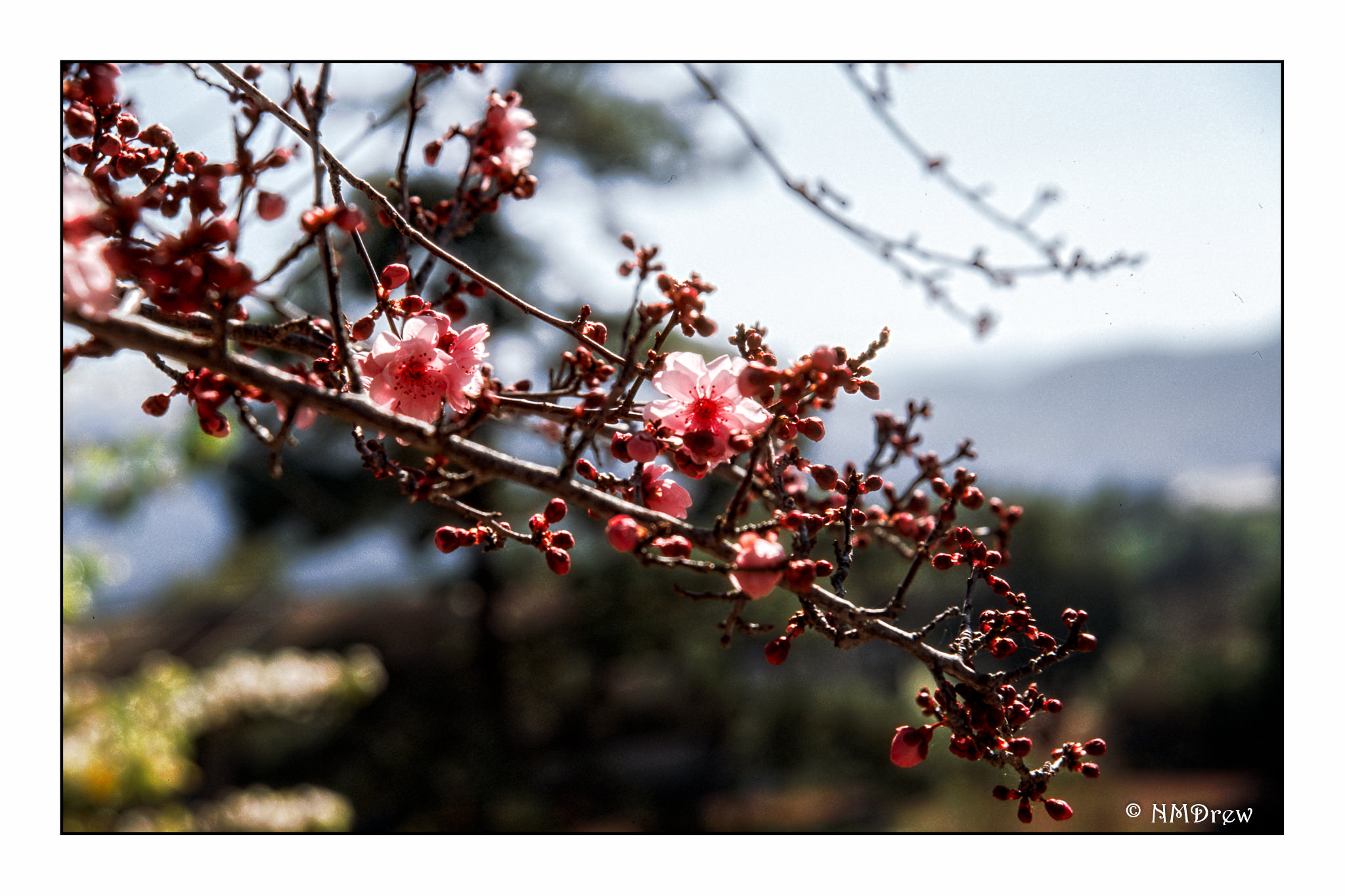
I have been updating some of my photography stuff, and part of that process is going through the archives. I took this with a film camera, and I have no idea when I did. It was taken at the local botanical garden. I also didn’t see it in my quick scan through my media files on this blog, so I thought it would be a good one to share. If I already published it, well, enjoy it again – I am.
Spring is such a wonderful time of year, and it doesn’t pay to miss it! I was at the garden yesterday to see the daffodils and narcissus toward sunset and did not have time to wander through this area – but I will in the not too distant future, and hopefully be able to capture more trees in bloom.




 Ink, Yarn & Beer